


 Izdanje Srbija
 Serbische Ausgabe
 Izdanje BiH
 Izdanje Crna Gora


 News
News


Ada Bridge case: GSP announces works without stopping trams, but still no official answers as to who, why and at what stage of design decided on wooden crossties
Source: eKapija
 Friday, 18.07.2025.
09:54
Friday, 18.07.2025.
09:54
Friday, 18.07.2025.
09:54
 Comments


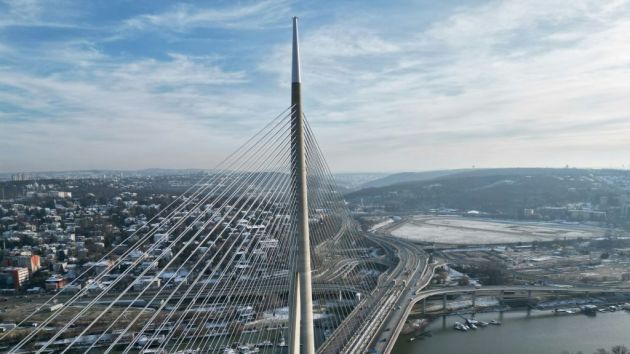
(Photo: kokixx/shutterstock.com)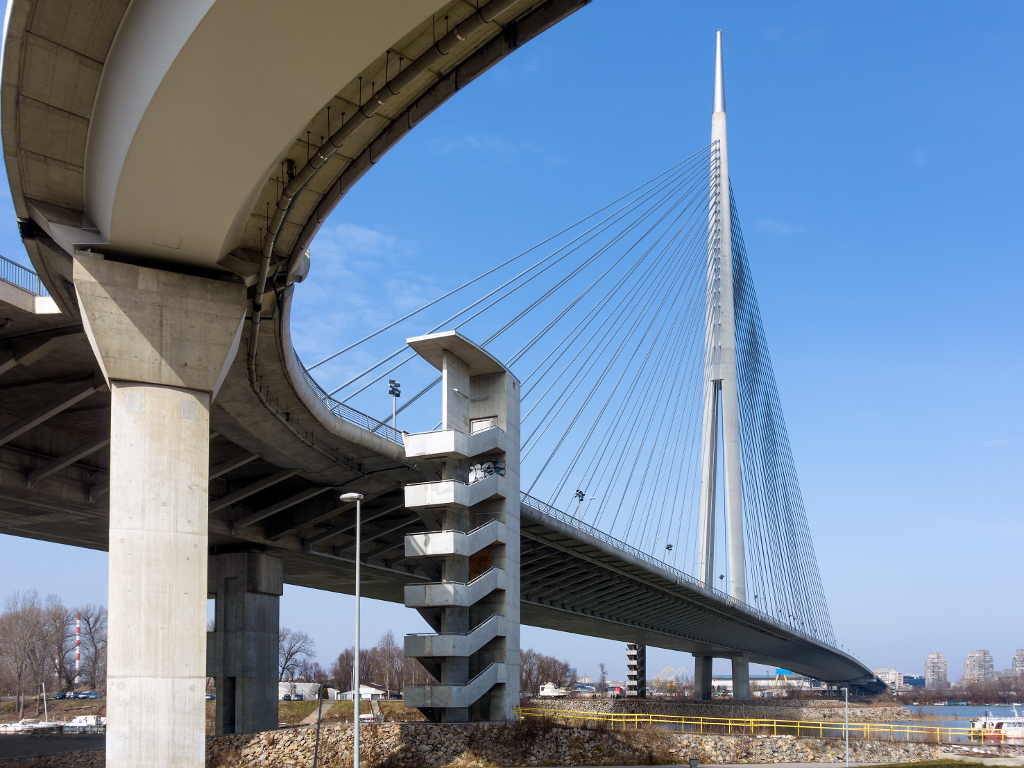
When asked if it was true that the reason for this was the poor design of the construction of this line in the period 2018/2019, they claimed that this was not true.
– One of the project conditions related to compliance with environmental standards, and due to the specific position of the structure (above the river), was that only wooden crossties with basic “bio” impregnation could be installed on the bridge. Since there is a need to replace a certain amount of wooden sleepers, these works would be carried out without stopping tram traffic and would last about 45 days (a rough estimate, as the works would take place at night). At this moment, we do not have an estimate of how much these works would cost, and the works would be carried out because it is time to replace the designed wooden sleepers whose warranty period has expired. The works will be carried out according to the approved project – GSP stated, without specifying who approved the project.
These answers from GSP confirmed eKapija’s unofficial findings that the tram corridor on the Ada Bridge will have to have the crossties installed only six years ago on the line across the bridge, which was put into regular traffic on July 5, 2019, replaced. On the other hand, these insufficiently precise answers from the city transport operator open additional doubts, such as the question of exactly how many crossties will be replaced.
Regarding the announced replacement of the disputed crossties, we have requested additional clarifications. As we were unofficially told by those familiar with the work, this announcement from GSP suggests that there will be no investment maintenance that involves detailed repair and replacement, but rather classic regular maintenance of the tram line, within which a small number of the most critical, most damaged, or worn-out crossties will be replaced with new, also wooden ones. This is work that GSP has previously carried out on the tram line on this bridge.
How these works will actually be carried out, under what traffic regime, remains to be seen because, according to our latest information, the documentation is still being prepared and it is not known when they will definitely begin. However, the installation of wooden crossties on this bridge, built not so long ago, opens up many other questions, primarily when it comes to the development of the conceptual design and main project and the issuing of a construction permit, and then a usage permit accordingly.
Let us remind that the Slovenian company Ponting was responsible for the work of developing the conceptual design for the Ada Bridge. In order to clarify at what stage of the design the rails on this bridge were included and what substrates were envisaged, we sent a query to Ponting asking them whether, in addition to the conceptual design, they also worked on the main design for the Ada Bridge on the basis of which the building permit was issued and if not, who was in charge of the main design on the basis of which that permit was issued. We were also interested in what their conceptual design for this bridge envisaged in terms of tram rails and the type of substrate on which they would be laid, i.e. whether the installation of wooden crossties on the tram corridor on the bridge was envisaged, and if so, why? We also asked whether the rails across the Ada Bridge were envisaged in the conceptual design at all or were they subsequently added to the design, and if so, if they knew who did it and when. We are still waiting for answers from Ponting, as well as for similar questions posed to the Belgrade Land Development Public Agency.
Regarding the necessary permits for the construction and subsequent use of the bridge, we contacted the Ministry of Construction, Transport and Infrastructure with an inquiry. We were interested in whether, when the construction permit for the construction of the Ada Bridge was issued, it envisaged the construction of tram tracks on this bridge, as well as whether the installation of the tracks was subsequently approved, that is, whether the initial permit for the construction of the bridge was changed and, if so, when and why. We were also interested in whether the project envisaged the installation of wooden or concrete crossties, as well as why it took eight years from its official opening to traffic to issue the use permit for the Ada Bridge. We are also waiting for these answers.
However, since eKapija, based on unofficial information it obtained, published an article about the necessity of replacing the wooden crossties on the Ada Bridge, our portal has been contacted by sources who were indirectly involved in and informed about this work, and who wished to remain anonymous.
One of them further confirmed our first unofficial findings that some of the experts at GSP had repeatedly approached the management to resolve the problem that has been going on for several years.
– The problem is not simply replacing the wooden crossties with concrete ones, for several reasons, and the main one is that the load on the bridge is significantly changed. Colleagues from GSP tried to obtain project documentation and engage the authors of the project, but without success. The problem with the crossties was as you stated, but primarily in that they were raw when the protection was applied. Today’s practice is to use plastic - polymer crossties that are environmentally certified and it is recommended that they be applied on bridges over watercourses. An additional calculation of the stability of the bridge is also necessary for plastic crossties, given that they are also significantly heavier than wooden crossties. It was proposed to deliver a certain number of plastic crossties (without compensation) and to test their application, but this proposal did not go further than the proposal to colleagues from GSP. I guess there was no one to decide what to do with the track – indicates an engineer who contacted our portal.
On the other hand, he adds, there is a Q Track type solution that involves completely replacing the track grid and removing the curtain, which otherwise has a dual role on the bridge, not only for the track but also as a counterweight for the cable pylon system.
– By using the Q Track system (encapsulated track), a slab track would be created in which a rail covered in rubber blocks is installed. This solution provides complete protection against stray currents and complete protection against vibrations and noise. As far as I know, unfortunately, there has been no answer or decision for that either. By the way, I am talking about solutions that have been tested and with many years of references, and have also been applied on our railroads – explains eKapija’s source.
As an interim solution, he notes, which is otherwise standard practice when the problem of enlarged holes in wooden crossties arises, either from rotting or friction during exploitation, coils have been delivered that are inserted into the holes in the crossties and over which the tie rods can be screwed back in with the same rail tightening force.
– One such quantity for testing was sent to colleagues from GSP, however, the holes were so damaged that these coils were not adequate for use. Another problem was that the city did not activate the guarantee for adequate work issued by the contractor, the company Colas Rail - France, in a timely manner. A lot could have been done with these funds, but now it will be necessary to solve it using the city funds – our source emphasizes.
Another source familiar with these works in more detail, indicated for eKapija that wooden crossties had been chosen because the rail designer had not had information about the permitted load of the bridge.
– The wooden crossties were coated, but due to the installation location (bridge), they did not want to use standard oil because each instance of rain would wash it off, and the bridge is porous and drains straight into the river. They chose an environmentally friendly oil and got what we have now. The crossties are from Romania – he notes, adding that, as far as he remembers, not all the crossties are wooden, but that there are also concrete ones.
– What I can’t understand is the logic of the rail designer, who was afraid of upsetting the balance. Concrete crossties are much heavier, but that difference is negligible if we look at the usual case on a bridge when three concrete mixers and four trams run onto the bridge, what difference does that make. After all, if everyone carried out the work according to the project specifications, then it’s clear where the problem is – he concludes.
Dejan Aleksic


U blizini:

410 m

460 m

470 m

550 m
Fotografije:


Opis:
Vidi sve
Companies:
 JKP GSP Beograd
 Ponting Inženirski biro d.o.o Maribor
 JP Direkcija za građevinsko zemljište i izgradnju Beograda
 Ministarstvo građevinarstva, saobraćaja i infrastrukture Republike Srbije
Comments
Your comment
Naš izbor



Most Important News
Full information is available only to commercial users-subscribers and it is necessary to log in.
Pratite na našem portalu vesti, tendere, investicione projekte, grantove i pravnu regulativu.
Registracija na eKapiji vam omogućava pristup potpunim informacijama i dnevnom biltenu
Naš dnevni ekonomski bilten će stizati na vašu mejl adresu krajem svakog radnog dana. Bilteni su personalizovani prema interesovanjima svakog korisnika zasebno,
uz konsultacije sa našim ekspertima.