


 Izdanje Srbija
 Serbische Ausgabe
 Izdanje BiH
 Izdanje Crna Gora


 News
News


Sewerage cha-cha-cha, gas of a five-hundred-year ruler, ecological TENT and drops of unification water – 2025 RETROSPECTIVE investments in UTILITY INFRASTRUCTURE AND ENERGY
Source: eKapija
 Sunday, 01.02.2026.
12:28
Sunday, 01.02.2026.
12:28
Sunday, 01.02.2026.
12:28
 Comments


Illustration (Photo: SergBob/shutterstock.com)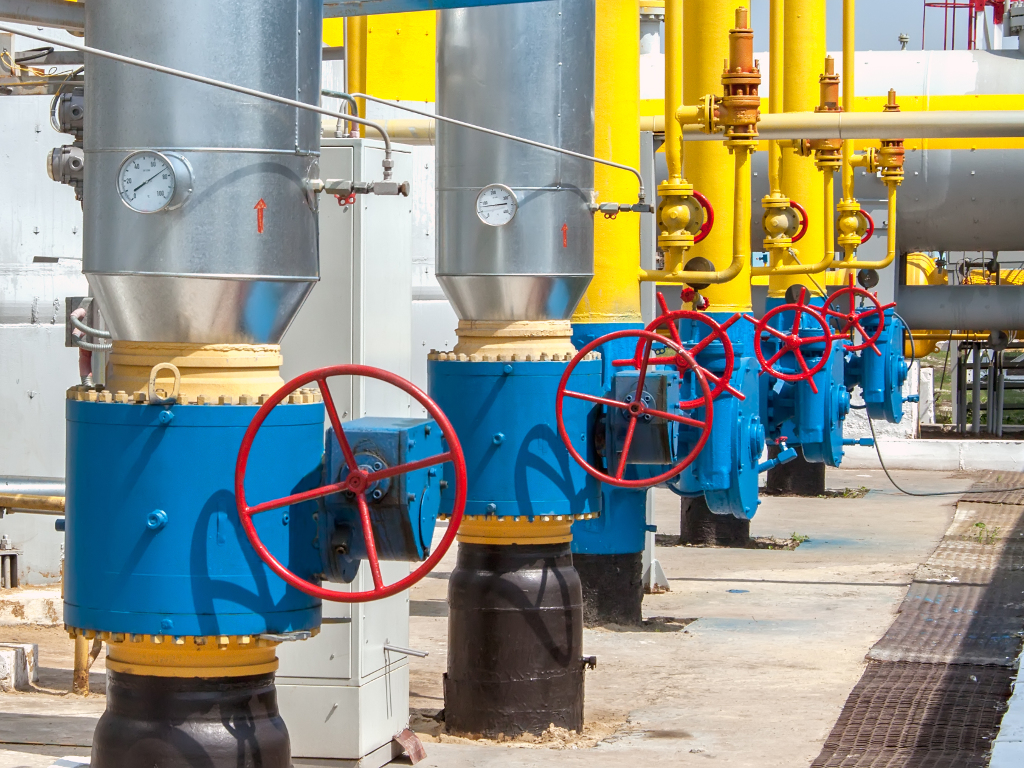
No, it wasn’t even RHPP Bistrica, whose construction is still pending, and which, in the year behind us, the authorities talked about almost on a weekly basis. This should perhaps not be surprising if we know that both NIS and the state’s announcements of investment in renewable energy sources were so frequently present in all media that the interest of media content consumers fell in inverse proportion.
So, what did people read in this field, many will probably ask themselves.
Investments in new energy facilities and utility infrastructure certainly interested readers, but not those projects that the authorities talked about almost every day, but those that are less frequently mentioned or, on the other hand, those that are very important, but which have been postponed for so long that, as one might say, “even God gave up on them.” Like the topic related to the “beautiful blue Danube,” which in Belgrade has not been blue for decades due to the equally long relevance of that topic - the construction of a sewage system on the left bank of the Danube.
If we can judge by the readership in the past year, eKapija readers can be divided into two teams, one consisting of those who are environmentally conscious and are keenly interested in the topics of wastewater treatment and the construction of waste processing plants, and the other consisting of those whose attention is attracted by investments in more traditional, albeit blacker (both literally and figuratively) energy sources.
(Photo: Shutterstock/Adam Radosavljevic)
1. RES are important, but (for Serbia) coal is coal
The shift towards renewable energy sources and investments in them is something that we have been hearing about for years from both the state and its company EPS. But if we revert to gambling lingo, both the state and the aforementioned company are still playing at a safe bet when it comes to the safest energy sources, which in the case of our country is coal and its exploitation. That it will certainly not be abandoned for quite some time, no matter how much the authorities are talking about green energy, is confirmed by the story about the plan of the EPS branch RB Kolubara to build the Rudovci dam and retention pond near Lazarevac, in order to continue coal exploitation in the Kolubara coal basin without any hindrance. There is a need to expand exploitation capacities and open new open pits. The Pestan River is a barrier on that route, so in order to protect the future mine from being flooded by water from the Pestan, works are planned to protect the mine from future flooding.
2. On the left bank of the beautiful blue (?) Danube in Belgrade
The left bank of the Danube (stylized as Dunavski venac - Danube Wreath) along Batajnica has been considered the most serious candidate for the status of new capital municipalities for years. And while both of these territories (which currently belong to the Danube municipalities of Palilula and Zemun) currently meet some of the conditions for such a thing, and some do not, it seems that an additional complication in this story is plaguing the future municipality of Dunavski venac - years of waiting for the start of construction of a modern sewage system in the settlements on the left bank of the Danube, colloquially known as cha-cha-cha [Borcha, Ovcha, Krnjacha - translator’s note]. It is true that the existence and functioning of a modern sewage system is neither an essential nor a formal condition that must be met in order to acquire the status of a new Belgrade municipality, but it is certainly paradoxical that, in the meantime, the settlements on the left bank of the Danube “gain independence” from Palilula without the “sewerage issue” in them having been resolved. The beginning of the end of this sewage and environmental tragedy on the Banat side of the Pancevo Bridge was indicated by the news published in late 2025 that the relevant ministries of our country had signed a contract with the EIB for the construction of a sewage network and wastewater treatment plant on Palilula. On that occasion, the state announced what has long been known even to the birds on the branches of the Palilula trees - that with the implementation of this project, Belgrade will for the first time receive a wastewater treatment system built to the highest European standards, and the residents of the left bank of the Danube, namely the settlements of Krnjacha, Borcha and Kotezh, a modern and efficient sewage system that will significantly improve sanitary conditions, quality of life and environmental protection. And to a certain extent, push official Belgrade towards fulfilling the parameters from Chapter 27 in its accession to the European Union.
3. Gas connection
It is not that energy stability and energy security and the future of Serbia were not of interest to our readers. Perhaps these were not articles related to NIS and the new long-term gas supply agreement with Russia, but they certainly were those related to the construction of new energy facilities and energy hubs. That our country’s plans for the construction of new gas interconnections with neighboring countries are very much in the focus of our readership is also indicated by the article on the completion of the documentation for the gas interconnector between Serbia and North Macedonia, whose commissioning is announced for 2028. The state emphasized that the construction of the gas interconnector was of strategic importance for strengthening the energy stability not only of Serbia but also of the entire region, and that this gas connection was very important, and apparently, our readers from Subotica to Djevdjelija agree.
Illustration (Photo: Kidsana Maimeetook/shutterstock.com)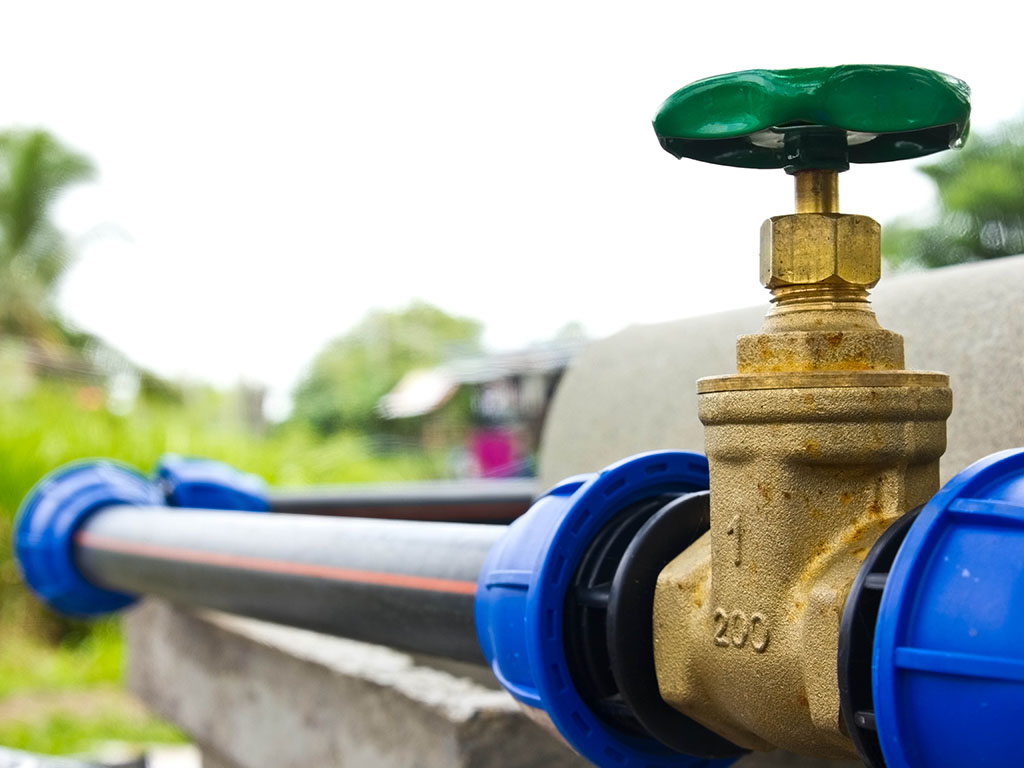
4. Toplica demands quality water supply
The average Serbian politician would probably assess with exasperation that the Serbian people cannot be pleased in any way. Some are looking for sewage, others for gas, others for water... always dissatisfied... But that’s how it is in a country where many areas are not networked with the necessary utility and energy pipes, so everyone, for good reason, has their own biggest problem. And if you ask the residents of the Toplica region, for them it’s precisely the water supply. The construction of the Selova dam and reservoir near Kursumlija, which began in 1986, has not yet been completed, and all work has been suspended for the past ten years. As announced, at the beginning of this year, work is planned to continue and the complete implementation of the project is expected by 2030. This would provide water supply for half a million people in the Toplica district and the city of Nis. Presumably, that’s why the news that the Serbian Government has decided to initiate the development of amendments to the Spatial Plan for the Special Purpose Area of the Selova Reservoir Basin has been on everybody’s radar in the months behind us.
5. MOL’s business, but without NIS in the picture
When the Hungarian MOL is mentioned in our public in recent weeks, NIS is associated with it by the method of conditioned response. And it is not surprising, if we know that for weeks now, there’s been a bit of an energy soap opera going on in connection with the sale of NIS, in which one of the main players is MOL. But, although MOL is one of the key words in the energy story of Serbia these weeks, a story that has to do with MOL, and which has attracted a lot of attention from readers, in this case has nothing to do with NIS. The topic that has interested the public does not concern Novi Sad and the Novi Sad purchase story, but is situated a few kilometers away, in Sremski Karlovci. It is there that MOL plans to expand the fuel delivery terminal. This terminal of the MOL company was opened six years ago and it was the largest investment of the Hungarian oil company in Serbia, which will certainly change with the purchase of NIS from the Russians.
6. Step on the gas
It was almost 20 years ago that Severina first sang the song “Step on the Gas” and at the beginning of this summer of the Lord, that song could even be the leitmotif of this energy retrospective, because there is some secret connection between our readers and the gas topic. In addition to building interconnections with neighbors, our readers were equally interested in whether and when the EU would lower the energy barrier to Serbia when it comes to supplying Russian gas. In the autumn behind us, various pieces of information on this topic were served at the Serbian media buffet, from the fact that we were waiting for the tap to be turned off, freezing was announced, uncertain winters ahead... and then the European Commission decided to put an end to this topic. It made it clear that Serbia could still import Russian gas - despite various interpretations of the regulation that prohibits imports, but only to EU members. The European Commission emphasized at the time that, in parallel, alternative ways of gas supply were being sought and that these options were already being intensively discussed within the working groups of Belgrade and Brussels.
TENT (Photo: Shutterstock/VSBojan)
7. TENT A: Next level
Yes, until renewable energy sources “take part” to a greater extent in the Serbian energy mix, whether we like it or not, we still have to rely on our precious thermal power plants, and one of the most important in the country is the Obrenovac one - TENT. This certainly does not mean that our country is not simultaneously considering the use of alternative fuels. And one such project is precisely related to TENT A. Namely, last year, at this time, EPS submitted a request to the relevant ministry to determine the scope and content of the study on the environmental impact assessment of the project for the construction of a plant for the co-combustion of alternative fuels at the Nikola Tesla A thermal power plant, on blocks A3, A4 and A5. The project of co-combusting alternative fuels in this thermal power plant was planned to increase electricity production. As specified at the time, alternative fuel, with a similar composition and higher thermal power than the main fuel lignite from the Kolubara mining basin, produced from municipal non-recycled waste, will be used as a supplementary fuel.
8. Step on the gas... from Turkey
Gas security is obviously more important for our region than any other type of energy security. Even if it comes to us through the connection of our former five-hundred-year ruler in these regions, Mashallah! For months, our public has been focused on whether Serbia will extend the gas agreement with Russia, instead of focusing on other geopolitical regions, for example, the one stretching from Trabzon to Antalya. The talk that Turkey’s state-owned company Botas could export gas to Serbia in the first quarter of 2026 to ease the pressure on the contract and Serbia’s supply related to Russian gas, provided that Turkey has surplus gas available, was quite refreshing. Energy thinking in this direction was prompted by an analysis by Turkish energy analyst Ugur Yildirim for the London-based energy news service Argus Media. The analysis indicated that Turkey had sufficient capacity to process imported LNG, and that in periods when there was free gas, part of that surplus could also be exported to Serbia, even though Turkey’s domestic consumption was growing rapidly.
9. “Greener” TENT
Gas, TENT, gas, TENT... No, the keyboard is not failing. Rather, the focus of our readers was largely on these energy niches and various topics related to gas supply and the operation of our largest thermal power plant. And, TENT being TENT, in addition to being important in the energy stability of Serbia, is also a considerable polluter, which has been commonplace for years and something that does not need to be emphasized too much. But, in this case, it still needs to be. Because it is precisely the problem of pollution caused by TENT that, if the announcements are to be believed, the authorities would like to solve to a significant extent, which is why last year EPS submitted a request to the Ministry of Environmental Protection to determine the scope and content of the study on the environmental impact assessment of the project for the reconstruction of the combustion system in order to reduce nitrogen oxide emissions (“DeNOx”) by primary measures and the replacement of parts of the boiler pipe system on block B2 of the Nikola Tesla B thermal power plant in Obrenovac. This is a modernization of the boiler, which was installed by RAFAKO in the 1980s, in order to improve energy efficiency, extend the plant’s service life and significantly reduce harmful gas emissions. The new system is intended to reduce nitrogen oxide emissions below 200 mg/Nm3, which is in line with European Union regulations and the obligations of the National Emission Reduction Plan (NERP).
Smederevo (Photo: Shutterstock/DMZ001)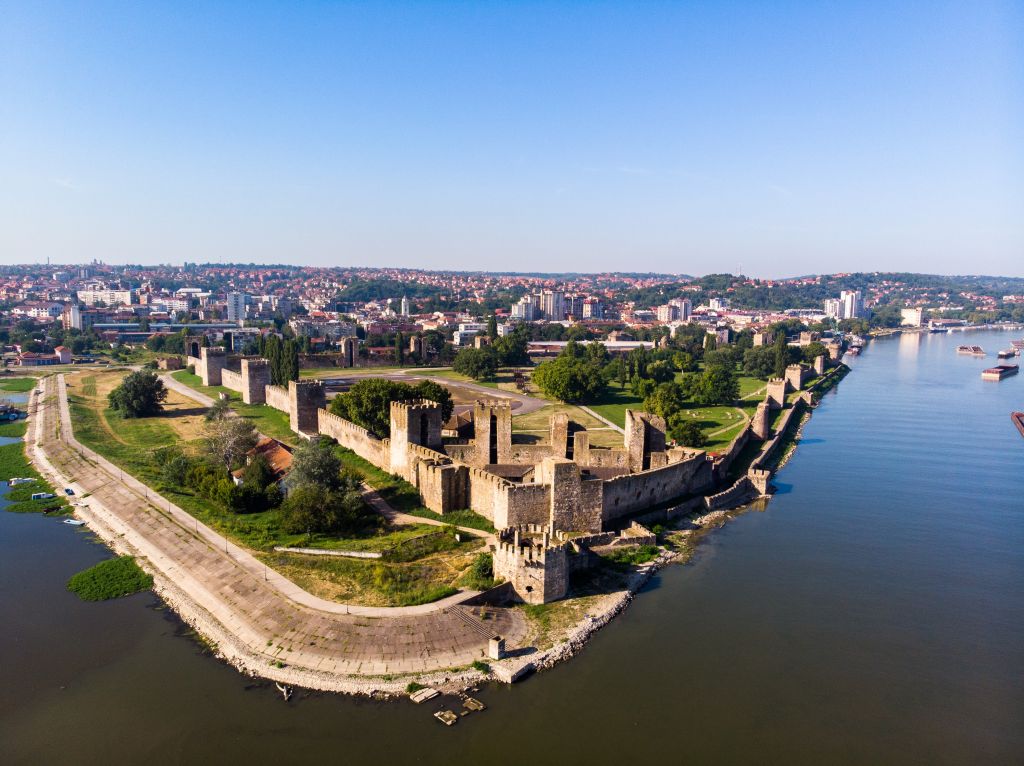
10. Vampiraca the Unifier
Smederevo has been a city of iron and grapes for decades, but like the residents of Toplica, the people of Smederevo also need a safe water supply. Although, as practice teaches us, announcing certain steps does not necessarily mean that they will be implemented in the foreseeable future, this does not mean that certain announcements do not still attract considerable attention. One of them is last year’s announcement that the Serbian Government had determined public interest in expropriating real estate for the purpose of building a water reservoir at the “Vampiraca” location in Smederevo. The fact that this project has a better fate than some similar ones in Serbia, when it comes to implementation, is also indicated by the writings of the local Smederevo media, which at one time reported that it was the one that had managed to unite the local government and the opposition.
We invite you to see which investments marked the year 2025 in the areas of REAL ESTATE, TRADE CENTERS, TRANSPORT, AGRICULTURE AND FOOD INDUSTRY, TOURISM and INDUSTRY AND MINING.
D. Aleksic
Companies:
 MOL Hungarian Oil and Gas Budapest
 MOL Serbia d.o.o. Beograd
 NIS a.d. Novi Sad
 Elektroprivreda Srbije ad Beograd
 Evropska investiciona banka EIB
 Ministarstvo zaštite životne sredine Republike Srbije
Tags:
MOL
Thermal Power Plant Nikola Tesla Obrenovac
TENT ad Beograd
EIB
Vampirača Smederevo
RB Kolubara
construction of dam and retention pond Rudovci near Lazarevac
gas interconnection Serbia North Macedonia
import of gas from Russia
import of gas from Turkey
water supply in Toplica area
water supply in Smederevo
expansion of MOL terminal in Sremski Karlovci
Ugur Yildirim
SPSPA of Selova Reservoir Basin
2025 retrospective utility infrastructure and energy
Comments
Your comment
Naš izbor




Most Important News
Full information is available only to commercial users-subscribers and it is necessary to log in.
Pratite na našem portalu vesti, tendere, investicione projekte, grantove i pravnu regulativu.
Registracija na eKapiji vam omogućava pristup potpunim informacijama i dnevnom biltenu
Naš dnevni ekonomski bilten će stizati na vašu mejl adresu krajem svakog radnog dana. Bilteni su personalizovani prema interesovanjima svakog korisnika zasebno,
uz konsultacije sa našim ekspertima.