


 Izdanje Srbija
 Serbische Ausgabe
 Izdanje BiH
 Izdanje Crna Gora


 News
News


Ada Bridge originally intended only for light rail traffic, tram line project done later
Source: eKapija
 Friday, 18.07.2025.
11:10
Friday, 18.07.2025.
11:10
Friday, 18.07.2025.
11:10
 Comments


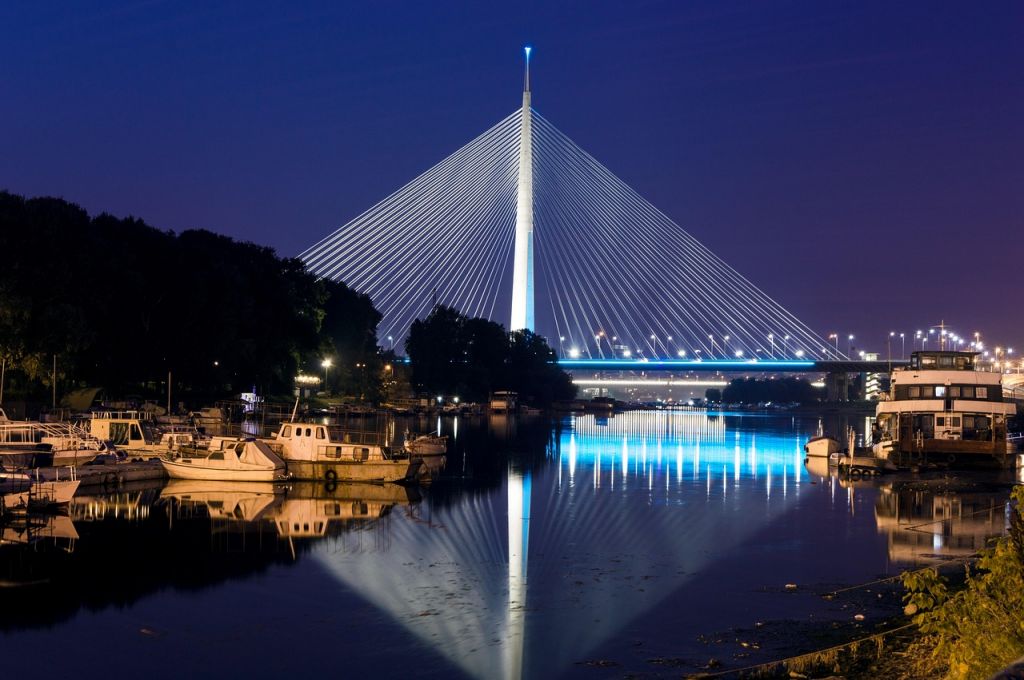
(Photo: Djordje Jovanovic from Pixabay)
One fact is clearer, however, two days after eKapija published unofficial information that all tram traffic over this bridge would most likely have to be suspended soon (because it is currently the only tram route to and from the Sava tram depot in New Belgrade). The conceptual design for the Ada Bridge, for the construction of which the Slovenian company Ponting was hired, did not envisage tram tracks with wooden crossties, but a different type of rail corridor - a light rail system.
– The conceptual design of the bridge, which was developed by Ponting, envisaged a passage for two tracks for light rail traffic (LRT). The main, or rather, the construction project was an integral part of the construction, or rather, the construction contract (design-built project), and it did not include the railway project - it was a subsequent project after the completion and handover of the bridge. I do not know who developed that project. They could explain that to you at the Belgrade Land Development Public Agency – explains Dr. Viktor Markelj, director of Maribor-based Ponting and one of the designers of the Ada Bridge, to eKapija.
As Markelj further specifies, Ponting also carried out an independent control of the main project.
– The main project includes all the loads and impacts of the LRT railroad on the bridge. However, the rail project itself (rails and other things), therefore, was a separate, additional project outside the contract for the bridge, so I do not know the author of that project – emphasizes Markelj.
This clearly indicates that the preliminary and main design for the tram tracks was subsequently and separately developed, largely after the main structure of the bridge was completed and opened to traffic on January 1, 2012. According to unofficial information we obtained from the City Administration, this was exactly the case.
– The preliminary and main design for the construction of the tram track was developed by the “JKP Beograd put” approximately two years after the bridge was built and opened to traffic. That separate design was also developed in accordance with all legal regulations – stated our source from the City Administration.
The construction of the track over the Ada Bridge itself, primarily if it is seen as an additional load on the bridge, is not disputable because, in addition to the fact that the rail corridor was envisaged by Ponting’s preliminary design, the space for the rail corridor was certainly planned, developed and left for laying the tracks when the bridge itself was built. What is still not clear is who and when exactly ordered the creation of a separate project for the tram corridor, as well as who determined that wooden crossties would be installed between the rails, rather than concrete or possibly stone blocks, and why.
There are still no official answers regarding these details, but if the allegations of unofficial sources of eKapija that wooden crossties were chosen because the railway designer did not have information on the permitted load of the bridge are correct, an additional question arises as to how this is possible and why this information was not provided to the railway designer for review. The problem is not that the conceptual design envisaged a corridor for the light rail system and that only later, after the completion of the bridge, a separate project for the tram corridor was prepared, but it is unclear why the data on the permitted load of the bridge was not available in order to see whether and what type of substrate could be installed instead of wooden crossties. Because the main problem is not that wooden crossties were installed, which are now largely worn out, but that they were coated with bio-impregnation due to environmental standards, which was obviously not a good enough substitute for the agents used in classic impregnation.
Some of these doubts may be clarified in the coming days, as we are still waiting for answers to the inquiries sent to the Ministry of Construction, Transport and Infrastructure and the Belgrade Land Development Public Agency.
The official response, let us recall, came only from the Belgrade GSP, and it confirmed our findings that the worn-out wooden crossties on the tram line on the Ada Bridge would be replaced in the coming period because, as the GSP stated, “there is a need to replace a certain number of them,” adding that the work would be carried out without stopping tram traffic.
– Since there is a need to replace a certain amount of wooden crossties, these works would be carried out without stopping tram traffic and would last about 45 days (a rough estimate, because the works would take place at night). The works would be carried out because the time has come to replace the designed wooden crossties whose warranty period has expired. The works will be carried out according to the approved project – GSP stated, without specifying who approved the project and how many crossties will be replaced.
However, this announcement, according to information from experts we spoke with, indicates that investment maintenance will not be carried out, which involves detailed repair and replacement, but rather classic regular maintenance of the tram line, within which a small number of the most critical, most damaged, or worn-out crossties will be replaced with new, also wooden crossties. This is, let us remind, work that GSP has previously carried out on the tram line on this bridge.
Dejan Aleksic


U blizini:

410 m

460 m

470 m

550 m
Fotografije:


Opis:
Vidi sve
Companies:
 Ponting Inženirski biro d.o.o Maribor
 JP Direkcija za građevinsko zemljište i izgradnju Beograda
 Ministarstvo građevinarstva, saobraćaja i infrastrukture Republike Srbije
 JKP Beograd put Beograd
Tags:
Ponting inženirski biro doo Maribor
Belgrade Land Development Public Agency
Ministry of Construction Transport and Infrastructure
JKP Beograd put
Ada Bridge
Viktor Markelj
tram tracks on Ada Bridge
wooden crossties
Comments
Your comment
Naš izbor



Most Important News
Full information is available only to commercial users-subscribers and it is necessary to log in.
Pratite na našem portalu vesti, tendere, investicione projekte, grantove i pravnu regulativu.
Registracija na eKapiji vam omogućava pristup potpunim informacijama i dnevnom biltenu
Naš dnevni ekonomski bilten će stizati na vašu mejl adresu krajem svakog radnog dana. Bilteni su personalizovani prema interesovanjima svakog korisnika zasebno,
uz konsultacije sa našim ekspertima.