


 Izdanje Srbija
 Serbische Ausgabe
 Izdanje BiH
 Izdanje Crna Gora


 News


Milanovic (Fiscal Council): Entire investment cycle of budget-funded projects should be examined
Source: Beta
 Thursday, 29.10.2026.
15:06
Thursday, 29.10.2026.
15:06
 Comments


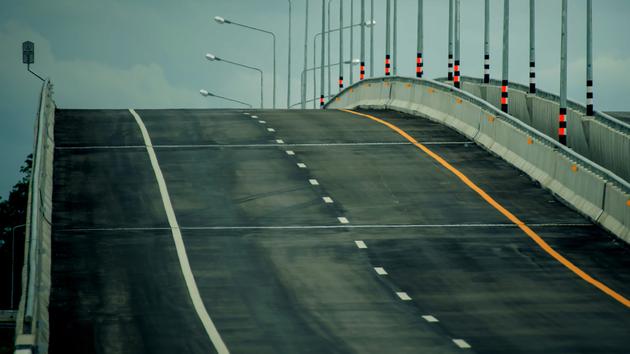
Illustration (Photo: ssguy/shutterstock.com)
– These three state investments, the largest individual ones, exhibit certain common characteristics that may point to more serious systemic weaknesses in the planning and management of public investments – said Milanovic. He addressed questions regarding whether things might change with the arrival of a new administration, why these projects are so costly and the price the state pays for its own lack of preparation.
Preparations for the Morava Corridor began well before the commercial contract was signed. In February 2017, the Government of Serbia established a working group to carry out the project in collaboration with the companies Bechtel and Enka.
In September 2018, a Memorandum of Understanding regarding infrastructure was signed between Serbia and the United States. It was during this phase that the initial estimated project value, approximately 800 million euros, first emerged.
Subsequently, through a Government decision, the project was designated as one of "special significance." In July 2019, a specific law was enacted, establishing a unique legal framework for the project's implementation. This also involved deviations from standard procedures for selecting contractors, as well as from specific processes regarding project preparation and implementation.
– The commercial contract set the value at 943 million euros, which already represented an increase of nearly 18 percent over the previously stated target value of 800 million euros. However, the issue is that even this 943 million euro figure did not necessarily represent the final price. In certain official documents, the planned value was presented as 943 million euros plus additional costs, while for specific tasks, such as the regulation of the West Morava riverbed, provision was made for billing based on unit prices – explained Milanovic.
According to him, this raises questions about how the initial value was determined in the first place, the level of detail in the project documentation at the time and the extent to which the actual scope and costs of all necessary works were known when the contract was signed.
Milanovic noted that, according to data from the Fiscal Strategy, the estimated project value by 2026 had reached approximately 252 billion dinars, roughly 2.1 billion euros. This is more than double the originally agreed-upon contract value and approximately 2.6 times the initial target estimate from 2018. Furthermore, it is not certain that this will be the final cost of the project.
– In public statements, the contractor cited an escalation clause, the pandemic and the war in Ukraine. Such clauses do indeed exist in international construction practice and are not, in themselves, controversial. However, their existence does not automatically explain an increase in the total project value by more than a billion euros – Milanovic stated.
Taxpayers will foot the bill for this project. It is worth recalling that Serbia took out loans from foreign banks on four separate occasions to finance this motorway.
Milanovic stated that the Morava Corridor is in its final stages, with physical completion exceeding 92 percent. Consequently, there is no room for substantive changes. He suggested that this presents an ideal opportunity to conduct a detailed analysis of the objective circumstances, potential oversights and key bottlenecks that led to such a drastic increase in costs and to publicly present the findings as lessons for future projects.
The Belgrade-Zrenjanin-Novi Sad project faces a somewhat different, yet potentially equally significant, issue.
– The initial plans envisioned the construction of an expressway, rather than a motorway. According to 2018 documentation from the Ministry of Construction, the estimated cost for the Zrenjanin-Centa–Belgrade (Borca) section was approximately 110 million euros, with an additional 100 million euros for the Zrenjanin-Novi Sad route. In other words, at that time, the project was valued at roughly 210 million euros – Milanovic noted.
He emphasized that this estimate cannot be directly compared to the price ultimately agreed upon in the contract, as the entire concept of the project was altered in the interim.
This shift concerns both the classification of the roadway and its technical scope, he notes. However, this very change raises a significant economic question - on the basis of what analysis was the decision made to build a much more expensive motorway instead of an expressway and was this decision grounded in a proper assessment of traffic demand, as well as costs and benefits?
In January 2021, the Government, by way of a formal conclusion, designated this project as one of special significance. Although no specific law was enacted, unlike in the case of the Morava Corridor, the project was subject to special procedures stipulated by the legal framework for linear infrastructure projects in effect at the time.
– A commercial contract for design and construction works was signed in November 2023, with a contract value of nearly 1.6 billion euros, excluding VAT. The new project entails the construction of a 105-kilometer-long motorway, as well as additional infrastructure, including a parallel non-commercial road along the Zabalj-Novi Sad route – Milanovic noted.
He added that the manner in which the contract was subsequently elaborated upon is particularly noteworthy. In September 2024, an annex was concluded that modified the payment schedule for the contractor. Subsequently, in May 2025, a specific annex to the framework commercial contract was signed, defining six project phases in terms of their value and scope of work.
That same month, an annex was also concluded to govern the financing and scope of the first phase. A report from October 2025 further mentioned annexes for subsequent phases that were still in preparation.
– Nearly a year and a half after the signing of the original 1.6-billion-euro contract, the contractual documentation was still being supplemented with provisions regarding the value, scope, and financing of individual phases. Phased contracting and financing for large infrastructure projects is not, in itself, unusual. However, the crucial question is what was precisely established in the original contract, versus what was only defined through subsequent contractual arrangements – said Milanovic.
He pointed out that if unit prices, the total scope of works and the rules for calculation were clearly established in advance, then the subsequent division into phases might simply be an organizational or financial matter.
– But if key elements regarding the scope and value of the works were essentially determined only after the contractor had been selected, this could pose a risk to the state – Milanovic stated.
It is worth recalling that the contract for this road was signed in 2023 with the Chinese company, China Shandong International Economic and Technical Cooperation Group.
He notes that the road is currently in the initial phase of construction, with physical progress standing at only about 10 percent. According to him, this leaves room to re-examine the project and to disclose the key elements of the contract and its annexes with the contractor.
If, as he stated, a new cost-benefit analysis, taking into account contractual obligations and potential compensation costs, shows that it is economically justified, consideration should be given to modifying the scope of work and the technical solution, including the possibility of reverting to the original concept of an expressway.
Djerdap 3 is a project intended to be implemented under a Serbian-American agreement on energy cooperation. Consequently, it is exempt from public procurement regulations. At the time, the invitation to become a strategic partner to the state was extended exclusively to American companies, and only Bechtel responded.
According to the latest bits of information, a working group is currently reviewing this proposal. There is no indication that any agreement has been signed. However, a contract was recently signed with a consortium led by the Jaroslav Cerni Institute for the preparation of planning documents and a portion of the technical documentation.
– Djerdap 3 is currently in the phase of developing project and technical documentation. This makes it an interesting case for comparison with the previous two projects, as it allows for the assessment of potential risks before the state enters the phase of major construction works – says Milanovic.
According to planning documents from 2023, the estimated value of the project was approximately 1.4 billion euros. Just two years later, in May 2025, the official estimate was increased to approximately 2.6 billion euros.
This represents an increase of about 86 percent, even though the project has not yet reached the implementation phase where typical additional construction works might arise.
– Regarding Djerdap 3, it is particularly important to note that this is a technically highly complex energy project. Costs here depend on numerous factors: geological and hydrological conditions, the design of underground structures and reservoirs, power generation equipment, grid connection and financing terms – said Milanovic.
Furthermore, he noted that the economic viability of a pumped-storage hydroelectric plant cannot be assessed solely based on construction costs. Instead, it is necessary to evaluate its role within the power system, future energy storage requirements, projected revenues and systemic benefits, as well as alternative methods for ensuring flexibility within the power system.
Therefore, according to him, a key question is how reliable the latest estimate of 2.6 billion euros actually is, and upon what project documentation it is based. If the estimated investment value has already increased by 1.2 billion euros during the preparatory phase, it remains an open question as to how much further costs might rise during construction, especially considering the limited domestic experience in implementing and supervising projects of this nature.
– Djerdap 3 serves as an excellent test for the new Government to demonstrate how a strategically significant investment can be prepared and executed based on an objective feasibility analysis, reliable input data and transparent decision-making – said Milanovic.
He added that these three projects raise broader questions regarding how the state prepares, implements and oversees major public investments.
In this process, he noted, four interconnected problems stand out. First, the exclusion of major projects from standard procedures designed to ensure cost control, second, the shortening of the preparatory phase, which shifts risks that have not been fully assessed into the construction phase, third, the assumption of significant contractual obligations before key project elements have been sufficiently developed, and finally, a lack of transparency in justifying subsequent increases in project value.
– This is often explained in vague, general terms, citing rising costs of materials and labor, even though the scale of the increases makes it highly unlikely that this is the sole reason – stated Milanovic.
According to him, for large-scale infrastructure projects, thorough preparation is not merely a formality. It is a vital mechanism for controlling future costs.
– The more effectively the preparatory phase is carried out, the lower the risk that actual costs and timelines will deviate significantly from the plan. In local practice, however, there is intense pressure to shorten preparatory phases as much as possible and to have them overlap. For instance, the state often simultaneously commissions the development of a preliminary design and a spatial plan for a special-purpose area, with deadlines spanning only a few months – said Milanovic.
Such acceleration, he pointed out, merely shifts risks to the construction phase, where addressing them becomes significantly more costly.
– It is only during the execution of works that it may emerge that geological conditions are more complex than anticipated, requiring additional structural elements or changes to construction methods, or that the actual volume of work deviates significantly from what was planned. The consequences include additional costs, extended deadlines and renewed pressure on the budget. Thus, the time the state seemingly saves during the preparation phase may end up costing it many times over during project implementation – said Milanovic.
Rising prices for construction materials, supply chain disruptions during the pandemic and the repercussions of the war in Ukraine have undeniably impacted the construction industry. However, as Milanovic noted, this does not mean that every increase in the cost of infrastructure projects can be attributed to inflation.
– International construction contracts often include escalation clauses that allow for the adjustment of agreed-upon prices in response to cost fluctuations. Yet, an increase in the price of steel or cement does not automatically mean that the total value of a highway project increases by the same percentage – Milanovic assessed.
Companies:
 Fiskalni savet Republike Srbije
Comments
Your comment
Naš izbor

Most Important News
Full information is available only to commercial users-subscribers and it is necessary to log in.
Pratite na našem portalu vesti, tendere, investicione projekte, grantove i pravnu regulativu.
Registracija na eKapiji vam omogućava pristup potpunim informacijama i dnevnom biltenu
Naš dnevni ekonomski bilten će stizati na vašu mejl adresu krajem svakog radnog dana. Bilteni su personalizovani prema interesovanjima svakog korisnika zasebno,
uz konsultacije sa našim ekspertima.