


 Izdanje Srbija
 Serbische Ausgabe
 Izdanje BiH
 Izdanje Crna Gora


 News
News


Airport collector dug as subway tunnel – Srbijavode completes construction of underground collector for draining treated stormwater
Source: eKapija
 Wednesday, 02.09.2026.
12:56
Wednesday, 02.09.2026.
12:56
Wednesday, 02.09.2026.
12:56
 Comments


Presentation of the technology for constructing the Nikola Tesla Airport Galovica collector (Photo: Print screen/Urbanisticki projekat)
The system, with a total length of 1,650 meters, with an internal diameter of 3.20 meters (for which the excavation was carried out using modern TBM technology (“mole”), with the installation of a total of 1,375 reinforced concrete rings), was announced as a project that would “contribute to improving the protection and safety of fellow citizens,” as Srbijavode director Goran Puzovic once stated.
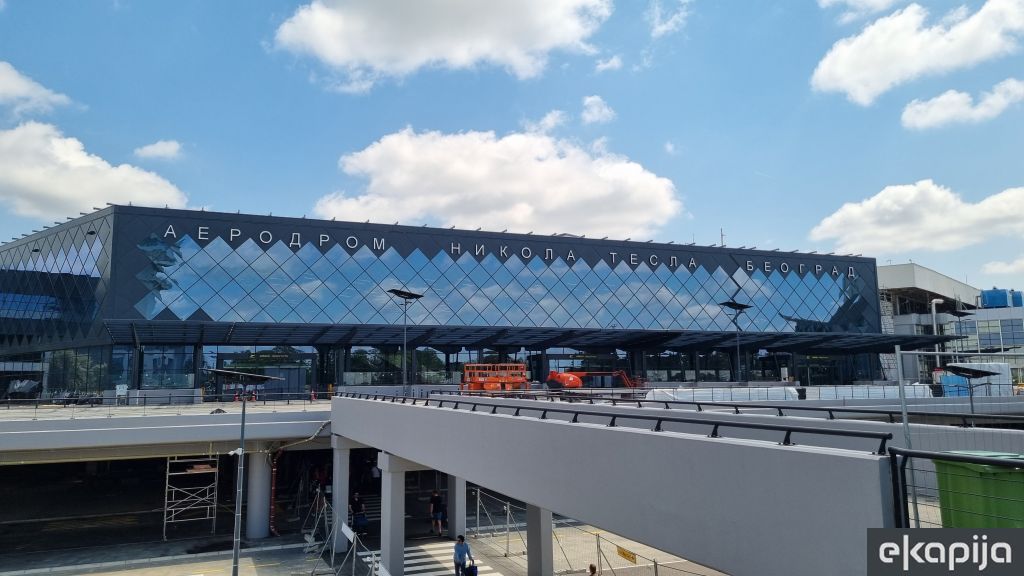
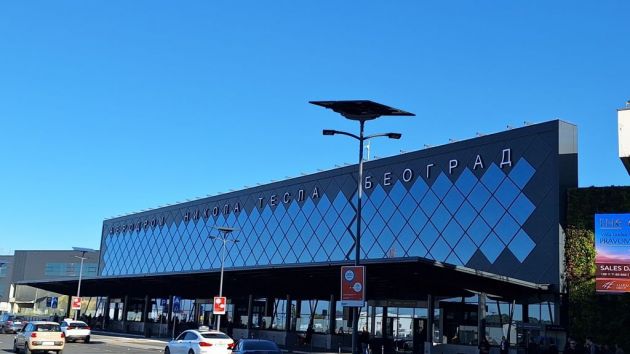
eKapija recently reported that the Serbian government had also allocated some money from the budget for the Belgrade Nikola Tesla Airport and for the construction of a collector, or “a system of large pipes that will collect rainwater from the airport areas, purify it and drain it into the existing Galovica canal system.”
Wastewater and atmospheric water collected by the Galovica canal flows into the Sava at the Ostruznica Bridge (near the Sava embankment between New Belgrade and Ostruznica).
The Galovica canal, which is about 50 kilometers long, collects water from the Srem fields and parts of the municipalities of Surcin and New Belgrade, and since most of the surrounding settlements and industrial facilities often do not have a purification system in place, untreated municipal and industrial wastewater ends up in the canal.
The main construction and tunneling works on the construction of the Nikola Tesla Airport - Galovica collector were completed on August 17, and as part of the project, the inlet and outlet structures were built and all necessary works on the transport and removal of excavated material were carried out.
During the works, special attention was paid to controlling the groundwater level, in order to ensure stable and safe working conditions.
The new system has a capacity of more than 25 cubic meters per second, which is a significant increase compared to the existing collector and ensures much greater safety of the airport’s operation, especially in conditions of intense rainfall.
– The collector enables more reliable and controlled drainage of stormwater in the area of Nikola Tesla Airport and the Galovica Canal, thus reducing the risk of water retention and flooding due to heavy rainfall. Such facilities represent an investment in the long-term safety of citizens and the resilience of Belgrade to the increasingly pronounced consequences of climate change – said the director of Srbijavode, Goran Puzovic.
He emphasized that at the same time “this project is important for the further infrastructural development of the airport zone, as well as for Serbia's overall preparations for the upcoming International Specialized Exhibition EXPO 2027.”
Illustration (Photo: Otpadne vode Podgorica/Printscreen)
Such systems are most often used in settlements or industrial zones where there is no direct connection to the central city sewer, as well as in modern ecological projects.
In the first phase, wastewater is collected and transported to a pumping station, and if the terrain is flat or hilly, underground pumps are used to lift the water and push it further through the system.
When the water reaches the underground collector, it first passes through mechanical filters, where it is cleaned of plastic, leaves, and textiles.
Heavier sludge and sand fall to the bottom, while grease, oil, and foam float to the surface and these layers are periodically removed mechanically.
Biological treatment is a key stage where organic matter (what is dissolved in water) is removed, followed by Aeration (introduction of oxygen) - air is blown in via a compressor. Oxygen is necessary for the development of “good” aerobic bacteria.
In the microbiological decomposition stage, these bacteria feed on organic pollution from the water and naturally clean it. Additionally, the water can pass through fine filters and get disinfected.
Often, in these processes, waste sludge is dried and used as compost, fertilizer or taken to special landfills.
Collectors are popular in modern hydro systems because they save space - the entire system is underground, so the surface above it can be a park, parking lot or yard, there are no unpleasant odors (the system is hermetically sealed and equipped with bio-air filters) and it prevents the discharge of fecal water into groundwater and soil pollution.
Until the construction of the new collector, stormwater from the airport site was evacuated by the airport collector, which at the roundabout flowed into the collector, which then evacuated stormwater into the Galovica canal.
An internal stormwater sewer network was built within the ANT complex, which is not under the jurisdiction of the PUE “Belgrade Water Supply and Sewerage”.


U blizini:


280 m

Fotografije:



Tags:
Public Water Management Company Srbijavode
Nikola Tesla Airport
Galovica canal
Goran Puzović
underground collector Nikola Tesla Galovica Surčin Belgrade
Comments
Your comment
Naš izbor


Most Important News
Full information is available only to commercial users-subscribers and it is necessary to log in.
Pratite na našem portalu vesti, tendere, investicione projekte, grantove i pravnu regulativu.
Registracija na eKapiji vam omogućava pristup potpunim informacijama i dnevnom biltenu
Naš dnevni ekonomski bilten će stizati na vašu mejl adresu krajem svakog radnog dana. Bilteni su personalizovani prema interesovanjima svakog korisnika zasebno,
uz konsultacije sa našim ekspertima.