


 Izdanje Srbija
 Serbische Ausgabe
 Izdanje BiH
 Izdanje Crna Gora


 News
News


“Investing in the Future – Powering a New World”: We present eKapija’s new special edition newsletter
Source: eKapija
 Thursday, 26.03.2026.
11:32
Thursday, 26.03.2026.
11:32
Thursday, 26.03.2026.
11:32
 Comments


(Photo: eKapija)
In the world of business, as well as on the sports field, the result is always a reflection of strategy, discipline and, above all, the choice of teammates. In the game for preserving a healthy environment, the Mozzart company has long ceased to be just an observer of environmental changes. They have become an active participant who, through the consistent application of the “Reuse, Reduce, Recycle” philosophy, creates new value for a cleaner future. As the director of the licensing sector at the company, Toma Vukić, emphasizes, for Mozzart, the green economy is not only the management of resources within the company, but also the active regeneration of nature where it is most vulnerable. During the year, they strengthened their ecological representation with projects that directly affect the preservation of Serbia’s biodiversity.
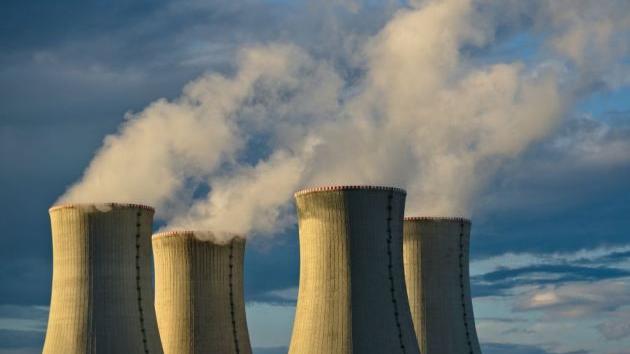
At a time when climate goals are becoming more ambitious, and the need for stable energy sources is becoming more pronounced, nuclear energy is once again coming into focus in global energy policies. In Serbia, this topic is becoming even more topical through discussions about the future energy mix, the possible construction of nuclear capacities, but also the improvement of existing systems for radioactive waste management and nuclear safety. Dalibor Arbutina, director of the company Nuclear Facilities of Serbia, spoke about these issues, pointing out the importance of nuclear energy for energy security, but also the concrete steps that Serbia is already taking in this area.
Food waste is one of the most paradoxical challenges of modern society. While huge amounts of fruit and vegetables are discarded every day, at the same time the need for sustainable sources of raw materials and solutions that reduce pressure on the environment is growing. This is how the project of the Faculty of Chemistry in Belgrade “Pure Way” was born, which was discussed by the project leader, Dr. Petar Ristivojević, associate professor at the Department of Analytical Chemistry of the Faculty of Chemistry, University of Belgrade. As he explained, this project not only reduces the amount of waste, but also turns it into a high-value resource, while simultaneously reducing greenhouse gas emissions and contributing to the development of a circular economy.
At a time when climate policies are increasingly shaping industrial flows, energy-intensive industries are at a turning point, between the pressure to reduce emissions and the need to maintain competitiveness. Although they are often seen as part of the problem, these sectors can play a key role in the transformation towards a more sustainable business model, through investments in new technologies, energy efficiency and the circular economy. How complex this process is in practice, what challenges companies face and what is needed to make the transition both environmentally and economically sustainable, is talked about by Stanislava Simić, director of the Association of Serbian Energy-Intensive Industry.
Battery storage combined with a solar power plant allows businesses to be more resilient to changes in electricity prices and significantly reduce costs. A quality system, even after 15 years, retains about 60% of its initial performance when operating with one cycle per day, while simultaneously reducing its carbon footprint. The company Conseko doo Belgrade, with more than 15 years of experience, offers complete solutions - from design and sizing to commissioning of battery systems. It also enables integration with the electricity market, including arbitrage and participation in the ancillary services market.
Nestlé has launched the “Together for Bees” project aimed at conserving bees through educating young people and improving local agri-ecosystems. In cooperation with agricultural schools, students participate in planting honey trees, setting up bee hotels and learning about sustainable, regenerative agriculture. The project aims to protect pollinators, increase biodiversity and strengthen the resilience of agricultural production. At the same time, the initiative raises awareness of the importance of bees for the food system and the future of food production.
Countries in the region are getting closer to fully integrating their electricity markets with the EU, which is a key step in ensuring competitive prices, greater system stability, resilience to energy shocks and support for the green transition. The connection process requires not only technical readiness, but also harmonization of legislation with EU regulations, which is currently at different stages in each of the countries in the region. The Energy Community tells eKapija how far Serbia, Montenegro and Bosnia and Herzegovina have advanced in this process.
As Serbia rapidly develops solar and wind power projects, the question of whether nuclear energy could become an important part of the future energy mix is increasingly being raised. According to Prof. Dr. Vladimir Stevanović from the Faculty of Mechanical Engineering, University of Belgrade, the reasons why many countries are considering or building nuclear power plants are the same for Serbia: reducing carbon dioxide emissions and lower long-term costs of electricity production.
Montenegro is preparing a new Law on Air Protection, which significantly improves the existing legal framework and introduces stricter environmental standards in line with the latest European Union directives. The main goal of this act is to protect the health of citizens and preserve the environment, while ensuring the constitutional right of every individual to clean and safe air. One of the key innovations of the law is the introduction of a legal mechanism that allows citizens to seek compensation for damage if their health is endangered due to air pollution and non-compliance with prescribed standards.
The Government of Serbia has established the Energy Balance for 2026, which, among other things, defines plans for the development of electricity production from renewable sources. According to this document, the installation of 180 MW of new wind farms and 56.7 MW of new solar farms is expected next year, totaling almost 237 MW of new capacity.
Montenegro plans a significant increase in electricity production in 2026, which should reach 3,798 GWh. As stated in the Energy Balance, a significant change in the structure by sources of electricity production is also planned this year, the main reason being a significant increase in production from wind farms and solar farms. Overall, production from renewable energy sources will account for about two-thirds of total electricity production.
Bosnia and Herzegovina is entering a strong investment cycle in renewable energy sources, with planned investments exceeding one billion euros in the coming years. The development of solar and wind farms, with the support of the private sector and energy companies, should significantly increase capacity and accelerate the energy transition. This process also brings broader economic benefits, including new jobs, increased investment and greater energy security.
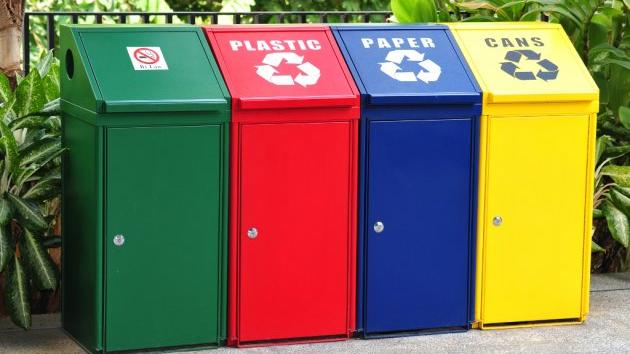
The abolition of recycling incentives at the beginning of 2026 has already led to disruptions in the system, with reduced waste inflow, rising costs and plants operating below capacity. As Sanja Knežević Mitrović, Head of the Environmental Unit at NALED, points out, the sector is currently caught between the old administrative and new market management models. She warns that, without clear rules and support in the transition period, there is a risk of further slowdown and destabilization of the system.
Sandra Pejović, in her author’s article for eKapija, points out that the circular economy is no longer a theory, but a necessary business strategy in the face of rising costs, informed consumers and stronger regulations. She particularly emphasizes that the FMCG industry must move to the “design-use-reuse” model in order to remain competitive. Although the Western Balkans region still operates predominantly linearly, she points out that the large percentage of waste in landfills shows enormous scope for moving to a more sustainable economic model.
See the full content of the newsletter HERE.
Companies:
 eKapija.com Beograd
 Mozzart d.o.o. Beograd
 Nestle Adriatic S Beograd
 Balkans Real Estate d.o.o. Beograd
 JP Nuklearni objekti Srbije Beograd
 Hemijski fakultet Beograd
 ASEII P.U. Beograd
 Conseko doo Beograd
 Vlada Republike Srbije
 NALED Beograd
 Mašinski fakultet Beograd
Tags:
Mozzart
Nestlé
Nuclear Facilities of Serbia
Faculty of Chemistry in Belgrade
Association of Serbian Energy Intensive Industry
Conseko doo Beograd
Energy Community
Government of Serbia
NALED
Faculty of Mechanical Engineering Belgrade
Toma Vukić
Dalibor Arbutina
Petar Ristivojević
Stanislava Simić
Sanja Knežević Mitrović
Sandra Pejović
Vladimir Stevanović
special edition newsletter
eKapija
Investing in the Future Powering a New World
Comments
Your comment
Naš izbor




Most Important News
Full information is available only to commercial users-subscribers and it is necessary to log in.
Pratite na našem portalu vesti, tendere, investicione projekte, grantove i pravnu regulativu.
Registracija na eKapiji vam omogućava pristup potpunim informacijama i dnevnom biltenu
Naš dnevni ekonomski bilten će stizati na vašu mejl adresu krajem svakog radnog dana. Bilteni su personalizovani prema interesovanjima svakog korisnika zasebno,
uz konsultacije sa našim ekspertima.