


 Izdanje Srbija
 Serbische Ausgabe
 Izdanje BiH
 Izdanje Crna Gora


 News
News


How can Montenegro turn the Adriatic into an economic growth engine? - On the wave of blue economy and opportunity for sustainable development and new jobs
Source: eKapija
 Monday, 22.09.2025.
22:39
Monday, 22.09.2025.
22:39
Monday, 22.09.2025.
22:39
 Comments


(Photo: Teodora Brnjoš)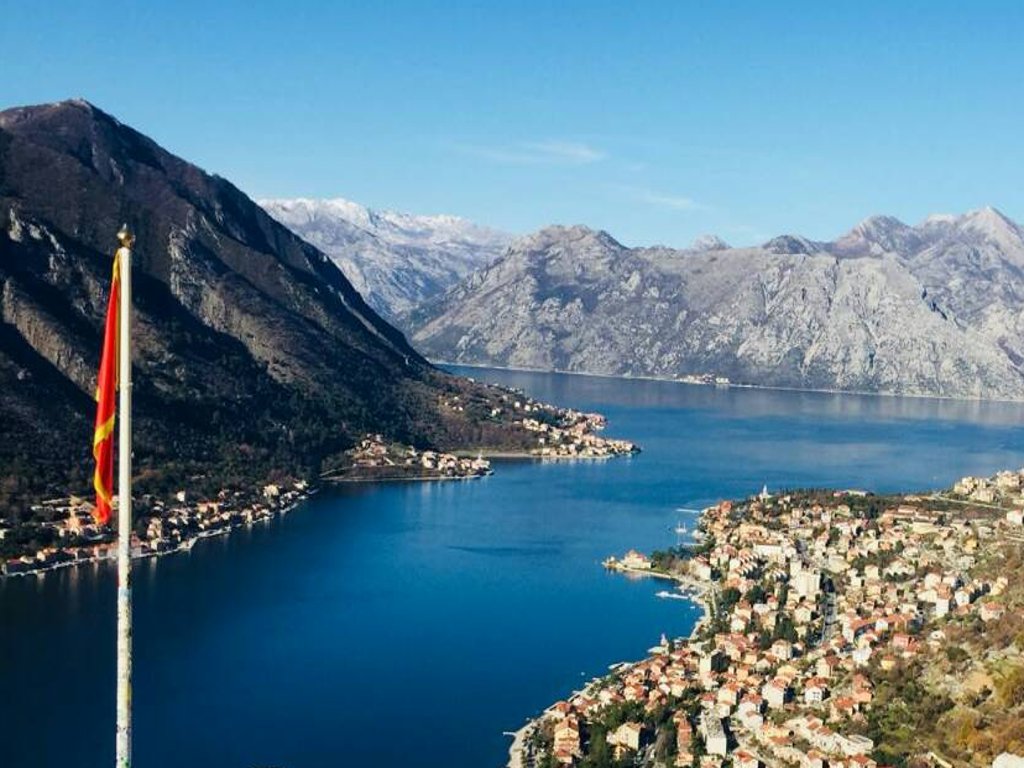
The blue economy is the use of marine and coastal resources in a sustainable manner, through activities that connect environmental protection with economic development. It includes sectors such as tourism, fisheries, aquaculture, maritime transport, energy and innovative technologies, and the goal is the long-term preservation of biodiversity and marine ecosystems, while creating new jobs and investments.
Since last year, Montenegro is a member of the European Partnership for Sustainable Blue Economy (SBEP).
- By becoming a member of SBEP, Montenegro joined European and international efforts aimed at preserving and restoring marine ecosystems, strengthening their resilience and developing climate-neutral and competitive activities. The vision of the Partnership is the transformation towards a sustainable blue economy by 2030 and the provision of preserved marine resources by 2050 - Milena Rmuš, secretary of the Coordination Committee for Energy Efficiency of the Chamber of Commerce of Montenegro, explains for eKapija.
For Montenegro, membership in SBEP also means concrete benefits: access to European funds and research programs within Horizon Europe.
- Transnational calls for project applications are expected to be announced in the following period, which will enable domestic institutions to join international projects and contribute to the development of innovative solutions for the sustainable use of marine resources. Thus, research and institutional capacities are strengthened, the application of modern technologies is encouraged, and the economy opens up new opportunities for investment and employment, while simultaneously preserving the Adriatic as a strategic resource - adds Rmuš.
Tourism, aquaculture and maritime transport sectors with the greatest potential
As sectors with the greatest potential for investment and development in the coming years, Rmus singled out sustainable tourism, aquaculture and maritime transport.
- These sectors, based on natural resources and the favorable geographical position of Montenegro, have the potential to contribute to the diversification of the economy, strengthening competitiveness and creating new jobs, especially in coastal communities - she explains.
According to her, Montenegro is already showing the ability to build a competitive advantage through sustainable tourism, fishing and aquaculture, as well as improving maritime logistics. However, Rmuš warns that development is hampered by an uneven regulatory framework and weaker coordination of institutions, and that a more integrated approach is needed, especially through maritime space planning and stable sources of financing.
- The improvement of these areas is limited by the uneven regulatory framework and weak coordination of institutions. As the blue economy is still regulated through sectoral regulations, a more integrated approach is necessary - especially through marine space planning, which would enable zoning, conflict reduction and better coordination between sectors. In addition, it is necessary to strengthen monitoring and reporting mechanisms, as well as provide stable sources of financing - Rmuš emphasizes.
She particularly emphasized the importance of cooperation between local communities, science and business.
- The cooperation of local communities, science and the economy is of essential importance for the development of the blue economy, but also the overall economy. Residents of coastal areas know best the specific needs and potentials of the area they manage, so their involvement ensures that solutions are adapted to real challenges and that measures are consistently implemented on the ground. The scientific sector brings knowledge, innovations and technologies that enable the sustainable use of resources and the monitoring of the state of the ecosystem, while the business community provides a framework for their practical application through business models and investments. When these actors are connected through joint projects and initiatives, a synergy is created that turns the blue economy into a real driver of development - the interlocutor of eKapija emphasizes.
Milena Rmuš (Photo: Privredna komora Crne Gore)
Tourism and excessive urbanization
As for tourism, Milena Rmuš believes that it can be a sustainable part of the blue economy in Montenegro, but only if it is developed through a model that combines ecological, economic and social aspects and is based on the responsible use of resources.
- At the moment, the pressure on the coast and the sea is significant, which is reflected in excessive urbanization, expressed seasonality, the load on the communal infrastructure and the growth of pollution, so it is clear that mass tourism is not sustainable by itself. At the same time, Montenegro has the potential to transform tourism into a blue economy segment that contributes to the preservation of natural values - through stricter control of spatial planning and construction, investment in ecologically acceptable infrastructure and the development of forms of tourism with minimal negative impact, such as ecotourism, nautical tourism and activities related to the protection of resources. In this way, the extension of the season and a more even distribution of tourist traffic would be achieved. A very important role is also played by local communities, whose involvement and promotion of authentic products can create greater added value, new jobs and support small and medium-sized businesses, while preserving the cultural and natural identity of the coast. Therefore, tourism in Montenegro can become a sustainable part of the blue economy only through careful management of coastal and marine resources, which harmonizes economic benefits with the protection of nature and biodiversity - she says.
According to her, the private sector is showing increasing interest in the blue economy, but the state can further encourage development through stimulating policies, tax breaks and easier access to international funds, along with education and training that strengthen the economy`s ability to recognize new trends and technologies.
As she points out, the Chamber of Commerce of Montenegro already participates as a partner in numerous projects financed through EU programs related to this area. Through them, the Chamber has the opportunity to educate the economy about circular practices, skills development and cross-border cooperation opportunities.
- The blue economy offers Montenegro the opportunity to use the natural resources of the sea and coast in a sustainable and innovative way, which can significantly contribute to economic growth and diversification of the economy - Milena Rmuš concludes.

Click here to see the entire Special Edition Newsletter
"Invest in Montenegro - A Smart Choice for Bold Visions"
read more
Tags:
Chamber of Commerce of Montenegro
Milena Rmuš
blue economy
Invest in Montenegro
Land of great opportunities
Invest in Montenegro Land of great opportunities
thematic newsletter
sustainable tourism
aquaculture
maritime traffic
Comments
Your comment
Naš izbor




Most Important News
Full information is available only to commercial users-subscribers and it is necessary to log in.
Pratite na našem portalu vesti, tendere, investicione projekte, grantove i pravnu regulativu.
Registracija na eKapiji vam omogućava pristup potpunim informacijama i dnevnom biltenu
Naš dnevni ekonomski bilten će stizati na vašu mejl adresu krajem svakog radnog dana. Bilteni su personalizovani prema interesovanjima svakog korisnika zasebno,
uz konsultacije sa našim ekspertima.