


 Izdanje Srbija
 Serbische Ausgabe
 Izdanje BiH
 Izdanje Crna Gora


 News


World Bank: Serbia's economic growth expected to accelerate to over 3% in 2026
Source: Beta
 Tuesday, 27.10.2026.
13:11
Tuesday, 27.10.2026.
13:11
 Comments


World Bank (Photo: bakdc/shutterstock)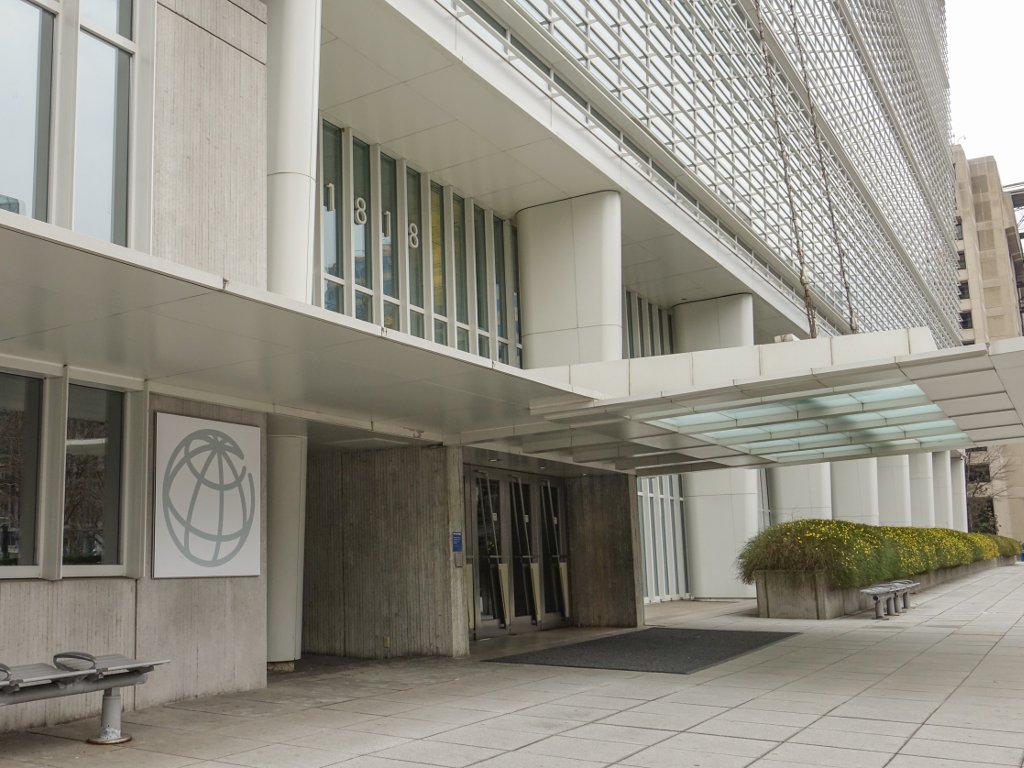
This recovery follows the restart of production at the oil refinery, increased output at Stellantis, a rebound in the services sector, and robust exports. On the expenditure side, growth in the first half of 2026 was primarily fueled by higher consumption, supported by slowing inflation and a strong expansion in household lending, while exports benefited from a recovery in the automotive industry.
On the production side, the services sector served as the main driver, the construction sector showed early signs of recovery, while industrial production made only a minimal contribution to overall economic growth. The unemployment rate fell significantly to 7.2%, a shift partly reflecting a transition from unemployment to economic inactivity, rather than a substantial increase in employment, the World Bank noted. Youth unemployment remained high at 22%, indicating a persistent mismatch between the skills possessed by the workforce and those demanded by the market, as well as limited employment opportunities.
In 2026, Serbia's fiscal deficit is expected to rise to 3.5% of GDP due to higher expenditures on wages, pensions and capital investments. However, overall public debt continues to follow a downward trajectory.
– This year's growth recovery in Serbia and solid macroeconomic results provide grounds for optimism. Our research frequently highlights the need for further structural reforms in Serbia to support the transition toward a fully-fledged market economy aligned with the EU. Furthermore, Serbia should strive to build an innovative and inclusive economy that offers quality, productive jobs to its citizens and enables the private sector to thrive – stated Aisha Williams, Country Manager for the World Bank Group in Serbia.
She added that such an economy, supported by stronger institutions and an improved business environment, would attract the private capital necessary for future growth. In the medium term, Serbia's economy is projected to grow at a rate of approximately 3 to 4 percent, driven primarily by consumption and, to a lesser extent, by investments.
It is also noted that significant downside risks remain. Specifically, the outlook could be negatively affected by persistent issues within the portfolios of large state-owned enterprises, limited progress in implementing structural reforms and uncertainty on both the global and domestic fronts. Continued economic growth should facilitate further poverty reduction through targeted social assistance, the provision of care for persons with disabilities and the elderly, and job-search and training support programs, all of which would complement macroeconomic progress.
In its latest Regular Economic Report for the Western Balkans, released today, the World Bank projects an acceleration of economic growth in the region by 2026, with this momentum continuing into 2027, fueled by consumption and investment. It further notes that the region's economy has proven resilient to shocks, and continues the trend of convergence with the European Union.
The report indicates that businesses can be supported in creating new jobs through the adoption of more efficient trade regulations, which would enable them to become more competitive in global markets.
According to projections, the average growth rate in Albania, Bosnia and Herzegovina, North Macedonia, Serbia, Montenegro and the territory of Kosovo and Metohija will reach 3.1% in 2026, an increase from the 2.6% recorded in 2025. Growth is also expected to accelerate to 3.4% in 2027, with the rate remaining at that same level in 2028.
– At a time of heightened geopolitical uncertainty and weak growth among key trading partners, the Western Balkans has once again demonstrated its economic resilience – said Xiaoqing Yu, World Bank Country Director for the Western Balkans.
However, she noted that resilience alone was not enough to help the region converge toward the average income levels of the European Union or to create the quality jobs that its citizens needed.
– Jobs are created by dynamic private sectors, and the next phase of growth requires efficient, predictable regulations and the removal of trade barriers, not just at the borders, but also behind them – she concluded.
The report also notes that multiple rounds of trade liberalization have led to the deep integration of the Western Balkans into global trade. Trade in goods and services reached 107% of the region's GDP in 2025, a level exceeding the EU average of 90%. Furthermore, service exports quadrupled between 2010 and 2025. The next generation of reforms should help businesses take fuller and more lasting advantage of this market access by reducing unnecessary costs within national borders, the report states.
It is also noted that while the average tariff rate on goods imported into the Western Balkans is approximately 6%, non-tariff measures add an additional cost of about 10%. These costs are exceptionally high, reaching over 20% in certain sectors of the agricultural economy. The costs resulting from restrictions on the cross-border provision of services are even higher, estimated at 29%.
Removing just half of the existing import barriers, such as unnecessary requirements for permits and authorizations, multiple inspections, certification procedures and rules regarding business establishment, could increase GDP by up to 12.5% in the medium term, according to simulation results presented in the report.
Higher import costs also hinder companies in this region from exporting and maintaining a presence in export markets. Only about one-third of new export ventures launched by firms from the Western Balkans survive their first year, and only 1% to 4% reach their fifth year. This has significant implications for employment, as exporters account for the vast majority of jobs in the region's manufacturing sector.
Furthermore, exporting companies tend to be larger and offer better wages compared to similar firms that focus primarily on the domestic market. Reforms should therefore focus not merely on reducing the volume of regulations, but also on improving them, through the simplification and digitalization of procedures, the introduction of risk-based inspection oversight, the recognition of harmonized standards and qualifications and the preservation of safeguards that serve legitimate public objectives, the World Bank stated.
Companies:
 Svetska Banka-WB Beograd
Comments
Your comment
Naš izbor



Most Important News
Full information is available only to commercial users-subscribers and it is necessary to log in.
Pratite na našem portalu vesti, tendere, investicione projekte, grantove i pravnu regulativu.
Registracija na eKapiji vam omogućava pristup potpunim informacijama i dnevnom biltenu
Naš dnevni ekonomski bilten će stizati na vašu mejl adresu krajem svakog radnog dana. Bilteni su personalizovani prema interesovanjima svakog korisnika zasebno,
uz konsultacije sa našim ekspertima.