


 Izdanje Srbija
 Serbische Ausgabe
 Izdanje BiH
 Izdanje Crna Gora


 News
News


World Bank: Growth in Europe and Central Asia economies slowing to 2.2%, Western Balkans accelerating to 3.1%
Source: Beta
 Wednesday, 07.10.2026.
09:07
Wednesday, 07.10.2026.
09:07
Wednesday, 07.10.2026.
09:07
 Comments


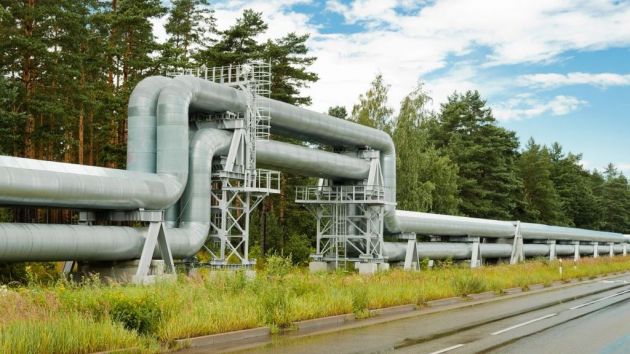
(Photo: Pexels/Anna Nekrashevich)
The growth slowdown is widespread, reflecting weaknesses across most countries in the region. Excluding Russia, which accounts for about 40% of the regional economy, the growth rate is expected to fall to 3% in 2026, compared to 3.7% in 2025. Disruptions in global commodity markets have had less impact on economic growth than initially anticipated, the World Bank noted in its report titled “Making AI Work: Jobs, Firms, and Productivity.”
– Developing economies in the region continue to demonstrate resilience, driven by reduced energy intensity, additional government measures, and strong domestic demand – said Antonella Bassani, World Bank Vice President for Europe and Central Asia.
As she pointed out, to boost competitiveness and help overcome the effects of a shrinking working-age population, countries in the region can harness the potential of artificial intelligence by strengthening the foundational educational and managerial skills of their workforce, while simultaneously preparing labor market and social protection institutions for these disruptive changes.
According to World Bank estimates, favorable labor market conditions, combined with rising real wages, remittances, tourism numbers, and public investment, have fueled economic growth. Governments have partially mitigated the impact of higher energy prices on households and businesses through temporary relief measures, although in some countries, these measures have also contributed to increased fiscal pressures.
Central Asia remains the fastest-growing sub-region, with an estimated growth rate of 5.8% in 2026, including projected rates of 9.6% for Kyrgyzstan and 7.9% for Uzbekistan. In the Western Balkans, the growth rate is expected to rise to 3.1% in 2026, up from 2.6% in 2025, while Poland stands out in Central Europe, with its growth rate projected to remain steady at 3.6%.
Growth in Ukraine is expected to slow to 1.2%, amid increasingly significant damage to critical infrastructure and hampered exports.
Rising energy prices have contributed to the persistence of high inflation, while slowing economic growth in the European Union and intensifying competition from other countries have negatively affected exports and industrial production, particularly within the region’s automotive supply chains, according to the World Bank.
Key downside risks continue to include further trade disruptions and the ongoing war in Ukraine, additional increases in energy, transport, and fertilizer costs, tighter global financing conditions and extreme weather events.
A specific analysis of artificial intelligence (AI) notes that AI is being introduced in the region faster than countries are currently able to absorb it. Roughly one in five workers, predominantly young and highly educated, holds a job significantly exposed to the impact of AI.
Currently, only one in ten enterprises uses AI, and primarily for basic tasks.
The region already possesses numerous prerequisites for AI, including near-universal mobile network coverage, affordable energy prices, and a large pool of workers with technical talent. However, the report states that the adoption of this technology is hindered by a lack of basic educational and managerial skills, integrated and interoperable data, and computing infrastructure capacity.
– While the private sector should be the primary driver of AI adoption, adaptation to its impact, and innovation, preparing the workforce for AI offers policymakers a real opportunity to tackle employment challenges and generate growth – said Ivailo Izvorski, World Bank Chief Economist for Europe and Central Asia.
In his assessment, the main risk for the region over the coming decade is likely to be insufficient AI adoption and adaptation, rather than an excessive presence of the technology.
Beyond increasing the efficiency of existing industries, AI could also enable the creation of new products, services, occupations, and sectors. Achieving this requires advanced skills and a much larger influx of private capital. Countries could spur an influx of private capital by expanding access to affordable computing services, thereby creating opportunities to export data center capacity and data processing services, provided there is demand for them, the World Bank stated.
Comments
Your comment
Naš izbor

Most Important News
Full information is available only to commercial users-subscribers and it is necessary to log in.
Pratite na našem portalu vesti, tendere, investicione projekte, grantove i pravnu regulativu.
Registracija na eKapiji vam omogućava pristup potpunim informacijama i dnevnom biltenu
Naš dnevni ekonomski bilten će stizati na vašu mejl adresu krajem svakog radnog dana. Bilteni su personalizovani prema interesovanjima svakog korisnika zasebno,
uz konsultacije sa našim ekspertima.