


 Izdanje Srbija
 Serbische Ausgabe
 Izdanje BiH
 Izdanje Crna Gora


 News
News


Is the Wizz Air base in Belgrade at risk due to the Directorate’s new regulations?

 Comments


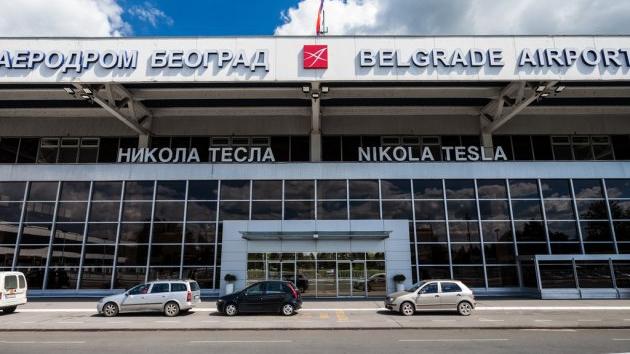
(Photo: Pexels/Tibor Szabo)
According to information obtained by Aero, employees at the Belgrade base of the Hungarian low-cost airline have expressed concern that the new regulations could affect its further work. The focus of attention is on the amendment to the Regulations on Issuing Approvals to Foreign Air Carriers for Performing International Public Air Transport with the Republic of Serbia, which was signed on March 27, 2026 by the Acting Director of the Directorate of Civil Aviation of the Republic of Serbia, Ognjen Babic.
– In the event that an international agreement allows air carriers of the contracting parties to perform scheduled public air transport using the rights of third and fourth freedom of air transport, the authorization is issued for flights that begin and end in the territory of the state that authorized the foreign air carrier, or in the territory of the European Union if it is an air carrier from the European Union – it is stated.
Although it is only one sentence in the regulation, it is precisely this that has attracted the most attention among representatives of the aviation industry in recent days.
The third freedom of air transport represents the right of an airline to transport passengers, mail and goods from its country to another country, while the fourth freedom of air transport enables transport in the opposite direction. In practice, the third and fourth freedoms allow an airline to transport passengers between its home country and another country. For example, Turkish Airlines between Turkey and Serbia or Air Serbia between Serbia and Turkey.
However, the European air transport market has been operating under significantly more liberal rules for years.
Wizz Air Hungary holds an Air Operator Certificate (AOC), or a license to operate commercial air transport. In 2020, the company became the first airline in Europe to receive an AOC under the direct regulatory supervision of the European Union Aviation Safety Agency (EASA), instead of national aviation authorities. At the same time, Wizz Air has its aircraft and crew based in Belgrade. Thanks to this business model, the Serbian company maintains a network of 27 routes using four aircraft based and crews living and working in Serbia.
This is precisely why some experts are questioning whether the new formulation is just a more precise definition of the existing rules or could be the basis for a different interpretation of the rights of foreign airlines that have aircraft based in Serbia. In other words, whether the new formulation could affect the model according to which a European airline with an AOC from one country has aircraft and crew based in another country.
In addition to the provision relating to the third and fourth freedoms of aviation, attention has also been drawn to the new formulation according to which the Directorate may consider the impact of certain changes on the rights of domestic air carriers. The Regulation states that additional approval is required in the event of a change of take-off/landing airport in another country, if such a change is significant from the point of view of the applicant’s use of traffic rights or affects the rights of domestic air carriers.
Some industry interlocutors believe that the formulation referring to the rights of domestic air carriers is one of the most significant innovations compared to the previous version of the Regulation. The question that now arises is how these provisions will be implemented in practice.
Serbia is a signatory to the European Common Aviation Area Agreement (ECAA), which provides European airlines with significantly broader market rights than the classic third and fourth freedoms of aviation. Therefore, some experts believe that a possible restrictive interpretation of the new rules could raise legal issues regarding the obligations that Serbia has assumed through this agreement.
On the other hand, it is also possible that this is an administrative clarification of existing procedures without the intention of changing the conditions under which European carriers operate on the Serbian market.
Sources familiar with the situation state that Wizz Air considers the new regulation to be potentially in conflict with the European Common Aviation Area Agreement (ECAA), to which Serbia is a signatory. According to the same sources, the company has already informed the European Commission, the European Union Aviation Safety Agency (EASA) and the Hungarian aviation authorities about this issue.


Comments
Your comment
Naš izbor

Most Important News
Full information is available only to commercial users-subscribers and it is necessary to log in.
Pratite na našem portalu vesti, tendere, investicione projekte, grantove i pravnu regulativu.
Registracija na eKapiji vam omogućava pristup potpunim informacijama i dnevnom biltenu
Naš dnevni ekonomski bilten će stizati na vašu mejl adresu krajem svakog radnog dana. Bilteni su personalizovani prema interesovanjima svakog korisnika zasebno,
uz konsultacije sa našim ekspertima.