


 Izdanje Srbija
 Serbische Ausgabe
 Izdanje BiH
 Izdanje Crna Gora


 News
News


World Bank lowers Serbia’s economic growth forecast for 2026 from 3% to 2.7%
Source: Beta
 Wednesday, 29.04.2026.
12:24
Wednesday, 29.04.2026.
12:24
Wednesday, 29.04.2026.
12:24
 Comments


World Bank (Photo: bakdc/shutterstock)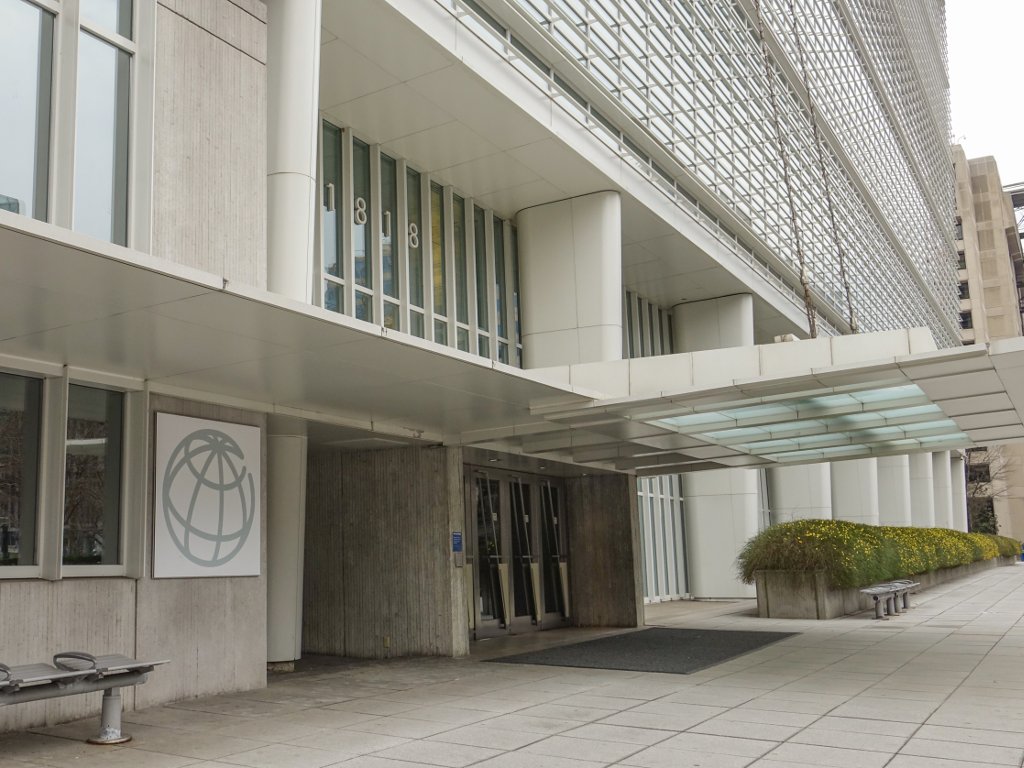
Growth has slowed, reflecting lower private investment and a negative contribution from net exports, and risks have been heightened in the context of the conflict in the Middle East, which is affecting external demand, energy import prices and investor sentiment, the report said, covering Albania, Bosnia and Herzegovina, the territory of Kosovo and Metohija, Montenegro, North Macedonia and Serbia.
As indicated, downside risks relate to state-owned enterprises facing problems, lack of progress in implementing the next phase of structural reforms, as well as increased global and domestic uncertainty.
Inflation, according to the WB, will remain elevated in 2026, partly due to the expected effect of the conflict in the Middle East on energy prices, but will remain within the target range in the medium term. Fiscal policy in 2026 should be largely under control, if measures to alleviate the energy crisis prove to be temporary or are neutralized by measures on the consumption side.
The WB estimated that the Serbian economy, in the medium term, should recover and grow at a rate of three to four percent. They also stated that the resignation of the prime minister and the slow formation of the government, political protests, sanctions against Russia in the oil sector and another poor agricultural season led to slower than expected growth in 2025. These developments also contributed to a decline in net foreign direct investment inflows by about 50%.
Director of the World Bank Office in Serbia Nicola Pontara stated that Serbia’s progress in the field of macroeconomics is undeniable, but, as he added, a full transition to a market economy requires structural reforms - not only to accelerate growth and bring Serbia closer to countries with similar characteristics in the EU, but also to create an innovative, inclusive and globally competitive economy, which ensures prosperity for its citizens.
– These reforms raise the quality of institutions and provide a better business environment, which can be seen in countries that have escaped the middle-income trap – said Pontara.
The World Bank also said that economic growth in the Western Balkans will remain subdued in 2026, impacted by the effects of the Middle East conflict, persistent inflation and heightened uncertainty, with combined economic growth in the region set to reach 2.8% in 2026, 0.3 percentage points below previous projections. A modest acceleration to 3.2% is expected in 2027.
They stressed that mobilizing the workforce will be key to maintaining the momentum of reforms in countries in the region facing labor shortages. Global uncertainty and geopolitical tensions are holding back growth in the Western Balkans, and rising prices are taking a direct toll on citizens’ wallets, said Shaoqing Yu, the World Bank’s Director for the Western Balkans. She said that while policymakers are using short-term fiscal measures to cushion the effects of these pressures on households and businesses, the World Bank report shows that jobs are key to long-term economic progress.
– The Western Balkans has a large pool of untapped talent – women, young people and others who want to work but face real barriers. Including them in the workforce is one of the most effective steps the region can take to strengthen its economy – said Yu.
The population of the Western Balkans, as stated in the report, is aging faster than anywhere else in Europe, so over the next decade at least one in five people in the region will be older than 65. The WB pointed out that it is paradoxical that labor shortages are felt in key sectors even though many people are excluded from the labor force or have simply given up looking for work. The report also points to underutilized capital: women, young people and others who want to work but face barriers to entering the labor market.
If the labor force participation rate were the same as in comparable European Union countries, this would mean an additional 2.8 million available working-age population. Just by bringing more women into the workforce, annual growth rates would increase by 0.35 percentage points. Work, the report says, should be made a more attractive choice – starting with tax and social benefit regulations, which in many cases make staying at home a financially safer option.
In most Western Balkan countries, for example, reporting any income from work simultaneously disqualifies individuals from benefit programs for the poor, making employment a financial risk rather than a reward. It also highlights the need for affordable childcare and eldercare, better job training, and workplaces that offer real flexibility and adequate working conditions, including for online workers.
Companies:
 Svetska Banka-WB Beograd
Comments
Your comment
Naš izbor



Most Important News
Full information is available only to commercial users-subscribers and it is necessary to log in.
Pratite na našem portalu vesti, tendere, investicione projekte, grantove i pravnu regulativu.
Registracija na eKapiji vam omogućava pristup potpunim informacijama i dnevnom biltenu
Naš dnevni ekonomski bilten će stizati na vašu mejl adresu krajem svakog radnog dana. Bilteni su personalizovani prema interesovanjima svakog korisnika zasebno,
uz konsultacije sa našim ekspertima.