


 Izdanje Srbija
 Serbische Ausgabe
 Izdanje BiH
 Izdanje Crna Gora


 News
News


What kind of aid is the state planning for recyclers? – Instead of subsidies, auctions to be introduced, with around 2.67 billion dinars available annually
Source: eKapija
 Tuesday, 07.04.2026.
08:46
Tuesday, 07.04.2026.
08:46
Tuesday, 07.04.2026.
08:46
 Comments


Illustration (Photo: sunsetman/shutterstock.com)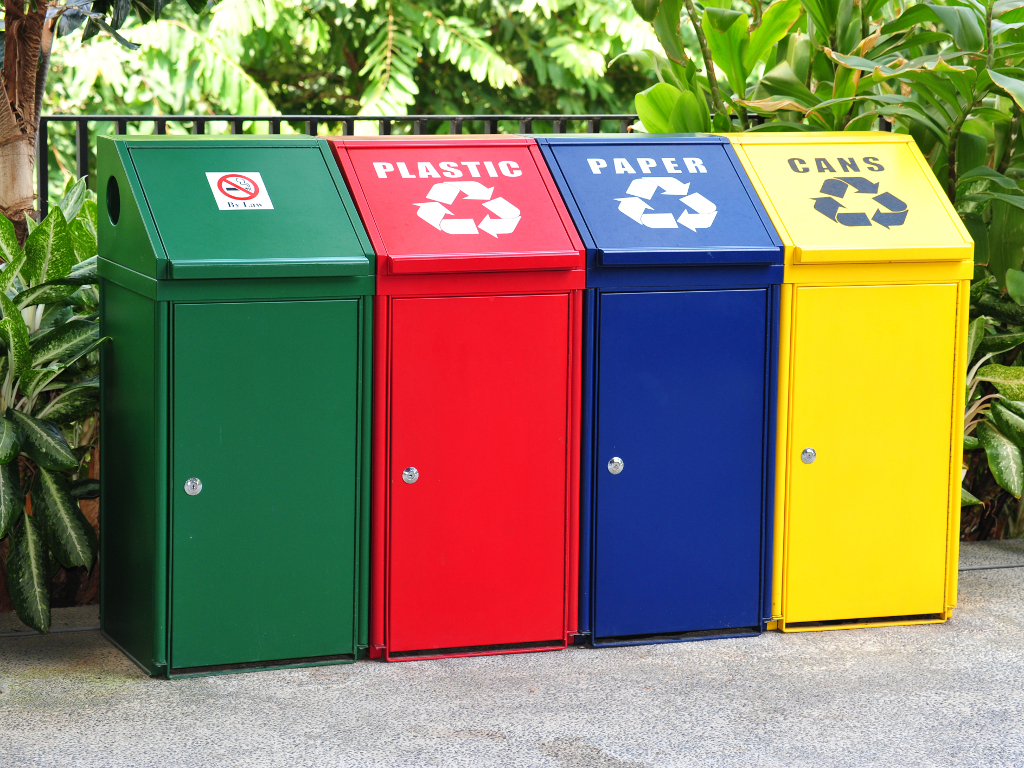
The draft regulation, prepared by the Ministry of Environmental Protection, defines the criteria, conditions and method of distributing grants to operators of waste reuse facilities, including waste tires, electronic waste, oils, batteries and end-of-life vehicles.
The Commission assessed that the proposed measure represented a state aid scheme, but also that it was in line with applicable regulations, as it aimed to improve environmental protection and develop a waste management system.
The incentives will be awarded through a competitive auction process, where operators will bid on a price per unit of waste, and the funds will be awarded to those with the most favorable bids. In this way, it is stated, a more efficient use of budget funds is ensured.
The Ministry emphasized in its analysis that the key problem in the waste management system was precisely in the early stages, collection and sorting, where the costs were highest and the economic profitability lowest. Therefore, support is focused precisely on that segment, in order to include more waste in formal flows.
It is expected that during the three-year period of implementation of the measure, the market will stabilize, the waste collection infrastructure will develop and the recycling rate will increase, which is in line with the national waste management program and European directives.
The Commission emphasized that the measure had a transitional character and that it should prepare the system for the transition to a model in which market mechanisms and extended producer responsibility would play a greater role.
In addition to the main auction mechanism, the regulation also provides for the possibility of granting de minimis aid, with restrictions to prevent over-financing of the same costs.
As eKapija recently wrote, the abolition of recycling incentives from the beginning of 2026 has already had visible consequences for the functioning of the waste management system in Serbia. The reduced inflow of waste to operators, the increase in costs for generators and the slowdown in material flows have led to recycling plants operating below capacity, while waste is increasingly being retained at the point of origin. In such circumstances, the sector is facing growing pressures – from increasing service prices to the temporary suspension of the takeover of certain waste streams, which further complicates the already fragile balance of the system.
As Sanja Knezevic Mitrovic, Head of the Environmental Unit at NALED, explained to eKapija, the recycling sector is currently between two models, the old, administratively driven, and the new, which should be based on market principles. Although the work on the new regulation and the introduction of the auction system are indicating a potentially more efficient framework, the key challenge remains ensuring stability in the transitional period. Without clearly defined rules and minimal support mechanisms, there is a real risk of further slowing down the system and disrupting its continuity.
– The termination of the regulation and the abolition of incentives as of January 1, 2026, are already having very concrete consequences for the work of recyclers and waste treatment capacities in Serbia. In practice, there is a reduced inflow of certain types of waste to operators, because the costs of collection and treatment have been completely transferred to generators. This leads to situations in which waste is retained by generators (and sometimes improperly stored), storage capacities are filled, and recyclers operate with reduced input quantities, i.e. below optimal capacities – says our source.
At the same time, as she points out, some operators were forced to significantly increase the prices of their services or temporarily suspend the collection of certain waste streams, such as waste tires or electrical and electronic waste. This, according to her, further slows down the flow of materials through the system and creates “bottlenecks,” which can lead to downtime in the operation of certain facilities.
– This situation directly affects the investment security of the sector, recyclers are faced with difficult business planning, and potentially with the postponement of further investments in capacities and technologies, which in the long term may slow down the development of the recycling industry in Serbia – she says.
Knezevic Mitrovic states that, on the other hand, it is important to point out that a Working Group has been formed at the ministry to work on a new Regulation, which envisages the introduction of a market model with an auction system.
I. Z.
Companies:
Komisija za kontrolu državne pomoći
 Ministarstvo zaštite životne sredine Republike Srbije
 NALED Beograd
Comments
Your comment
Naš izbor



Most Important News
Full information is available only to commercial users-subscribers and it is necessary to log in.
Pratite na našem portalu vesti, tendere, investicione projekte, grantove i pravnu regulativu.
Registracija na eKapiji vam omogućava pristup potpunim informacijama i dnevnom biltenu
Naš dnevni ekonomski bilten će stizati na vašu mejl adresu krajem svakog radnog dana. Bilteni su personalizovani prema interesovanjima svakog korisnika zasebno,
uz konsultacije sa našim ekspertima.