


 Izdanje Srbija
 Serbische Ausgabe
 Izdanje BiH
 Izdanje Crna Gora


 News
News


Petar Ristivojević, professor at the Faculty of Chemistry in Belgrade: How food waste can become a resource of the new green economy and cosmetic industry
Source: eKapija
 Tuesday, 24.03.2026.
23:20
Tuesday, 24.03.2026.
23:20
Tuesday, 24.03.2026.
23:20
 Comments


(Photo: Dragan Bogdanović)
As project leader Dr. Petar Ristivojević, associate professor at the Department of Analytical Chemistry of the Faculty of Chemistry at the University of Belgrade, explains in an interview for eKapija, the key lies in applying the principles of green chemistry and advanced extraction methods which enable the extraction of valuable bioactive compounds from what is today considered waste. Instead of landfills and pollution, the focus is shifting to innovations that link science, industry and sustainable development, opening up space for new products, from functional food to cosmetics, and for a different, more responsible attitude towards the resources we use daily.
Food waste is a global problem. How does the "Pure Way" project directly contribute to the reduction of waste and carbon footprint?
- The PURE-WAY project is based on the idea that waste should not be viewed as a problem, but as a resource. Instead of fruit and vegetable waste ending up in landfills, where it emits methane and carbon dioxide, pollutes water and soil, and contributes to the reduction of biodiversity, we transform it into products of high added value. In this way, through the activities of the PURE-WAY project, we directly reduce the amount of waste, but also the emission of gases with the greenhouse effect. In addition, we develop processes that are economically efficient and based on the principles of green chemistry, which significantly reduces the overall carbon footprint. It is particularly important that the rest of the biomass after extraction is further used, through fermentation and composting, so that we practically have no "final waste".
You use green solvents and natural eutectic compounds, can you explain how they work and why they are better than conventional solvents?
- Natural eutectic mixtures represent combinations of natural components found in plants, such as sugars, organic acids and amino acids, which under certain conditions form a liquid suitable for efficient extraction of biologically active compounds. Unlike conventional organic solvents, which are often flammable, toxic and harmful to the environment, eutectic mixtures are biodegradable, safe to use and may even be nutritionally beneficial. Their additional advantage is selectivity, they enable the extraction of targeted compounds, such as polyphenols and pigments, while preserving their stability. This results in higher quality extracts, completely of natural origin, without harmful chemical residues, which is of special importance for the development of a new generation of functional food and cosmetics.
Why did you decide to use fruit and vegetable waste as raw material, and what bioactive substances do you extract from it?
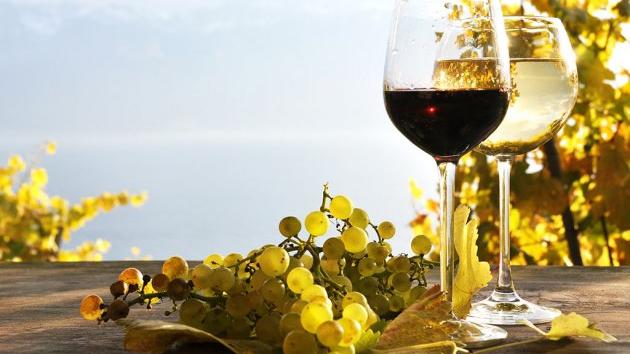
- The waste of fruits and vegetables is extremely rich in biologically active compounds. Peels, pits, seeds and pulp contain significant concentrations of polyphenols, vitamins and natural pigments. For example, we extract polyphenols (such as resveratrol) from grape residues, essential oils and flavonoids from citrus, carotenoid lycopene from tomatoes, various carotenoids from carrots, anthocyanins from blackberries, and betalain pigments from beets. We chose these raw materials because they are available in large quantities, represent low-value industrial waste and are currently underutilized. By using them, we solve two problems simultaneously - we reduce the amount of waste and get valuable components for the development of new products.
The project includes cooperation with partners from Romania, Greece and Germany, how is that international cooperation going?
- The project gathers an interdisciplinary team from six countries of the European Union, Rosario University from Argentina, and North Carolina State University from the USA, with each partner having a clearly defined role. Partners from Romania are working on the encapsulation of the extracts with the aim of improving their stability to heat, changes in pH value and light. The Greek team participates in the development and production of natural cosmetic products, together with a company from Germany that develops functional beverages. The Chemistry Faculty of the University of Belgrade coordinates the project and connects all activities, from laboratory research to pilot production. We are also in charge of preparing active components for final products. Cooperation is realized through regular meetings, exchange of researchers and joint experiments, but also through direct cooperation with industry, which is crucial for the transfer of results from the laboratory to the market.
What final products are developed within the project and how do they contribute to health and the prevention of diseases such as obesity and diabetes?
- As part of the project, we are developing several product categories: functional beverages, natural food supplements, cosmetic preparations that slow down the aging process, and biofertilizers. The focus is on products rich in antioxidants and other bioactive compounds that can have a positive effect on health, including regulating metabolism, reducing oxidative stress, and supporting the prevention of obesity and diabetes. The polyphenols and natural pigments we extract have shown strong antioxidant, anti-inflammatory and antidiabetic properties in numerous studies. The goal is to develop products that are not only natural, but also functional - with clearly defined health benefits.
The project lasts four years, what results do you expect already from the second year and how do you plan to measure them?
- Already in the second year, we expect optimized extraction processes, the most active extracts characterized in detail and the first product prototypes, such as functional drinks. We evaluate the results through several parameters: chemical composition and stability of extracts, biological activity, product safety, consumer acceptability, as well as environmental indicators such as waste reduction and carbon dioxide emissions. In this context, industrial partners from Romania, Greece, Germany and Serbia are particularly important. In addition, we also conduct life cycle analysis and life cycle cost analysis, which is crucial for future industrial applications.
Do you plan to expand the project to other types of food waste or expand to other regions of Europe, if "Pure Way" proves successful?
- If the PURE-WAY project achieves the expected results, we plan to expand it further. This implies the application of developed technologies to other types of food waste, such as cereals or dairy by-products, as well as the expansion of cooperation to additional regions of Europe. Also, we plan to apply for new funding in order to further improve and expand the project concept. In this context, the special focus will be on the application of developed solutions in the field of food packaging, as well as on the development of high-quality confectionery products enriched with bioactive components obtained from fruit and vegetable waste. The ultimate goal is to develop a sustainable and scalable model that can be applied in different industries and countries, making circular economy principles in the food sector the standard, not the exception.
Ivana Žikić

Click here to see the entire Special Edition Newsletter
"INVESTING IN THE FUTURE - Powering a new world"
read more
Companies:
 Hemijski fakultet Beograd
Tags:
Faculty of Chemistry
University of Belgrade
Food waste
Pure Way
special edition newsletter
Investments in the future Energy for the new world
green economy
special edition newsletter about the green economy
Comments
Your comment
Naš izbor





Most Important News
Full information is available only to commercial users-subscribers and it is necessary to log in.
Pratite na našem portalu vesti, tendere, investicione projekte, grantove i pravnu regulativu.
Registracija na eKapiji vam omogućava pristup potpunim informacijama i dnevnom biltenu
Naš dnevni ekonomski bilten će stizati na vašu mejl adresu krajem svakog radnog dana. Bilteni su personalizovani prema interesovanjima svakog korisnika zasebno,
uz konsultacije sa našim ekspertima.