


 Izdanje Srbija
 Serbische Ausgabe
 Izdanje BiH
 Izdanje Crna Gora


 News
News


Are private student dorms a new investment opportunity for Belgrade?
Source: eKapija
 Wednesday, 11.06.2025.
22:41
Wednesday, 11.06.2025.
22:41
Wednesday, 11.06.2025.
22:41
 Comments


(Photo: Marcus Loke/Unsplash)
Affordable housing and student accommodation were the topics of the eponymous panel at this year`s REBEC conference, with a focus on Serbia and the Central and Southeastern Europe region.
The first panelist, Nikolaos (Nikos) Manomenidis, director of the real estate agency Crecos from Thessaloniki, talked about how the student accommodation market looks in Greece:
- In Thessaloniki, there are more than 120,000 students. You`d think that sounds promising, but in recent years in Greece we`ve seen a huge increase in demand for student accommodation, although the population is decreasing, more and more people are living alone. In Thessaloniki alone, more than 10,000 people live independently, mostly elderly people, but there has also been a large increase in divorce, as much as 50% in the last 10 years. This means that we have 450,000 new households, and about the same number of small apartments, which creates a certain challenge.
According to him, the investment market in student accommodation has been active in Thessaloniki for the last five years.
- It started with Jewish investors who invested a lot in Thessaloniki. The city has a long Jewish history, dating back to 1912 when a third of the population was Jewish. They invested in old buildings and turned them into student accommodation - said Nikos.
70,000 foreign medical students in search of housing
As assessed by George Bobvosch, Development Consultant at Wyndham Hotels & Resorts for South Eastern Europe, and in Central and Eastern Europe, especially in the capitals and university centers such as Warsaw, Prague, Budapest, the number of students has been growing rapidly over the past three decades.
- In the last 35 years, many medical faculties have been opened even today, we have about 70,000 foreign students studying medicine in this region. The cities I mentioned traditionally had two accommodation options: campuses within the university, and subsidies for students who had to seek off-campus accommodation. However, the number of foreign students has grown dramatically. Universities have begun to notice the market need and to approach developers, like us, in order to find sustainable solutions - Bobvoš stated.
According to him, the company has developed a segmentation strategy - how many students we want to include and what kind of accommodation is needed:
- Because students need affordable housing. It`s not social housing, but it`s bordering on it - not luxurious, but not cheap and bad either. The accommodation has to be functional. It is often modeled after a barracks: long corridors, a series of rooms, a common kitchen and bathroom. As developers, we`ve found it to be a great business: stable, because it is easy to plan five to seven years ahead, then reliable, given that students (or their parents) regularly pay rent and cost-effective - in cities like Warsaw, Prague, Budapest, a decent rent brings a stable income. There is also a long-term lease that allows for predictable income.
- Three Central European cities, Warsaw, Prague, Budapest, build about 10,000-12,000 units of student accommodation every year - Bobvoš pointed out.
He also gave the most common structure of buildings and apartments that are built for students, as well as the average prices:
- These are mostly single rooms with additional amenities. There are, of course, different models, depending on the desired level of comfort and price. For example, in an average 10-story building, the first eight floors are rooms with shared kitchen and bathroom facilities. The top two floors often have studio apartments with their own facilities. However, the price of a studio (with kitchen and private bathroom) can be 30-50% higher than the price of a regular room. It depends on the standard of the facility and the target group. In more luxurious accommodations in some non-EU countries, another advantage of such accommodation is that the student can obtain a residence permit through that facility. In many cases, the university or the facility owner will help with address registration and paperwork. This means a lot to students from distant countries, from China or Japan for example.
- Therefore, it depends on the market, location and demographics. Not everyone is ready to pay that much, but there is a significant demand for all levels, from basic to luxury - stated Bobvoš and added that it often happens that old hotels from the socialist period are converted into student accommodation, as it is profitable and quick to renovate.
According to him, it is also a common practice for students to stay in the city even after completing their studies, so that`s when they buy their first real estate and often turn to the same developers they lived with as students.
Why is there no more student accommodation in Belgrade?
The moderator of the panel, Petar Orlić from the law firm Horizons Alliance, stated that we have about 90,000 students in Belgrade.
- Construction costs are lower than in Western European countries. So why don`t we have more student housing? - he asked.
Milan Mitrašinović, Assistant Director of Capital Markets at Avalon Real Estate, gave the answer:
- The key is in the quality of universities and study programs. Students come to cities like London, Paris, Amsterdam and Munich, because they want world class education. Statistically, the number of European students is decreasing, while the number of Asians and South Asians is increasing. That wave spills over first to Dubai, and then to European cities.
- For example, in London, in the Whitechapel district, the American developer, Great Star, built a student complex with a swimming pool, sauna, gym... very luxurious, fully furnished, but the target group are rich students from Asia (especially South Asia), who want premium conditions. In that case, the rent can go up to 1,500 euros per month. I doubt that something like that would be on the price here because that "strong" international component is missing. but there are also such cases here,
there are families coming from Asia and the Middle East, who are wealthy enough to buy or rent an apartment for their children in Belgrade. But to attract such families, good study programs, security, infrastructure and administrative flexibility are needed. Therefore, the potential exists, but work must be done at the academic and infrastructural level, not only through investments in student accommodation - Mitrašinović said.
Illustration (Photo: vvoe/shutterstock.com)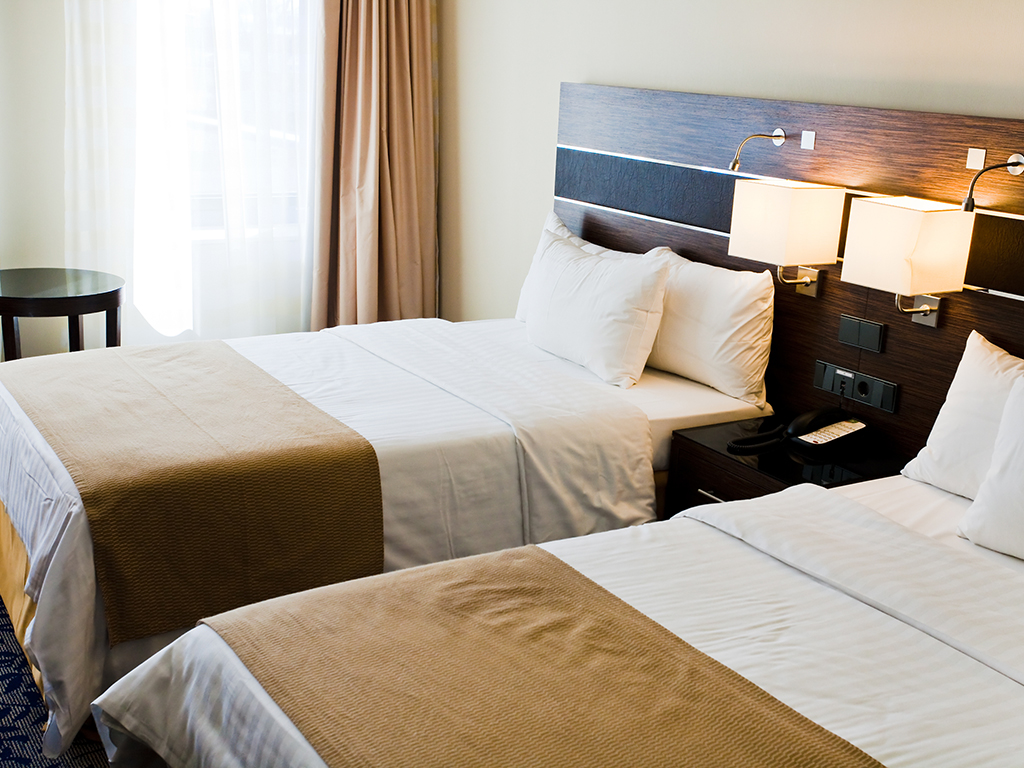
There is a lack of private investment segment in Serbia
He estimated that what is also missing in Serbia is precisely that private segment, which actually drives the entire offer in other major university cities:
- We still have a system dominated by local authorities to a large extent, which fully control student accommodation. Education is part of a wider social process and is good PR for the authorities, but when we talk about state finances, some bigger project would compete with other big infrastructure investments, and not everything can be financed and there are simply not enough funds to build quality student accommodation.
- In this context, private investments in the form of student apartments, i.e. remodeling of old buildings, can be meaningful - to breathe life into those buildings and eventually expand capacity, especially since there is a lot of land available - Mitrašinović believes.
Bobvoš pointed out that there is a big difference when we talk about foreign students, which is relatively easy to "target", and about domestic students, and he offered a solution for the problem in Serbia:
- There are, historically speaking, three scenarios: you were lucky enough to come from a family rich enough to buy you a small apartment in the city where you study; parents could have helped you by paying the rent or, if nothing else, they could have contributed to the cost of the dorm. What has changed from a development perspective, however, is the fact that real estate prices have risen, and therefore there are fewer and fewer families who can financially support their children. In this light, universities could offer student accommodation as part of their service, which would increase the attractiveness of enrollment. Because it is not the same when someone from Čačak gets the opportunity to study at the University of Belgrade if there is also decent accommodation.
- This is already happening. It does not cover the entire cost of the stay, but part of the costs are covered by scholarships or student loans, part of which is returned, and part is non-reimbursable aid - Mitrašinović answered. He pointed out that today the construction of apartments is significantly more expensive than the construction of a student dormitory.
- Therefore, when an investor has land, he will more often use it for housing than for student accommodation - assessed Mitrašinović and added that this is why it is crucial for the state to regulate urban planning so there is an urban plan specific for student accommodation, because it would directly affect the price of land and the attractiveness of investment.
And Nikos followed up on this topic, saying that there is a relatively similar urban practice in Greece:
- There is no specific urban zoning for student accommodation. However, there is an interesting system in Greece since the 1950s called "antiparochi" - a system that arose due to the lack of mortgage loans. The owner of the land cedes the land, and the investor builds a building and gives the owner a part of the apartments in exchange, without buying the land.
"Social antiparochi" in Greece
- Today, there is also a state version of that model - "social antiparochi", where the state transfers land or abandoned buildings to investors which will build a student dormitory or affordable housing. Part of the apartments goes to the users (students or social categories), and the part is kept by the investor for sale or rental - he explained.
He added that there is also a second pillar: energy efficiency projects, where investors do not receive money directly for renovation, but for the energy improvement of buildings, which is used as a motivation for the renovation of old buildings and their conversion into student or affordable housing.
Bobvoš pointed out that local governments in cooperation with universities can create contracts and incentive models for the construction of student accommodation, through tax breaks or other incentives.
- The state is rarely directly involved in this, mostly cities, municipalities and universities - he stated.
Another solution, according to him, are the so-called "easily assembled objects":
- It`s not the most elegant solution, but when the need arises to house several hundred people in a short period of time, a prefabricated building can be built that can be easily erected, dismantled and moved. They`re not aesthetically perfect, but they work. For example, medical students must be close to the university, so such prefabricated solutions make sense both locationally and financially. In Scandinavia, even wooden prefab structures are used, although it all depends on local regulations. Somewhere it is allowed, somewhere not.
Mitrašinović pointed out that the entire model of student accommodation must be built "from behind": to know how much a student can pay per month, and then calculate how much we can pay for the land to make the project profitable.
- In cities like London, it works because the city is extremely well connected - a student can live 30 km away and come to lectures without any problems. But that`s not the case everywhere.
- In London, which we mentioned, for example, the average house price is £460,000, and to buy you need a deposit of £80,000 to £100,000 and a salary of over £100,000. That`s why people choose renting more and more often as the only option - added Orlić.
- Both as a parent and as an investor, I feel that the next generation actually has it harder than us. If I fail to make wise investment decisions, my children may never have their own apartment, unless they inherit it. It is devastating - added Bobvoš.
- That is why cities like Vienna build thousands of social housing every year, which are not completely out of market prices, but are affordable. That`s how people start with that model, and later progress to buying an apartment. In London, it is almost impossible. The quality of apartments that are "affordable" is very low - poor insulation, dilapidated construction, etc. - he added.
- This brings us back to the model of construction for rent - Mitrašinović pointed out.
How far are we from such a model in Serbia?
- We are not far. There is a market that is well suited to this approach, but in Belgrade, the "build-sell" model is still dominant, in the middle segment, there is especially too much focus on immediate sales, and therefore we have a shortage of whole buildings and service apartments. We lack the next step: institutional buyers - pension funds, insurance companies, etc. who would buy entire buildings and rent them out long-term. They`re not looking for big returns, but they want stable cash flow. We lack that segment in order for the market to be rounded - said Mitrašinović.
Bobvoš added that we see from examples in Central and Eastern Europe that it is better not to build new public buildings, but to transform older buildings into such services.
- It is an efficient and quick solution - he stated.
Nikos finally shared another experience from Greece:
- During the crisis in Greece, prices dropped, but people did not invest. We have workers from Albania who worked for low salaries, but they invested in real estate, and now they have property. Two students who worked for me went to the UK for a master`s degree, lived together modestly, and after three years they started investing in real estate. So it is possible - only if you live more modestly and invest wisely. Today, our children enjoy themselves more and invest less in themselves and their families. We need to change awareness and educate people about financial literacy.
- Life has never been easy. Today, it may be easier to feed ourselves, but our attention is scattered on consumption, and we forget to invest in ourselves and our family - concluded Nikos Manomenidis.
B. P.

Click here to see the entire Special Edition Newsletter
"Real Estate & Construction - Trends that Build the Future"
read more
Companies:
 Festlent d.o.o. Beograd
Tags:
REBEC
Horizons Alliance
Avalon Nekretnine
Crecos
Wyndham Hotels and Resorts
Nikolaos Nikos Manomenidis
Džorž Bobvoš
Petar Orlić
Milan Mitrašinović
student accommodation
construction of student accommodation
affordable housing
special edition newsletter real estate and construction trends that build the future
Comments
Your comment
Naš izbor


Most Important News
Full information is available only to commercial users-subscribers and it is necessary to log in.
Pratite na našem portalu vesti, tendere, investicione projekte, grantove i pravnu regulativu.
Registracija na eKapiji vam omogućava pristup potpunim informacijama i dnevnom biltenu
Naš dnevni ekonomski bilten će stizati na vašu mejl adresu krajem svakog radnog dana. Bilteni su personalizovani prema interesovanjima svakog korisnika zasebno,
uz konsultacije sa našim ekspertima.