


 Izdanje Srbija
 Serbische Ausgabe
 Izdanje BiH
 Izdanje Crna Gora


 News
News


In addition to oil pipeline, construction of product pipeline with Hungary also planned

 Comments


Illustration (Photo: Shutterstock/Kodda)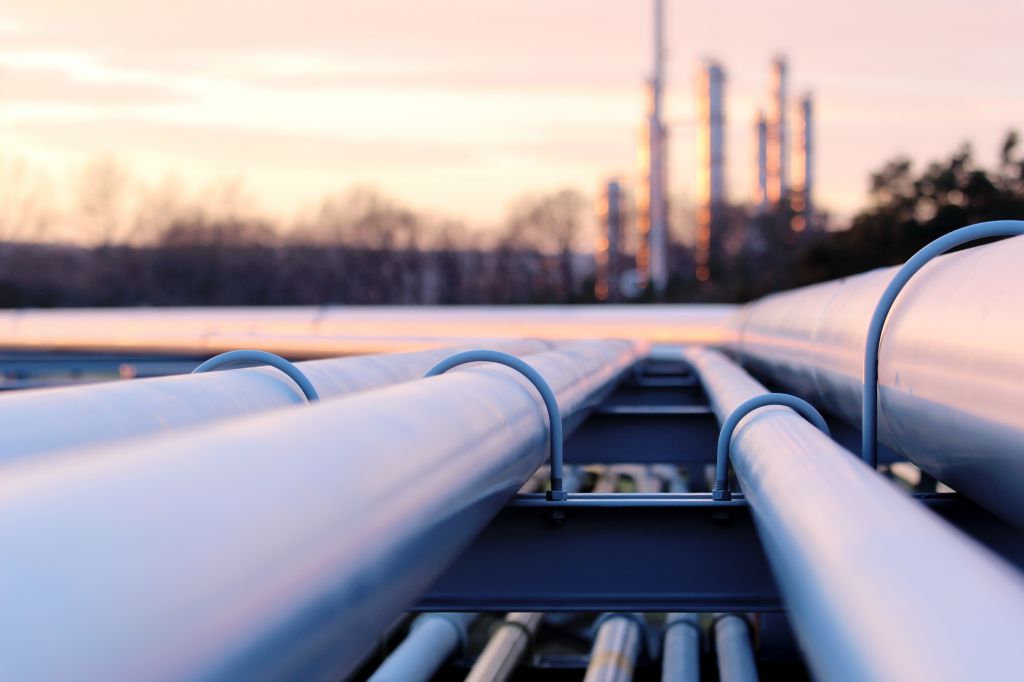
The oil pipeline route through Serbia is 113 kilometers long and has a capacity of 5.5 million tons per year. The oil pipeline would run from Kanjiza, via Senta, Ada, Becej, Zabalj to Novi Sad. What is interesting is that the project is being implemented for the transport of REB (Russian Export Blend) oil, i.e. Russian oil that Serbia cannot deliver and use from the end of 2022 due to European Union sanctions against Russia.
When asked whether this means that only Russian oil, which Serbia did not use even before the EU sanctions on Russian energy came into force, will arrive via the new route, the Ministry of Energy says for the Politika daily that the construction of the oil pipeline with Hungary is of strategic importance, because diversification of supply sources means greater energy security and safety. So far, on our part, a feasibility study and spatial plan have been completed, work is underway to issue location conditions, and we expect that they will be ready to begin work by mid-year.
– As is known, Hungary and Slovakia are supplied with crude oil via the southern branch of the Druzhba oil pipeline. In the future, the plan is to connect the southern branch of the Druzhba oil pipeline with the Sarmatia oil pipeline in Brody. Sarmatia is an international energy project that should connect the Ukrainian cities of Odessa and Brody, and in this way oil from the Caspian Sea would be transported via the port of Odessa to the markets of Poland, but also the rest of Europe. This is a project of general interest within the Energy Community – the relevant ministry explains.
It is always better, the ministry adds, to have more options for supply, because this will give better negotiating power, but also greater security so that we do not depend on just one direction for this important energy source.
The Ministry of Energy emphasizes that JANAF remains the key supply direction both at the moment and in the near future. If and when the plans for the construction of the Sarmatia oil pipeline and the merger with Druzhba are realized, market competition will open for the supplier of the refinery in Pancevo.
By the way, the Druzhba oil pipeline, which has been operating since 1964, is the longest in the world, about 4,000 kilometers. From Russia, the oil pipeline goes to Belarus, from where it is divided into two branches. One goes through Poland to Germany. The second branch transports oil through the territory of Ukraine. From there, one part of the oil comes to Slovakia and the Czech Republic, and the other to Hungary and Croatia.
Asked whether a product pipeline from Hungary will be built at the same time, through which MOL could deliver only derivatives to Serbia, which could call into question the profitability of the long-term operation of the Pancevo Oil Refinery if MOL actually buys NIS, the ministry replies that Serbia is currently considering options for building a product pipeline with countries in the region, Hungary and Romania.
– The product pipeline is actually a pipe for transporting petroleum products, and by using the product pipeline there is no dependence on the Danube, tankers, or rail transport. Given the availability of data used in the construction of the oil pipeline with Hungary, a brief SWOT analysis (strategic planning analysis) for the product pipeline was conducted in cooperation with representatives of Transnafta AD, which has already been discussed by Serbian President Aleksandar Vucic and Hungarian Prime Minister Viktor Orban – the Ministry of Energy explains.
Oil experts say that, although the tender mentions Russian oil, oil that is not from Russia can also be transported via Druzhba via Hungary and the new oil pipeline to be built, if it is brought to the appropriate input part of the network. This happened in 2024 and 2025 with Kazakh oil arriving at the Schwedt refinery in Germany (which is also affected by EU sanctions) via the northern branch of the Druzhba oil pipeline.
In 11 months of 2024, around 1.4 million tons of Kazakh oil arrived in Germany via Druzhba, and last year even more – around two million tons. Russian oil will be able to reach Serbia via Druzhba as long as Hungary ignores EU policy and has Trump’s protection to oppose most of the decisions of European Commission President Ursula von der Leyen and Estonian politician Kaja Kallas, says the same Politika source.
Dr. Stevica Dedjanski, from the Center for the Development of International Cooperation, former State Secretary at the Ministry of Energy, said when the project was first mentioned that the oil pipeline could be completed in 20 months if it were started immediately, which would be a good thing, because if we know that transit via JANAF costs us up to EUR 48 million per year, and that a new oil pipeline would cost EUR 10 million, then the calculation is clear.



Tags:
Transnafta ad Pančevo
Pančevo Oil Refinery
JANAF
Naftna industrija Srbije ad Novi Sad
MOL
Serbia Hungary oil pipeline
Druzhba oil pipeline
Sarmatia oil pipeline
construction of Serbia Hungary oil pipeline
construction of Serbia Hungary product pipeline
Comments
Your comment
Naš izbor
Most Important News
Full information is available only to commercial users-subscribers and it is necessary to log in.
Pratite na našem portalu vesti, tendere, investicione projekte, grantove i pravnu regulativu.
Registracija na eKapiji vam omogućava pristup potpunim informacijama i dnevnom biltenu
Naš dnevni ekonomski bilten će stizati na vašu mejl adresu krajem svakog radnog dana. Bilteni su personalizovani prema interesovanjima svakog korisnika zasebno,
uz konsultacije sa našim ekspertima.