


 Izdanje Srbija
 Serbische Ausgabe
 Izdanje BiH
 Izdanje Crna Gora


 News
News


The state gave green light for project that brings in 5.5 million tons of oil per year - The 113 km long oil pipeline plan from Hungary to Novi Sad was adopted
Source: eKapija
 Monday, 31.03.2025.
16:20
Monday, 31.03.2025.
16:20
Monday, 31.03.2025.
16:20
 Comments


Illustration (Photo: Shutterstock/fotokaleinar)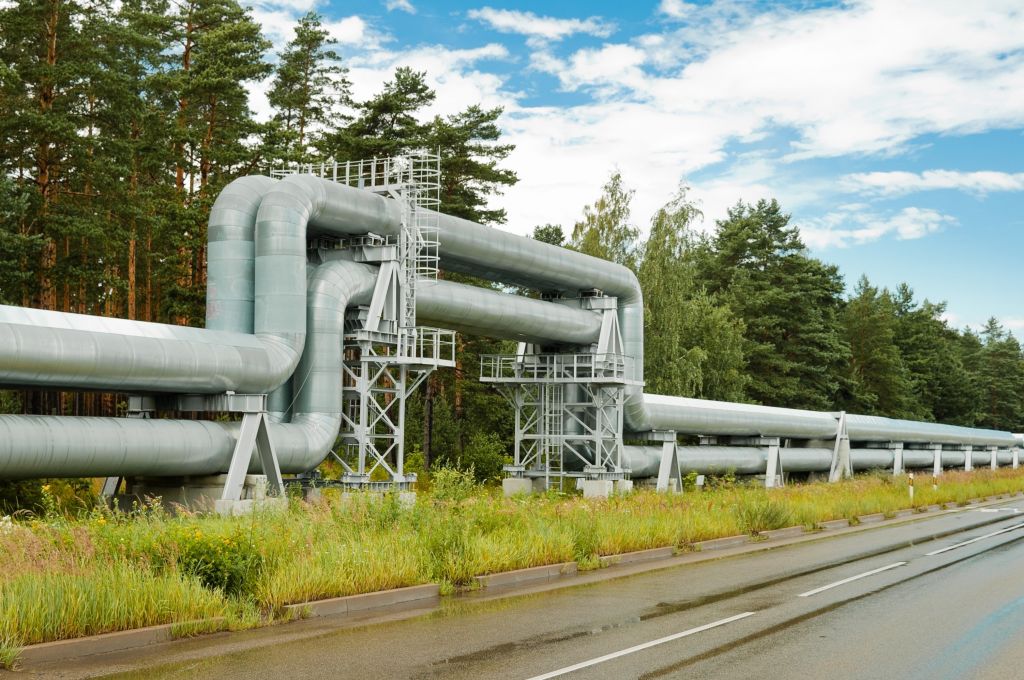
According to the document, the spatial plan includes parts of the territories of the cities and municipalities of Novi Sad, Kanjiža, Senta, Ada, Bečej and Žabalj. This plan establishes the basics of the organization, arrangement, use and protection of the infrastructure corridor of the oil pipeline, and contains elements of detailed regulation that enable its direct implementation.
The pipeline construction project is the result of cooperation between Serbia and Hungary, formalized in June 2023 by signing the Memorandum of Understanding between the Ministers of Mining and Energy of Serbia and the Ministers of Foreign Affairs and Trade of Hungary.
The goal of the project is to improve Serbia's energy security and diversify crude oil supply routes.
The Ministry of Construction, Transport and Infrastructure is responsible for creating the Spatial Plan.
while the funds for its implementation are provided by Transnafta AD Pančevo.
The maximum capacity of the pipeline is in line with the nominal volume of crude oil processing at the Pancevo Refinery, which amounts to 4.8 million tons per year, as well as with the maximum quantity that Hungary can deliver to Serbia – 5.5 million tons per year. This corresponds to a flow rate of about 725 m³/h under continuous transport conditions.
A preliminary hydraulic calculation has been established that for the full transport capacity from the Alđo pumping station to the Transnafta AD Pancevo terminal a maximum operating pressure of 70 bar is required. Concrete operating conditions in the pipeline - flow and pressure - will depend on Serbia's current needs for crude oil, as well as from the available quantities of domestic oil and that arriving via the JANAF pipeline.
The location of the oil pipeline bordering Hungary - Novi Sad in relation to other facilities of the oil industry (Photo: Prostorni plan područja posebne namene infrastrukturnog koridora naftovoda od granice sa Mađarskom do Novog Sada)
Defined route: The spatial plan includes 4,535 hectares through six municipalities
The special purpose spatial plan for the construction of the oil pipeline defines an infrastructure corridor with a total length of about 120 kilometers, with a 200 meter belt on both sides of the pipeline. The total area covered by the plan amounts to 4535.43 hectares. The planned steel pipeline, with a maximum working pressure of 70 bar will be underground along the entire route and will extend for a total of 113 km. The preliminary diameter is DN450, but the final dimension will be determined by the project documentation.
The plan includes parts of the territories of the municipalities of Kanjiža, Senta, Ada, Bečej, Žabalj and the city of Novi Sad, precisely defined through cadastral municipalities like Velebit, Kanjiža, Senta, Ada, Bački Gradište, Žablja, Kaća and others. The final limit of the Spatial Plan was determined based on the technical documentation and the conditions of the competent institutions.
The pipeline starts at the border with Hungary near Horgos 2, where there is a reception-dispatch cleaning station (POČS) and an atmospheric tank of 10 m³. From there it extends southward,
passing to the east of Horgoš (2 km) and northwest of Martonoš (400 m), crossing the IB-13 state road and the Horgoš-Kanjiža railway.
On the territory of Kanjiža, the route goes southwest, passes west of the town (2.8 km), then west of Zimović (800 m) and Trešnjevac (1 km), crossing the Horgoš-Martonoš, Kereš and Adorjan-Velebit canals.
In the municipality of Senta, it continues to the southeast, passing west of Gornji Breg (2 km), enters the municipality of Ada, where it passes west of Sterijin (600 m) and intersects with the state road IIA-105.
In the municipality of Bečej, it goes south, crosses the river Čik, passes west of Bački Petrovi Selo (3 km) and Bečej (2 km), then crosses the Danube-Tisa-Danube canal and passes west of Bačko Gradište (2.1 km).
In the municipality of Žabalj, it passes west of Čurug (2.5 km), crosses the Jegrička river and its tributary, and near Gospodjinci it crosses the state road IIA-112 and the railroad. There it leaves the Interconnector gas pipeline corridor and enters the infrastructure belt of oil and gas pipelines near Đurđevo.
It goes further west, passes through the railway and road corridors near Nemanovac, then enters the energy corridor of the E-75 highway near Novi Sad. The route passes through the North IV working zone and ends at the Reception Cleaning Station (PČS) Novi Sad inside the "Transnafta" AD Pančevo terminal.
The major part of the route passes through agricultural land, outside urban areas, along crossings with rivers, roads and railways.
Let's remind the story of connecting Serbia to the Russian Druzhba oil pipeline began in 2022, after the announcement of the suspension of Russian oil deliveries through the Janaf pipeline after the adoption of the eighth package of EU sanctions in which the countries of the Western Balkans are not exempted from the ban on the import of crude oil from Russia by sea.
The Ministry of Mining and Energy then announced that it was looking at all possibilities to ensure diversification in the field of crude oil supply.
In spring 2023 at the 13th session of the Joint Commission for Economic Cooperation of Serbia and Hungary the decision on the construction of an oil pipeline from Algi in Hungary to Novi Sad was adopted, carried out by the Hungarian MOL and the Serbian Transnafta, and then the state Memorandum of Understanding on the construction of the pipeline was signed.
According to previous announcements, the Serbia-Hungary oil pipeline should be built by 2028.
and the estimated value of the project amounts to 157 million EUR for the Serbian section of the pipeline.
I. Ž.
Companies:
 Vlada Republike Srbije
 Ministarstvo građevinarstva, saobraćaja i infrastrukture Republike Srbije
 Transnafta ad Pančevo
Tags:
Government of Serbia
Ministry of Construction
Transport and Infrastructure
Transnafta AD Pančevo
Spatial plan of the special purpose area of the oil pipeline infrastructure corridor from the border with Hungary to Novi Sad
oil pipeline to Hungary
construction of oil pipeline
oil pipeline Serbia Hungary
Druzhba
Comments
Your comment
Naš izbor




Most Important News
Full information is available only to commercial users-subscribers and it is necessary to log in.
Pratite na našem portalu vesti, tendere, investicione projekte, grantove i pravnu regulativu.
Registracija na eKapiji vam omogućava pristup potpunim informacijama i dnevnom biltenu
Naš dnevni ekonomski bilten će stizati na vašu mejl adresu krajem svakog radnog dana. Bilteni su personalizovani prema interesovanjima svakog korisnika zasebno,
uz konsultacije sa našim ekspertima.