


 Izdanje Srbija
 Serbische Ausgabe
 Izdanje BiH
 Izdanje Crna Gora


 News
News


Will Bosnia and Herzegovina become a hub for major investments in data centers?

 Comments


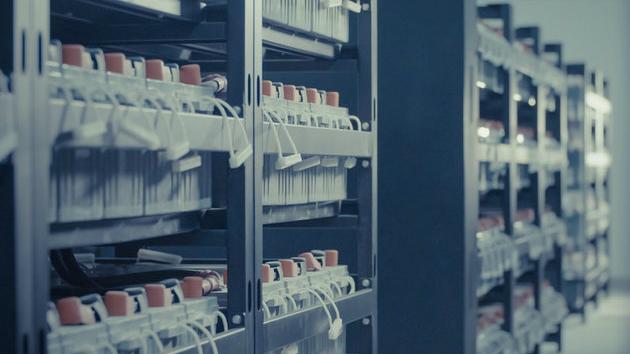
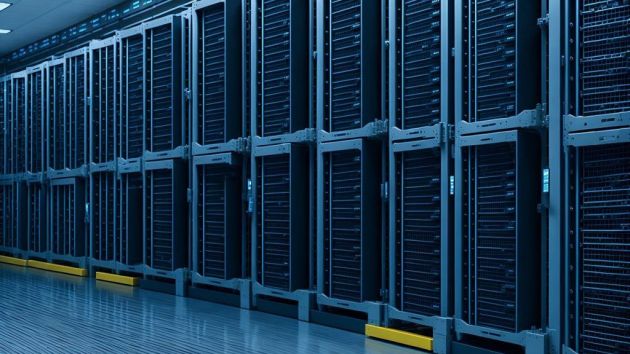
Illustration (Photo: Pixabay.com/Pete Linforth)
This is a sector that creates jobs for engineers and IT specialists during the operational phase, as well as for construction workers during the building process. However, there are also challenges, such as environmental impact and high electricity consumption, which could drive up power prices.
Each country has unique conditions, and there is no single solution that can be universally applied to all of them.
How do data centers affect the environment?
The type of center also matters, because, for instance, some use closed-loop cooling systems, resulting in less pollution of water bodies, while others use open-loop systems. The latter can pose environmental challenges because water, such as from a river, is drawn into the facility and then discharged back into the river, potentially picking up oils and other harmful substances along the way.
Furthermore, data centers designed for artificial intelligence are far more sophisticated, as they utilize numerous expensive graphics processing units that require a highly skilled workforce, unlike data centers for online retail, which rely on much cheaper storage drives.
Does BiH have enough electricity for large data centers?
When it comes to electricity, BiH produces far more energy than it consumes, at least in terms of nominal installed capacity. In recent times, BiH has exported a significant portion of this energy to the EU. However, this is becoming increasingly difficult due to strict carbon taxation rules, specifically, penalties imposed on electricity because of the high share of fossil fuels used in its generation.
In concrete terms, if large data centers were built in BiH near power plants and in areas with sufficient water for cooling, the country could sell electricity directly at the site of production.
How much electricity does a large data center consume?
Data centers consume vast amounts of electricity. For instance, a large data center housing servers for artificial intelligence can consume as much electricity as the entire city of Banja Luka. Since all that electricity is ultimately converted into heat, a large volume of water is required to extract that heat from the servers and release it into the natural environment.
Some cities have utilized this thermal energy for winter heating or to supply industrial facilities, an option that is also worth considering.
Why are Americans pushing back against large data centers?
Many such centers have been built in the U.S. over the past decade, with local communities offering various incentives. For instance, they offered exemptions from certain taxes, while power utility systems provided preferential rates per kilowatt-hour. Today, however, there is significant resistance from local residents, who complain about higher electricity costs and voltage fluctuations. The issue arises when the frequency of the alternating current powering the centers begins to fluctuate. This can damage sensitive and expensive electronic components within the data centers, causing them to automatically disconnect from the grid and switch to backup generators. When such a massive facility drops off the grid, it can trigger a cascading reaction, leading to widespread power outages across the area.
Additionally, some Americans have complained about reduced water pressure caused by the pumps data centers use to draw in vast quantities of water, particularly during periods of drought and extreme heat. These periods often coincide with times when water supplies are already low, affecting not only cooling operations but also electricity generation, which further exacerbates the problem.
On the other hand, data centers have improved conditions in rural American areas by offering well-paid jobs and, in some cases, driving population growth, specifically by attracting professionals in high-demand fields like electrical engineering and software development.
How could BiH benefit from these projects?
For these projects in BiH to be viable and turn into economic successes, suitable locations must be carefully selected while ensuring environmental preservation. Furthermore, experience has shown that solar power plants and wind farms are particularly attractive for supplying electricity to these centers, as they offer multiple benefits. For instance, investors in solar panels or wind farms can more easily secure investment capital if they hold a power purchase agreement with a large data center. This provides the power plant investor with guaranteed capital and a secured market for several decades, while the data center gains a stable energy source under predictable terms and at a favorable price.
How much might Americans invest in Republika Srpska?
Although there is little official information on the matter so far, we know from reliable sources that serious American investors are interested in investing in Republika Srpska and constructing such data centers, projects worth hundreds of millions of dollars. These investments would create numerous jobs, not only during the construction phase but also for the long-term maintenance of the facilities and for the personnel responsible for overseeing their operations.
If all aspects are taken into account and the projects are implemented with the interests of the citizens in mind, this could evolve into a sound economic investment benefiting both the local population and foreign investors.
Tags:
power companies in Bosnia and Herzegovina
US investors
data centers
artificial intelligence data centers
artificial intelligence
IT infrastructure
server infrastructure
graphic processors
information technologies
electrical energy
electricity consumption
water consumption
server cooling
renewable energy sources
solar power plants
wind farms
environmental protection
carbon taxation
CBAM
energy infrastructure
foreign investments
US investments
jobs
Comments
Your comment
Naš izbor
Most Important News
Full information is available only to commercial users-subscribers and it is necessary to log in.
Pratite na našem portalu vesti, tendere, investicione projekte, grantove i pravnu regulativu.
Registracija na eKapiji vam omogućava pristup potpunim informacijama i dnevnom biltenu
Naš dnevni ekonomski bilten će stizati na vašu mejl adresu krajem svakog radnog dana. Bilteni su personalizovani prema interesovanjima svakog korisnika zasebno,
uz konsultacije sa našim ekspertima.