


 Izdanje Srbija
 Serbische Ausgabe
 Izdanje BiH
 Izdanje Crna Gora


 News
News


Waste as a business - Where does Montenegro have the greatest potential for circular economy?
Source: eKapija
 Sunday, 20.09.2026.
22:37
Sunday, 20.09.2026.
22:37
Sunday, 20.09.2026.
22:37
 Comments


Illustration (Photo: NicoElNino/shutterstock.com)
According to MONSTAT data, in 2024, around 375,460 tons of municipal waste were generated in Montenegro, and of the processed amounts, as much as 91.6% was disposed of.
- It shows that the potential exists. The problem is that mixed waste from containers is not raw material. In order for a company to invest in processing, it needs clean and continuously available quantities of a certain material - Vanja Cicmil, executive director of Zero Waste Montenegro, tells eKapija.
A plant for every type of waste is not realistic
Due to the size of the market, geographical dispersion and seasonal fluctuations brought by tourism, according to Cicmil, Montenegro cannot count on having final recycling capacities for every type of material.
- It is much more realistic to develop a network of small and medium businesses in the area of recycling, reusing, repairing, collecting, sorting, baling, composting and processing construction waste, while certain quality prepared secondary raw materials could be sent to regional facilities.
Moreover, he adds, profitability should not depend only on the selling price of secondary raw materials, which can vary significantly.
- It is necessary to supplement the income from materials through a system of extended responsibility of producers and subsidies - Cicmil states.
Aluminum and copper have the highest market value
When it comes to the types of waste that have the greatest value as secondary raw materials, it is necessary, as he says, to distinguish the market value of the material from its wider ecological and social value.
- Metals, particularly aluminum and copper, probably have the highest market value. It is important to note that no matter what the material is, the value depends on the purity, quantity, transport costs and the current state of the market.
In the case of certain materials, transportation can be one of the key factors.
- Glass, for example, is a material that can be recycled many times without additives, unlike plastic, which has greater limitations, but it is heavy and relatively cheap, so transportation often affects profitability.
That is why it is especially important for Montenegro that separate collection is organized efficiently at the local level.
- The biggest resource that we needlessly dispose of today is biowaste. The national waste management plan estimates that organic waste makes up about 41% of municipal waste, while, for example, plastic and paper with cardboard make up about 15% each.
- When organic waste ends up in a landfill, we not only lose possible compost or biogas, but also emit methane, one of the strongest greenhouse gases.
He adds that construction waste, furniture, wood, textiles and electronic equipment also have potential.
- For them, reuse, repair and renewal often create a greater economic and social value than recycling itself.
(Photo: Rawpixel.com/shutterstock.com)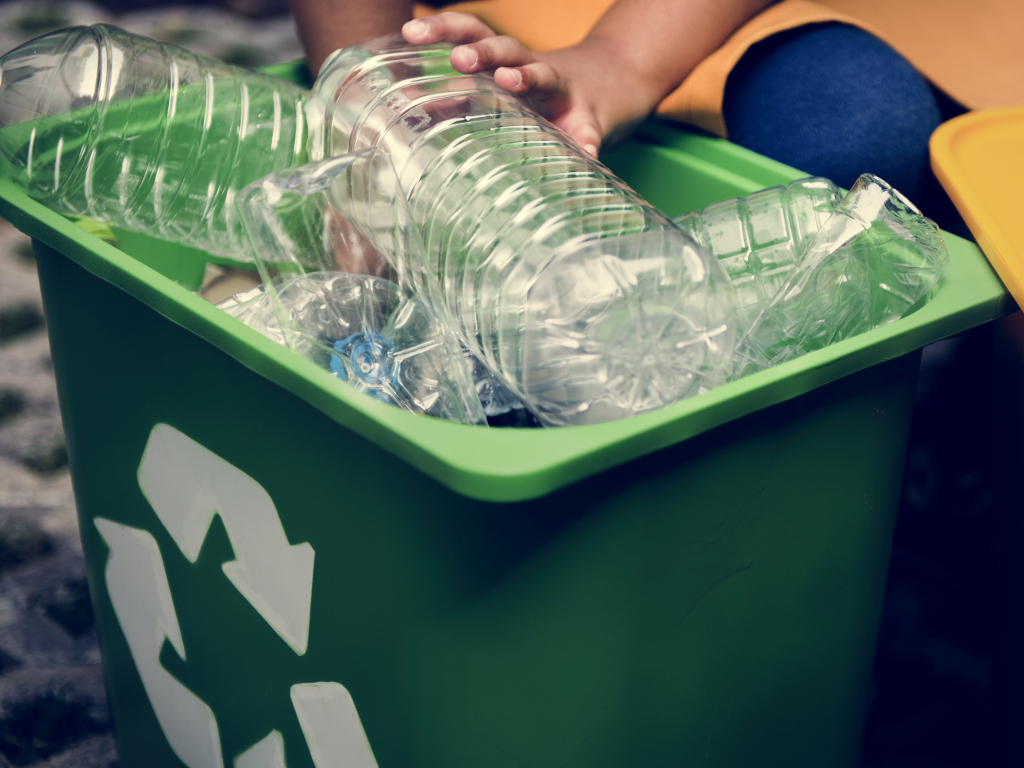
The recycling industry does not buy any kind of waste
Although the obstacles to the development of private business include insufficient waste separation, infrastructure, regulation and the lack of markets for recycled products, Cicmil singles out the quality of the raw material as the main problem.
- All of the above represents an obstacle, but the main problem is that the waste management system currently does not provide reliable and sufficiently clean raw materials.
As he explains, the recycling industry has very specific demands.
- The recycling industry doesn`t buy any kind of waste, but rather an exact material of a certain quality and composition. If there is no efficient and reliable system of separate collection of recyclable materials, then it is difficult to create the main prerequisite, which is to get quality raw materials.
An additional problem is the absence of mandatory criteria for green public procurement, as well as slow implementation of regulations.
- If waste disposal is cheaper because the price does not include all the costs of pollution, remediation and long-term management of the landfill, recycling is already placed in an unequal position.
The construction of infrastructure, by itself, is therefore not enough.
- Construction of facilities before separate collection is provided can lead to expensive facilities that do not have enough quality material to work with.
Regulations exist, but the market is not yet created
The existing waste management system, according to Cicmil, still does not provide a strong enough incentive for companies to invest in recycling and processing.
- The legislation now recognizes the hierarchy of waste, separate collection and extended producer responsibility, and the current State Waste Management Plan foresees an increase in municipal waste recycling to 65% by 2035. It is a step in the right direction, but the regulation and the plan do not create a market by themselves.
In practice, he added, the system is still mostly organized around the collection and disposal of mixed waste.
- Prevention, reuse and quality separation are insufficiently rewarded, while product and packaging manufacturers have not yet taken full financial and organizational responsibility for the waste generated from their products.
According to her, for more serious investments by the private sector, it is necessary to operationally establish extended producer responsibility systems.
- This includes a deposit system for certain packaging, ensuring transparent flows of money and materials, gradually introducing a `pay as you throw` system and using green public procurement to create demand for recycled products.
The first step is separate collection in all municipalities
According to Cicmil, Montenegro can build a more serious sector based on circular economy in the next five to ten years, but only if that concept is not limited to recycling.
- I see the greatest potential in waste prevention, reuse and repair centers, returnable and reusable packaging, processing of construction waste, composting, electronic equipment repair services, reuse of textiles and furniture, as well as in quality sorting and preparation of secondary raw materials.
Such activities, according to her, can simultaneously create local jobs and help the country to achieve its prescribed goals.
- I think that the first step should be the establishment of separate collection in all municipalities, starting with biowaste and dry recyclable materials, with precise deadlines, responsibilities, funding and publicly available data.
Oversized facilities for mixed waste are a risk
At the same time, Cicmil warns that one of the biggest risks would be tying Montenegro to oversized plants that require large and long-term guaranteed amounts of mixed waste.
- The biggest risk would be tying Montenegro to oversized plants, where I mean incinerators, which need guaranteed amounts of mixed waste for decades, especially through public-private partnerships.
Such projects, he adds, must be approached with great care.
- Such a model creates economic interest for mixed waste and directly competes with prevention, reuse and recycling.
And exactly the opposite should be the goal of the circular economy.
- A serious circular economy does the opposite and success is measured by the amount of waste that was not created and the value of the products and materials that were returned to the system - our interlocutor concludes.
Ivana Žikić

Click here to see the entire Special Edition Newsletter
"Invest in Montenegro – Opportunities, Insights, Growth"
read more

Tags:
MONSTAT
Zero Waste Montenegro
Vanja Cicmil
special edition newsletter Invest in Montenegro
Invest in Montenegro Opportunities
growth perspectives
Comments
Your comment
Naš izbor



Most Important News
Full information is available only to commercial users-subscribers and it is necessary to log in.
Pratite na našem portalu vesti, tendere, investicione projekte, grantove i pravnu regulativu.
Registracija na eKapiji vam omogućava pristup potpunim informacijama i dnevnom biltenu
Naš dnevni ekonomski bilten će stizati na vašu mejl adresu krajem svakog radnog dana. Bilteni su personalizovani prema interesovanjima svakog korisnika zasebno,
uz konsultacije sa našim ekspertima.