


 Izdanje Srbija
 Serbische Ausgabe
 Izdanje BiH
 Izdanje Crna Gora


 News
News


Bad air comes to pay - Pollution could cost Montenegro dearly, citizens are entitled to compensation for impaired health
Source: eKapija
 Tuesday, 24.03.2026.
22:56
Tuesday, 24.03.2026.
22:56
Tuesday, 24.03.2026.
22:56
 Comments


Illustration (Photo: Svietlieisha Olena/shutterstock.com)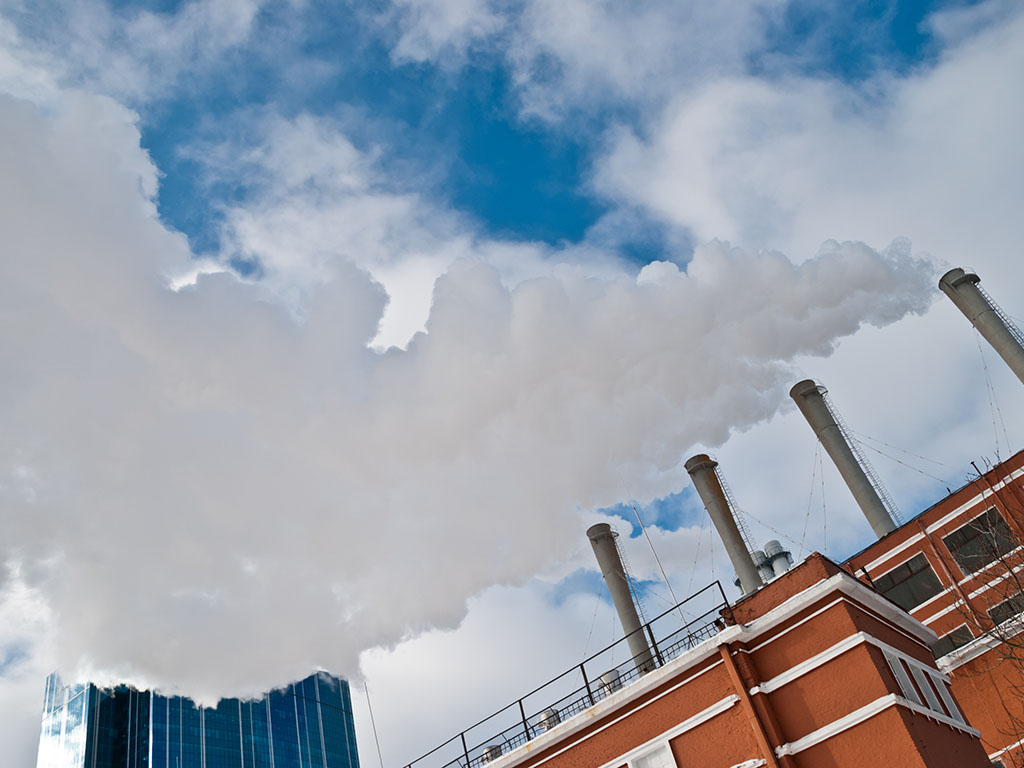
In the explanation of the law, it is pointed out that the existing regulations are not fully harmonized with the requirements of the European Union, especially in air quality monitoring segments, application of modern measuring methods, definition of limit values of emissions and transparent information to the public. The new law seeks to overcome these shortcomings through more precisely defined competences of institutions, more up-to-date monitoring system and stricter pollutant control.
One of the key novelties of the law is the introduction of a legal mechanism which allows citizens to claim compensation for damages if their health is at risk due to air pollution and non-compliance with the prescribed standards. In this way, for the first time, direct responsibility for consequences for human health is clearly established, which represents a significant step forward in strengthening legal protection and alignment with European legislation.
- The protection of human health and the environment is the main objective of this Law, considering that air pollution has a direct impact on respiratory and cardiovascular diseases, increased mortality rate, as well as adverse effects on ecosystems - it is stated in the explanation of the Law, which is under public discussion.
As stated, the new law not only enables more effective prevention measures and emissions control, but also introduces a legal mechanism for compensation for damage to human health caused by non-observance of prescribed air quality standards.
- Individuals who suffer health damage as a result of breaching obligations in this area, including inadequate implementation of air quality plans and short-term action plans, have the right to demand and obtain compensation for that damage before the competent court. This further strengthens the protection of citizens` rights and ensures the broadcaster`s responsibility in accordance with the principles of legal protection provided by the Directive of the European Parliament and the Council (EU) 2024/2882 on the protection of human health from air pollution - it was clarified.
The document states that, by 2030, it is planned to reach much stricter limit values for pollutants such as PM2.5 and PM10 particles, in accordance with the recommendations of the World Health Organization. Also, a modernized monitoring system will be established that includes the measurement of ultrafine particles, as well as digital platforms for collecting and publishing data in real time, thus providing citizens with timely and transparent information.
- In cases where the permitted values are exceeded, competent authorities will be obliged to develop and implement plans for improving air quality. These plans will include measures for various sectors, including industry, energy, traffic, agriculture and households, with the application of the principles of integrated management - it was assessed.
The law stipulates the obligation to establish an air quality monitoring system, preparation of emission reduction plans, and measures for the protection of sensitive groups and areas, in accordance with the requirements of Directive (EU) 2024/2881. Also, it enables integration with information from other environmental protection sectors, including noise and chemicals, to comprehensively manage health and environmental risks. As indicated, the application of this law represents an important step towards achieving the EU`s ambitious goals for cleaner and healthier air.
- The strategic goal is to achieve so-called "zero pollution" by 2050, i.e. that the air quality reaches a level that is not considered harmful to human health, nature and biodiversity. In that direction, the law introduces a number of instruments such as national obligations to reduce emissions, development of the air protection information system, regular reporting and data exchange, as well as the improvement of air quality modeling and assessment - the document states.
As stated, competences and responsibilities for air protection, methods for assessing air quality, monitoring air quality, modeling application, air quality management, air quality plans, measures for avoiding, preventing and reducing air pollution and its harmful effects on human health and the environment, national obligations to reduce emissions, air quality reporting and data exchange, air emission monitoring activities, air protection information system, public information, access to justice,
compensation for damage to human health, financing of air protection, administrative and inspection supervision are defined by law.
- Air quality monitoring and assessment prescribes the establishment of a network of stations for continuous and periodic air quality monitoring, including measuring PM2.5, PM10, NO₂, SO₂, CO, O₃ and ultrafine particles, while the Agency for Environmental Protection is responsible for collecting, processing and verifying data and regular reporting to the public, local self-governments, and the European Commission in accordance with technical standards and EU requirements - it was clarified.
In case of exceeding the limit values of pollutants, competent authorities are obliged to develop and implement air quality plans and emission reduction programs which include measures for industry, traffic, energy, agriculture and domestic sources, in accordance with the principles of integrated air quality management and the requirements of EU Directive 2024/2881.
The law prescribes the issuance of emission permits and the definition of maximum emission limit values for all significant sources of pollution, including thermal power plants, industrial plants, production facilities and traffic flows, whereby emission permits contain technical conditions, monitoring obligations and criteria for emission control in accordance with EU standards.
Citizens are guaranteed the right to access information on air quality in real time, including the publication of data in electronic databases and participation in public consultations during the development of plans and programs for reducing emissions, thereby ensuring their involvement in decision-making and legal protection in accordance with the Aarhus Convention.
The law foresees the powers of inspection bodies to supervise compliance with regulations on emissions and air quality standards, and in case of non-compliance with regulations, monetary and other sanctions are prescribed.
The principles of prevention, cooperation between competent authorities and the principle of transparency have been defined, including systematic monitoring of critical pollutants and implementation of risk management measures, which enables preventive action in air quality protection.
The introduction of electronic systems for monitoring emissions and air quality is foreseen, including automatic sensors, digital registers and mandatory electronic reporting to local institutions and the European Commission, along with integration with existing information systems.
The law promotes the reduction of emissions through the support of innovations, application of renewable energy sources and modernization of industrial and transport facilities, in accordance with the principles of sustainable development and technical standards of the EU.
- In situations where the concentrations of polluting substances exceed the threshold values,
emergency actions are foreseen, including temporary traffic bans, limitations of industrial activities and timely warning of citizens, in accordance with the health care crisis plans and regulations of the domestic legislation - it is written in the explanation of the Law.
Also, the law regulates issues of financing, inspection supervision and implementation of measures. Although no significant increase in budget allocations is expected, certain investments will be needed in the acquisition of modern equipment and strengthening of the capacities of the competent services. Additional funds are planned through international projects, but also through the collection of fines for entities that violate regulations, while responsible business entities will be encouraged to invest in technologies to reduce emissions.
As it was concluded, the new Law on Air Protection represents an important step towards the modernization of the environmental protection system and the fulfillment of obligations from the negotiated Chapter 27. Its implementation should contribute to better air quality, greater responsibility of polluters and a higher level of health protection of citizens in Montenegro.
As the Ministry of Ecology, Sustainable Development and Development of the North announced in mid-March, the Draft Law on Air Protection will be subject to public discussion for 30 days.

Click here to see the entire Special Edition Newsletter
"INVESTING IN THE FUTURE - Powering a new world"
read more
Companies:
 Vlada Crne Gore
 Agencija za zaštitu životne sredine Podgorica
 Ministarstvo ekologije, održivog razvoja i razvoja sjevera Crne Gore
Tags:
Government of Montenegro
Environmental Protection Agency
Ministry of Ecology
Sustainable Development and Development of the North
Air Protection Act
air protection
air pollution
compensation for air pollution
Investments in the future Energy for the new world
green economy
special edition newsletter on the green economy
special edition newsletter
Comments
Your comment
Naš izbor
Most Important News
Full information is available only to commercial users-subscribers and it is necessary to log in.
Pratite na našem portalu vesti, tendere, investicione projekte, grantove i pravnu regulativu.
Registracija na eKapiji vam omogućava pristup potpunim informacijama i dnevnom biltenu
Naš dnevni ekonomski bilten će stizati na vašu mejl adresu krajem svakog radnog dana. Bilteni su personalizovani prema interesovanjima svakog korisnika zasebno,
uz konsultacije sa našim ekspertima.