


 Izdanje Srbija
 Serbische Ausgabe
 Izdanje BiH
 Izdanje Crna Gora


 News
News


Serbia has 7,200 electric cars, procedure for chargers almost like for building permit – Amending single rulebook would accelerate network development
Source: eKapija
 Monday, 17.08.2026.
14:36
Monday, 17.08.2026.
14:36
Monday, 17.08.2026.
14:36
 Comments


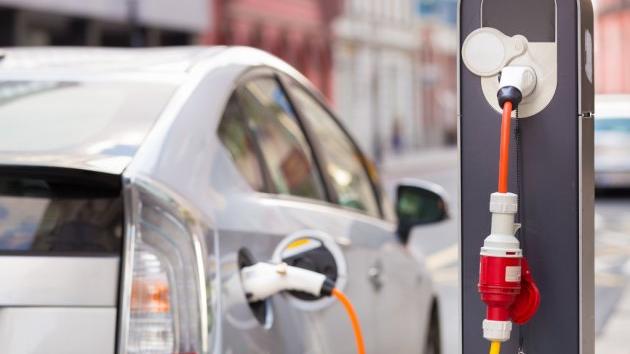
Illustration (Photo: eKapija/S.M.)
The Draft Law on the Regulation of Infrastructure for Alternative Fuels is in line with NALED’s recommendation to simplify the procedure for installing chargers for electric vehicles, which envisages the removal of obstacles in terms of planning, permitting, procurement, optimal material and cost efficiency and management of infrastructure for alternative fuels. The draft accepts the use of existing infrastructure, parking lots and other complementary infrastructure, as well as the direction in which to strive to remove obstacles to permitting.
In order to comply with European regulations, the Draft Law on the Regulation of Infrastructure for Alternative Fuels, which passed a public debate in June this year, stipulates that cities and municipalities with more than 50,000 inhabitants must install at least one station, with at least five charging points, while chargers will be installed every 60 kilometers on state roads.
– There are currently around 7,200 electric cars registered in Serbia, and citizens will more easily decide on this option if charging is available at every step. At the same time, investors are deterred from installing new chargers by a procedure that is almost as complex as issuing a building permit. Safety and technical checks must remain, but the administrative process can easily be relaxed to the benefit of everyone. NALED’s proposal is therefore to enable the installation of chargers without a special decision from the authority responsible for construction, with mandatory conditions from Elektroprivreda Srbije and, when necessary, the consent of the public road manager – says Dusan Vasiljevic, Director of the Competitiveness and Investment Department at NALED.
The need for amendment arises from the inconsistent provisions of the current regulation. One part states that for the installation of chargers in the protective zone of roads and streets, it is not necessary to obtain an act from the competent authority, while the other prescribes the obligation to issue a decision on approval for the execution of works.
Such inconsistency leaves room for different interpretations, so investors in practice undergo the procedure according to the Law on Planning and Construction, which requires additional time, more extensive documentation and higher costs. Amending the regulation would eliminate this legal ambiguity, make the procedure more predictable, and maintain the necessary control of the installation and connection of chargers.
If the competent authorities assess that a special solution is still necessary for certain locations, NALED recommends in the Grey Book that such cases be clearly and precisely stated in the regulation. Investors would thus know in advance which rules apply, whom to contact and what documentation they need to obtain.
In the Grey Book of Innovations, which was created within the StarTech project, with the support of Philip Morris, NALED also proposes other recommendations for the development of the eMobility ecosystem:
– A 50% reduction in road tolls for electric vehicles and 25% for hybrid vehicles, as well as free or preferential parking, are some of the measures that can help increase the use of more environmentally friendly vehicles, which have also been implemented in other countries. It is also necessary to digitalize and simplify the procedures for granting subsidies, and the key generator of the transition to electromobility should be state authorities and public enterprises by giving priority to zero-emission vehicles in procurement – says Vasiljevic.
Expanding the network of electric vehicle chargers is an important part of the development of smart cities, which NALED is working on through the project “Towards Smart, Green and Sustainable Cities in Serbia”, which it is implementing together with GIZ and in cooperation with the companies Intracom Telecom and TeleGroup, through the development partnership program with the private sector develoPPP of the German Federal Ministry for Economic Cooperation and Development (BMZ), where a solar charging station for electric vehicles is being piloted in Veliko Gradiste as one of the smart solutions.
Companies:
 NALED Beograd
Tags:
NALED
Dušan Vasiljević
Law on the Regulation of Infrastructure for Alternative Fuels
electric cars
electric vehicle chargers
Comments
Your comment
Naš izbor

Most Important News
Full information is available only to commercial users-subscribers and it is necessary to log in.
Pratite na našem portalu vesti, tendere, investicione projekte, grantove i pravnu regulativu.
Registracija na eKapiji vam omogućava pristup potpunim informacijama i dnevnom biltenu
Naš dnevni ekonomski bilten će stizati na vašu mejl adresu krajem svakog radnog dana. Bilteni su personalizovani prema interesovanjima svakog korisnika zasebno,
uz konsultacije sa našim ekspertima.