


 Izdanje Srbija
 Serbische Ausgabe
 Izdanje BiH
 Izdanje Crna Gora


 News
News


State preparing new rules for capital projects – Stricter control, central database and mandatory check of investment readiness to be introduced
Source: eKapija
 Tuesday, 11.08.2026.
14:48
Tuesday, 11.08.2026.
14:48
Tuesday, 11.08.2026.
14:48
 Comments


Illustration (Photo: Val Thoermer/shutterstock.com)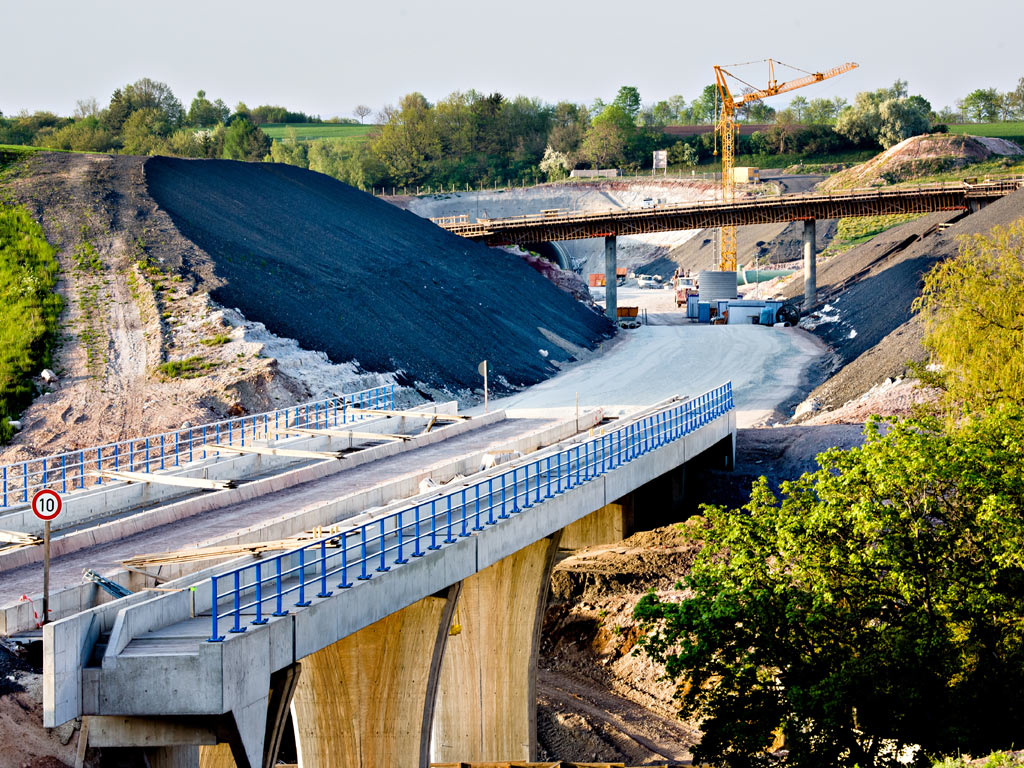
According to the Ministry of Finance, the goal of drafting the new regulation is to improve the legal framework and system of planning and monitoring of capital projects in accordance with the best international standards.
This activity is being carried out in accordance with the conclusions of the Strategic Political Dialogue on Public Administration Reform held in October 2024 with the European Commission, as well as Serbia’s commitments in the European integration process.
The new rules should regulate the preparation, assessment, selection, financing, implementation and monitoring of capital projects, as well as the analysis of the effects of completed investments.
According to the proposal, the rules would apply to capital projects that are fully or partially financed by public funds, borrowing, state guarantees and subsidies, as well as to projects financed from donations, transfers, international assistance and European Union funds.
Capital projects are considered to be projects for the construction and capital maintenance of buildings and infrastructure facilities of public interest, as well as investments in equipment, machinery and other non-financial assets. Projects with a long-term implementation period can be divided into several stages, but each stage must individually meet the conditions for a capital project. The proposal also explicitly prohibits the artificial division of a project in order to avoid the application of the rules of the regulation.
Thresholds of EUR 2 and 20 million
The draft regulation classifies capital projects into state, provincial and local projects.
A state capital project is an investment whose estimated costs amount to at least EUR 20 million in dinar equivalent, whose predominant beneficiary is the Republic of Serbia and which is financed from republican public funds, international sources, or for which the state provides a guarantee or subsidy.
For provincial and local capital projects, the threshold is at least EUR 2 million in dinar equivalent, with the appropriate level of government as the predominant beneficiary and prescribed sources of financing.
If a project simultaneously meets the requirements for multiple categories, it will be considered a higher-level government project.
PIMIS as central database
The proposal introduces a Centralized Database of Capital Projects - PIMIS, or an information system for managing capital projects.
Through PIMIS, projects will be recorded, project documentation will be entered in all phases, assessment, selection and prioritization will be performed, implementation will be monitored and the achieved effects will be subsequently analyzed.
The Ministry of Finance will manage the system, while authorized proposers will be responsible for the accuracy of the data they enter.
Until PIMIS is fully established, documentation will be able to be submitted in paper or electronic form, or in another appropriate manner.
Commission to decides on priorities
The Commission for Capital Projects, established by the Government, is responsible for state capital projects. It is headed by the Prime Minister, while the Deputy Presidents are the ministers responsible for finance, construction, transport and infrastructure, and European integration.
The Commission adopts lists of project ideas, projects in preparation and prepared projects, and then determines the priorities for their financing and implementation.
Before the Commission makes a decision, the projects are considered by the Sub-Commission, which analyzes the financial aspect, compliance with planning documents, the readiness of project and technical documentation, environmental protection and other relevant elements.
Priority is determined based on economic and financial, management and social, environmental criteria, as well as priority areas of development determined by public policies and planning documents.
Implementation control every three months
During the implementation of the investment, the authorized proposer must develop an implementation plan with a timeframe and cost projection.
Progress will be monitored quarterly, through reports containing data on implemented activities, spent funds and possible deviations from the plan.
If it is determined that the project is late or deviates from the planned costs and activities, the plan correction procedure is initiated. The authorized proposer then has a period of 15 days to submit an explanation of the deviation and a proposal for an amended plan.
If it is determined that the continuation of the project is not justified, the Commission may make a decision on its rationalization – that is, postponement or termination of the project.
Termination means the suspension of implementation and deletion of the project from the unified list of prepared projects.
Effects will be checked three years after completion
Upon completion of the investment, the authorized proposer must submit a final project report within 60 days.
For state and provincial capital projects, subsequent evaluation is also envisaged, three years after the completion of the project. At that time, the planned goals will be compared with the actually achieved results and the effects of the project on society, public finances, the budget and the environment will be analyzed.
This obligation does not apply to local capital projects.
Local commissions must be formed within 60 days.
The provincial government establishes the Provincial Commission, while each local self-government unit must establish its own Local Commission for capital projects. The provisions relating to the Sub-Commission do not apply to local and provincial projects, while the obligation of subsequent evaluation of effects does not apply to local projects.
Public consultations until August 17
The Ministry of Finance has invited institutions, the professional public, the academic community, civil society organizations and citizens to submit proposals, suggestions, initiatives and comments on the Draft Regulation.
The consultations will last until August 17, 2026, and the draft regulation is available on the website of the Ministry of Finance and the “eKonsultacije” portal.
Comments can be submitted by e-mail to opkp@mfin.gov.rs or in writing to the Ministry of Finance, 20 Kneza Milosa Street, Belgrade, with the indication “Public consultations on the Draft Regulation on Capital Projects.”
The new regulation, after adoption, should replace the 2023 Regulation on Capital Projects. It is envisaged that projects that have not been completed by the time of its entry into force will continue the project cycle in accordance with the new rules.
I. Z.
Companies:
 Ministarstvo finansija Republike Srbije
Comments
Your comment
Naš izbor
Most Important News
Full information is available only to commercial users-subscribers and it is necessary to log in.
Pratite na našem portalu vesti, tendere, investicione projekte, grantove i pravnu regulativu.
Registracija na eKapiji vam omogućava pristup potpunim informacijama i dnevnom biltenu
Naš dnevni ekonomski bilten će stizati na vašu mejl adresu krajem svakog radnog dana. Bilteni su personalizovani prema interesovanjima svakog korisnika zasebno,
uz konsultacije sa našim ekspertima.