


 Izdanje Srbija
 Serbische Ausgabe
 Izdanje BiH
 Izdanje Crna Gora


 News
News


Serbia launches new phase of Danube megaproject - Tender announced for designers of multi-billion-euro Djerdap 3 pumped-storage hydropower plant
Source: eKapija
 Tuesday, 21.07.2026.
13:14
Tuesday, 21.07.2026.
13:14
Tuesday, 21.07.2026.
13:14
 Comments


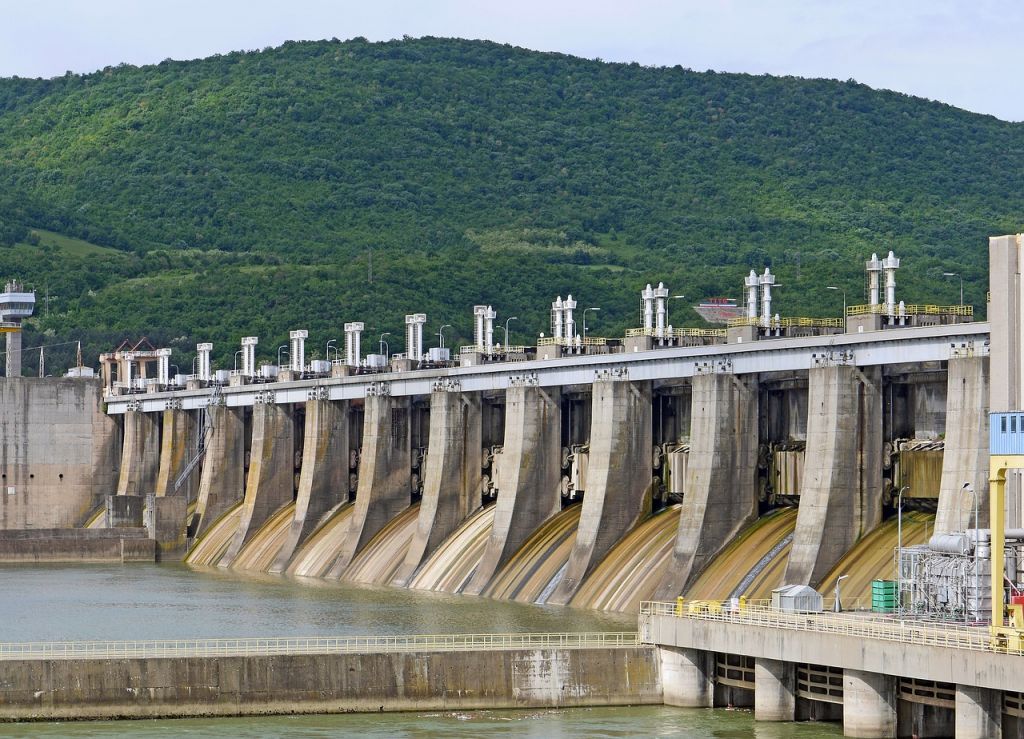
Existing Djerdap HPP (Photo: Erich Westendarp from Pixabay)
The procurement covers the preparation of key documentation for the further development of one of Serbia's strategic energy projects: the General Design, Preliminary Feasibility Study, Special Purpose Spatial Plan and Strategic Environmental Assessment.
The Djerdap 3 pumped-storage hydropower plant is planned as a large-scale electricity storage system whose primary role will be to increase the flexibility of the power system, cover peak loads and support the integration of energy from renewable sources, primarily wind and solar.
According to analyses conducted to date, the project has the potential for an installed capacity of around 1,200 to 2,400 MW, with the possibility of developing a system with a large effective head of around 400 meters. Pesaca and Brodica on the Severni Kucaj mountain are being considered as possible upper reservoirs, while the Danube, specifically the Djerdap 1 HPP reservoir, would serve as the lower reservoir.
The planned pumped-storage hydropower plant is being developed in the wider area of the Djerdap Gorge, between Golubac and Donji Milanovac, around 65 kilometers upstream from the Djerdap 1 HPP. The system would include intake and outlet structures on the Danube, a powerhouse with reversible pump-turbine units, intake and discharge tunnels and pipelines, upper reservoirs with dams, transformer and switchgear facilities, a connection to the transmission grid, as well as supporting infrastructure.
According to the public procurement documentation, the project is of strategic importance for the development of Serbia's power system, as it would enable greater use of renewable energy sources and contribute to security of electricity supply.
A particular challenge is the fact that the project is being implemented within the existing Djerdap Hydropower and Navigation System, which is a cross-border system operated by Serbia and Romania on the Danube. The documentation will therefore need to assess impacts on the water regime, navigation, the operation of the existing Djerdap 1 and Djerdap 2 hydropower plants, as well as the conditions for cooperation with the Romanian side.
The project is located in an area of high natural, cultural and environmental value, including the Djerdap National Park, which means that part of the documentation will also focus on aligning technical solutions with environmental protection requirements and the preservation of natural values.
The deadline for submitting applications is August 20, while more details about the tender are available HERE.
The idea of constructing the Djerdap 3 pumped-storage hydropower plant has been under consideration since the 1970s. Following the construction of the Djerdap 1 and Djerdap 2 systems, the first studies and conceptual designs were prepared, while the project has gained renewed attention in recent years due to the need for large-scale energy storage capacity and the development of renewable energy sources.
The Embassy of the United States of America in Serbia published a call for expressions of interest in early June for participation in the Djerdap 3 pumped-storage hydropower plant construction project. Minister of Mining and Energy Dubravka Djedovic Handanovic stated that six companies had expressed interest in the construction of the Djerdap 3 pumped-storage hydropower plant through the public call.
Serbia and Romania recently signed a Memorandum of Understanding in Bucharest on facilitating the exchange of information regarding the Djerdap 3 pumped-storage hydropower plant project, whose value is estimated at EUR 2.6 billion.
As stated following the signing of the document, Serbia plans to begin preparing the spatial planning and design and technical documentation for the construction of this pumped-storage hydropower plant this year.
I. Z.


U blizini:


2,1 km


Fotografije:


Opis:
Vidi sve

Tags:
Ministry of Mining and Energy
preparation of planning and part of the technical documentation for the implementation of the Djerdap 3 pumped-storage hydropower plant construction project
Djerdap 3 PSHPP
Djerdap 3 Pumped-Storage Hydropower Plant
Djerdap 1 HPP
Djerdap 2 HPP
Dubravka Djedovic Handanovic
Memorandum of Understanding on facilitating the exchange of information regarding the Djerdap 3 Pumped-Storage Hydropower Plant project
Investicije na lokaciji:
2024.
Comments
Your comment
Naš izbor

Most Important News
Full information is available only to commercial users-subscribers and it is necessary to log in.
Pratite na našem portalu vesti, tendere, investicione projekte, grantove i pravnu regulativu.
Registracija na eKapiji vam omogućava pristup potpunim informacijama i dnevnom biltenu
Naš dnevni ekonomski bilten će stizati na vašu mejl adresu krajem svakog radnog dana. Bilteni su personalizovani prema interesovanjima svakog korisnika zasebno,
uz konsultacije sa našim ekspertima.