


 Izdanje Srbija
 Serbische Ausgabe
 Izdanje BiH
 Izdanje Crna Gora


 News
News


It’s time to change the industrial strategy

 Comments


(Photo: Pixabay/ falco)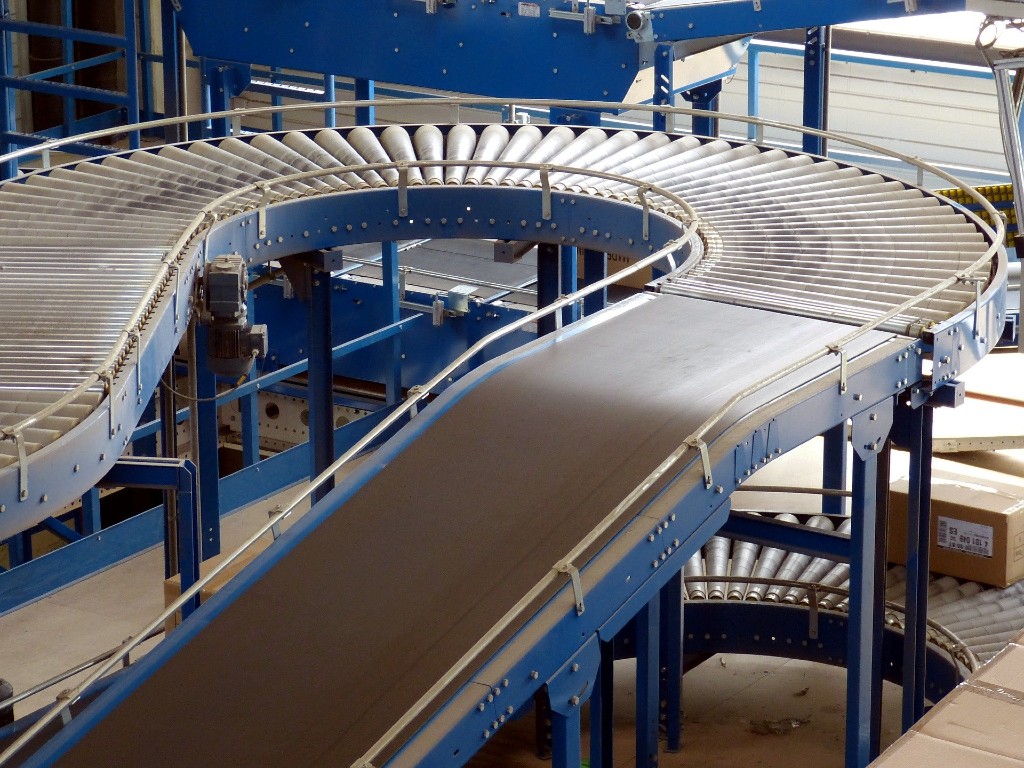
He points out that the new EU strategic framework, set at the beginning of last year, called the Clean Industrial Deal (CID), represents the EU’s strategic response to the triple crisis facing industry.
This refers to the decline in global competitiveness (documented factually in the Draghi report from 2024), the urgent need to accelerate sustainable transitions, primarily decarbonization, and the increased vulnerability and need for economic resilience.
The CID is essentially the EU’s reaction to the global return to proactive industrial policy, especially to the decline in competitiveness compared to the US and China. More precisely, it is the first EU strategic document to address the phenomenon of “deindustrialization.” Until now, the goal has been vague and abstract, such as “shifting to higher value-added sectors” or “modernizing industry.”
However, in the absence of strong measures to attract and retain production, a combination of high energy prices in the EU, more generous subsidies in other countries (e.g. the “Inflation Regulation Act”) and excessive bureaucracy that stifles efficiency and innovation, business is taking place in an environment that inevitably leads to the collapse of industry, writes Nikolic.
The new approach is therefore born from mistakes and the realization that previous policies were insufficient to prevent this undesirable outcome in the new, harsher global context.
Historically, EU industrial policy has changed through several periods:
The first marked the post-war period (until the late 1970s), when a strong, selective and protectionist policy was enforced. This period was marked by mass production, extensive use of fossil fuels, and tariff protectionism. The end result was a larger physical volume of production, but also a contraction of innovation, accompanied by environmental problems.
The second, horizontal, market-oriented approach of the 1990s and 2000s (which Serbia also followed wholeheartedly at the beginning of the transition) led to the erosion of the EU’s industrial base, the relocation of production to regions with cheaper labor and a lower regulatory burden, and the loss of entire technological chains (solar panels, electronics).
The third phase, from 2010, brings back a somewhat more explicit industrial policy driven by globalization, the climate agenda, and geopolitical competition. The so-called “Smart Specialization” is promoted as an attempt at regional industrial revitalization, which, however, has shown limitations in achieving convergence. The EU Green Deal is also adopted, setting an ambitious framework for EU climate neutrality.
This is also the most criticized strategic development direction of the EU, which has omitted an industrial framework for its implementation. A paradoxical situation has arisen, the EU has imposed the strictest standards in the world on itself, only for its companies and equipment manufacturers to rapidly lose market share to their American competitors, with IRA subsidies, and Chinese ones with enormous state support, who are investing in clean technologies.
During this era, there have also been numerous initiatives, as an elaboration of this approach, such as the Critical Raw Materials Act or the Net-Zero Industry Act – the so-called European ecosystem for the production of net-zero emission technologies.
In a way, all these initiatives have also supported the orientation towards a more explicit industrial policy, which will culminate in the CID.
However, its development could be far more aggressive, as suggested by the draft document entitled: “The Industrial Accelerator Act (IAA) 12.”
Unlike the CID, which is primarily a political framework or vision, the IAA would be a key legal instrument for its implementation, with the aim of accelerating and making more effective the use of existing industrial policy tools.
The quantitative objective is not simply to halt deindustrialization, but to ambitiously increase the share of industry in EU gross value added from 14.3 in 2020 to at least 20 percent by 2030.
Its purpose is to make the “return of industrial policy” an operational reality by removing obstacles, centralizing resources and pushing for priorities. It must accelerate the green transition, decarbonize energy-intensive industries (steel, cement, chemicals) and strengthen the competitiveness of EU production through faster permitting and the introduction of eco-labels.
The EU is therefore not giving up decarbonization, but the goal is to accelerate this process by simplifying the permitting system, improving access to clean energy and supporting key low-carbon projects.
In this sense, it is expected that more legal solutions will be adopted during 2026, such as: a specialized bank for industrial decarbonization, a new Circular Economy Law, a revision of the Public Procurement Directive, a new EU Emissions Trading System (EU ETS) and so on. Therefore, the IAA should not be seen as an isolated legal proposal, but a process that will only outline the EU’s industrial policy.
The IAA will make industrial policy not only aggressive within the EU, but also more assertive externally, which directly affects our economy. The pressure for harmonization will certainly increase further. For example, in order for companies from EU partner countries to be part of these “accelerated” supply chains, they will have to meet even stricter standards (from environmental to digital and safety).
Hypothetically, if the EU were to offer preferential terms to strategic manufacturers through the IAA (e.g. extra-fast approval and access to cheap funds), this would reduce Serbia’s attractiveness for foreign direct investment.
An active policy of attracting capital through financial incentives for employment and investment would have to include deep integration into these simplified procedures and secure value chains. Countries that fail to adapt to this accelerated, demanding regime risk becoming merely suppliers of low-value inputs or raw materials to aggressively integrated EU clusters, rather than building their own complex value chains.
For countries like Serbia, this must in any case be an urgent signal that the traditional approach to industrial policy must be re-examined – as the rules for entry into the most important market will become ever faster, more demanding and more subordinated to the EU’s strategic, rather than purely economic, objectives.
The success of the CID will not be measured only by the growth of industrial production in the EU, but by the ability to fundamentally transform this production and become the driver of a sustainable, competitive and resilient future for Europe in a turbulent global context.
The Republic of Serbia has based its current Industrial Policy Strategy (for the period 2021-2030) on the premises of a “moderate return” to explicit industrial policy, with the aim of: improving the digitalization of business models of industrial production, developing an innovation-based industry and developing higher stages of technological production, increasing the volume of investments while increasing the quality of investments, improving the technological structure of exports, and transforming the industry from a linear to a circular business model.
In short, we aimed to increase the competitiveness of the industry by focusing on green transition and sustainable development, but with a horizontal approach.
And there is no doubt that the growth of the manufacturing sector since 2020, despite numerous limitations, is characterized by positive technological changes: Technological complexity of production in the Serbian manufacturing sector (share in GVA), share of exports of high-tech products in GDP, in the meantime we have faced numerous challenges starting from the Covid crisis, geopolitical tensions, trade wars and fragmentation, energy constraints...
It is difficult to say that the premises of the current Strategy have been exhausted, but the context and priorities have changed dramatically, requiring not a revision “from scratch,” but an urgent and deep strategic adaptation.
Namely, the circular economy, digitalization and green transformation are still absolutely valid and necessary directions for a modern, resilient and competitive industry. They are not passing trends, but structural conditions for survival in the 21st century. Something that the EU does not renounce.
Abandoning them means exposing oneself to enormous market and regulatory risk.
The 2020 strategy was based on a pre-COVID and pre-war world with different assumptions that no longer exist. Therefore, the new strategy, for example, must explicitly address the diversification of supply chains – from basic raw materials and energy to more complex intermediate products.
Crises have shown that energy security and affordability often become a more urgent and politically sensitive goal than decarbonization.
Such a strategy must provide a clearer answer to the question of how to ensure stable and cheap energy for industry during the transition (e.g. through gas interconnectors, nuclear power, etc.).
Classic measures of support for the economy, such as subsidies and tax credits, may also need to be reconsidered.
New instruments are needed to support in crisis situations, to encourage strategic reserves, and to strengthen domestic development and engineering capacities so that technologies are not only imported, but also adapted and developed locally.
In fact, Serbia should not abandon its strategic premises, but deepen and enrich them in light of new lessons that the EU itself is having a hard time learning. This means that our industrial policy should become even more explicit, and even more focused on building internal resilience, while building bridges to a transformed European Union.
Revision (or adaptation) is not a sign of failure of the previous strategy, but a sign of maturity to recognize that the world has changed faster than planned, says the editor-in-chief of MAT.
Companies:
 Ekonomski Institut a.d. Beograd
Tags:
MAT
Macroeconomic Analysis and Trends
Ivan nikolić
industrial strategy
Clean Industrial Deal
inflation
excessive bureaucracy
high energy prices
Industrial Accelerator Act
Industrial Policy Strategy
supply chain diversification
company subsidies
Comments
Your comment
Naš izbor


Most Important News
Full information is available only to commercial users-subscribers and it is necessary to log in.
Pratite na našem portalu vesti, tendere, investicione projekte, grantove i pravnu regulativu.
Registracija na eKapiji vam omogućava pristup potpunim informacijama i dnevnom biltenu
Naš dnevni ekonomski bilten će stizati na vašu mejl adresu krajem svakog radnog dana. Bilteni su personalizovani prema interesovanjima svakog korisnika zasebno,
uz konsultacije sa našim ekspertima.