


 Izdanje Srbija
 Serbische Ausgabe
 Izdanje BiH
 Izdanje Crna Gora


 News
News


Waste management, water and air filtering plants, innovative solutions – 2025 RETROSPECTIVE, investments in ECOLOGY
Source: eKapija
 Friday, 06.02.2026.
09:59
Friday, 06.02.2026.
09:59
Friday, 06.02.2026.
09:59
 Comments


Mount Zlatar, a new protected area (Photo: Shutterstock/Bada1)
Certainly, one of the greatest successes is the innovation of our scientists from the Vinca Institute, who found a solution for the biggest air pollutants. Their industrial smoke neutralizer proved to be a salvation for outdated thermal power plants.
Kragujevac became the headquarters of the first eco-industrial park in the Western Balkans, and Belgrade received 150,000 filters to reduce air pollution.
With seven regional waste management centers, we now have several wastewater treatment plants more, but also a tax on CO2 emissions and another special nature reserve - Mount Zlatar.
Find out more details below. Here are the articles that attracted the most attention from our portal’s readers in 2025.
1. Industrial smoke neutralizer - A team of scientists from the Vinca Institute of Nuclear Sciences has patented an innovative solution for the biggest air pollutants.
– When the alarming news about Belgrade as the city with the most polluted air in the world first appeared, we felt a responsibility to direct our research towards solving the problem. Our thermal power plants and smelters in Serbia most often do not have any filters for emitted gases. The idea was developed to find the most suitable material that could absorb the most dangerous gases SO2, CO and CO2 and NOX before they reach the atmosphere – Dr. Sanja Milosevic Govedarovic, senior research associate at the Vinca Institute, told eKapija.
The industrial smoke neutralizer - NID, uses a mixture of natural mineral clays that are completely safe. In addition, it neutralizes acidity that may be increased due to the dissolution of exhaust gas components in water, does not stick to the walls of the system and does not form scale, and the used material can be used as fertilizer for crops, which contributes to the environmental sustainability of the solution and the circular economy.
2. Clean Serbia Program - On the right bank of the Kolubara River, in Baric, on an area of 3.06 hectares, a wastewater treatment plant is soon to be built.
The plant is being built in Baric (Photo: Zahtev za odlučivanje o potrebi procene uticaja na životnu sredinu)
Mechanical treatment includes fine screens and sand traps, while biological treatment is carried out in a compact plant with four SBR reactors. The system also includes sludge treatment, which reduces the solids content by more than 50% before it is transported for disposal.
In Ratari near Obrenovac, construction of a wastewater treatment plant has recently begun as part of this program, announced city manager Miroslav Cuckovic.
– The start of construction of the first in a series of wastewater treatment plants along the Sava and Danube rivers in Ratari puts Belgrade on the map of green capitals of Europe – stated the city manager.
3. Solution for unsanitary landfills - The French Development Agency (AFD) and the European Bank for Reconstruction and Development (EBRD) are lending EUR 300 million to seven regional waste management centers in Serbia, which will help 47 local governments solve the problem of unsanitary landfills.
Illustration (Photo: Pixabay / prvideotv)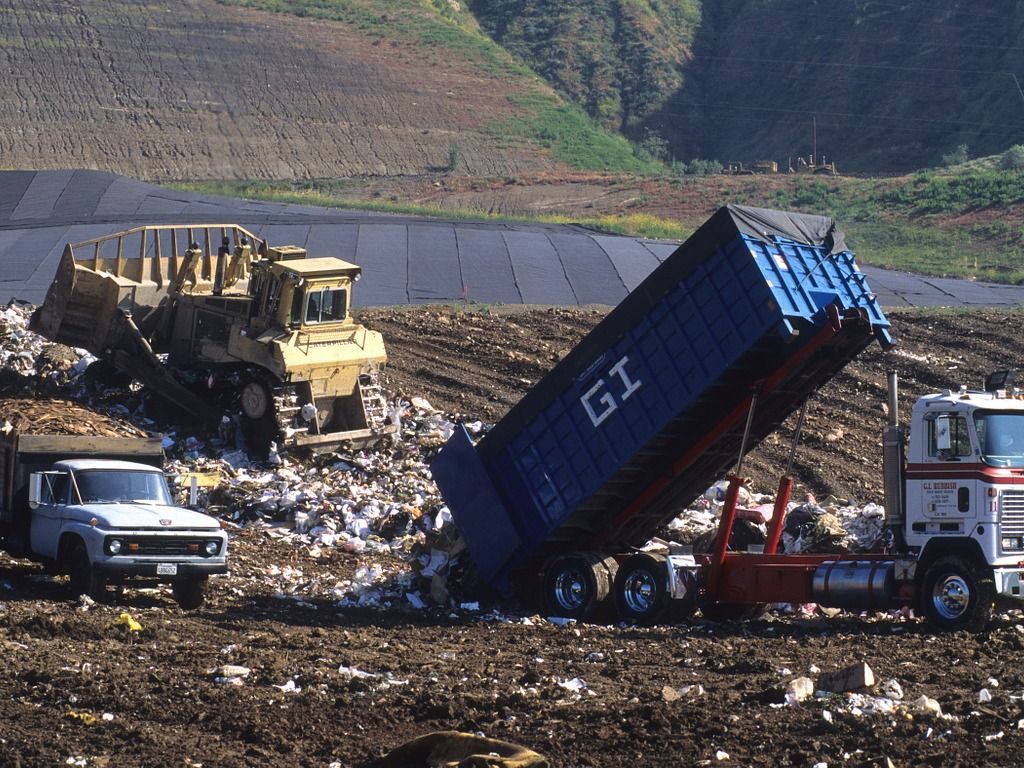
The aim is to minimize the amount of waste landfilled and extend the lifespan of landfills.
– Serbia will have for the first time a mechanical-biological waste treatment facility, where recyclable materials will be separated to the greatest extent possible so that as little waste as possible is deposited in a sanitary landfill – said Minister of Environmental Protection Sara Pavkov.
4. Eco-industrial park in Kragujevac - The first brownfield eco-industrial park in the Western Balkans has been developed in Kragujevac.
MIND Park, as a pilot project, aims to become a fully integrated eco-industrial zone and an example of sustainable industrial development in accordance with EU environmental standards.
Darko Djoric, CEO of MIND Park, explains that this 190-hectare park will apply advanced methods to reduce negative environmental impacts.
The establishment of this eco-industrial park is part of a broader industrial decarbonization strategy for the Western Balkans.
5. Wastewater collector in Kraljevo - With the support of the European Union, the project to build a wastewater treatment plant in Kraljevo has been implemented since 2022, when the Ministry of Finance and the Ministry of Environmental Protection issued a public call.
– This is a project worth more than EUR 17 million, very important for all the residents of Kraljevo, which will enable wastewater treatment, but also the expansion of the sewage network to suburban settlements – say the City Administration.
6. Pollution tax - The Law on Greenhouse Gas (GHG) Emissions Tax, adopted at the end of 2025, introduces for the first time a tax on carbon dioxide, nitrous oxide and perfluorocarbon emissions.
(Photo: Unsplash/veeterzy)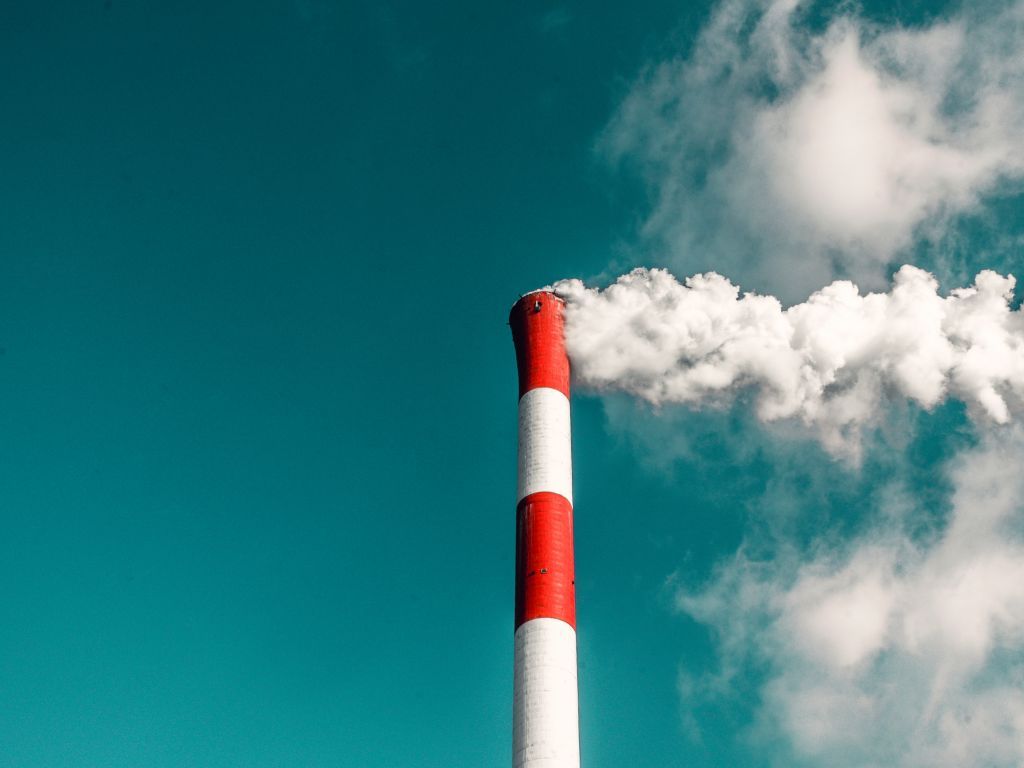
Taxpayers must have a GHG emission permit and operate in the production of: artificial fertilizers and nitrogen compounds, cement, pig iron, steel and ferroalloys, aluminum and electricity.
The tax is calculated at a rate of EUR 4 per ton of CO2 emitted, or per ton of CO2 equivalent for other gases.
7. Filters for cleaner air in Belgrade - The City of Belgrade will install 150,000 filters to reduce air pollution.
The filters should reduce the emission of suspended particles PM10 (particles smaller than 10 micrometers) into the air by at least 40%.
In the first phase, by April 30, 2026, 80,000 filters will be installed, and in the second phase, the remaining 70,000 filters will be installed by April 30, 2027, at the latest.
The project has an estimated value of 14.6 million dinars.
8. Zlatar new protected area - The Serbian Government has declared the “Zlatar” Special Nature Reserve.
This protected area covers about 8,000 hectares of forest ecosystems - spruce, fir and beech forests, with numerous endemic species and valuable habitats, home to 128 species of birds, 42 species of mammals and 871 species of plants.
Meanders of the Uvac (Photo: Shutterstock/Alberto Loyo)
By the way, Mount Zlatar is located in the southwestern part of Serbia and is one of the most beautiful ancient Vlach mountains.
9. Worms that decompose Styrofoam - Serbian scientists are experimenting with mealworms as a way to decompose polystyrene.
Larisa Ilijin, a senior research associate at the Institute of Biology in Belgrade, said that scientists had discovered how mealworms could digest various types of plastic, including polystyrene, used in packaging, insulation and food containers.
These insects normally eat almost anything, but they have to be “trained” to consume plastic products.
– We have larvae that have been adapted over a long period of time to biodegrade plastic, in order to be as efficient as possible in this process – said Ilijin.
(Photo: Printscreen/YouTube/ScienceAlert)
– Styrofoam takes more than 500 years to decompose in nature... this could be one of the good ways to solve the problem of plastic waste in nature – said Ilijin.
The institute has provided several containers with mealworms to the Belgrade company Belinda Animals. The company is now breeding them and hopes to attract a network of similar farms.
10. “Fog catchers” installed on Tara - As part of the “For a Green Agenda for Serbia” initiative, and with financial support from the Swedish International Development Cooperation Agency, atmospheric moisture collectors, so-called “fog catchers,” have been installed in Tara National Park in order to preserve the humid habitats of the unique ecosystem of the Crveni Potok reserve.
The Crveni Potok reserve is the only place in the world where Pancic spruce and white peat bogs, a type of rare moss, grow together, which are currently threatened by climate change, drought and human influence.
By installing “fog catchers” in Tara National Park, they will try to stabilize the water regime of the ten-thousand-year-old peat bog.
– Fog catchers are mesh structures. Water droplets are collected on this fine mesh by condensation, then deposited in reservoirs, or water basins. We will use this water in unfavorable periods, and the first effects will be visible after just one vegetation season – says Marijana Josipovic, biologist of Tara National Park.
Companies:
 Institut za nuklearne nauke Vinča Beograd
 Institut za biološka istraživanja Siniša Stanković Beograd
 Pokret Čista Srbija
 Milanović Industries Group d.o.o. Kragujevac
 Ministarstvo zaštite životne sredine Republike Srbije
Tags:
 Zlatar
Vinča Institute
Institute for Biology
Clean Srbija
NID
MIND Park Kragujevac
Sara Pavkov
Law on Greenhouse Gas Emissions Tax
Tara
fog catchers
Comments
Your comment
Naš izbor

Most Important News
Full information is available only to commercial users-subscribers and it is necessary to log in.
Pratite na našem portalu vesti, tendere, investicione projekte, grantove i pravnu regulativu.
Registracija na eKapiji vam omogućava pristup potpunim informacijama i dnevnom biltenu
Naš dnevni ekonomski bilten će stizati na vašu mejl adresu krajem svakog radnog dana. Bilteni su personalizovani prema interesovanjima svakog korisnika zasebno,
uz konsultacije sa našim ekspertima.