


 Izdanje Srbija
 Serbische Ausgabe
 Izdanje BiH
 Izdanje Crna Gora


 News
News


Lafarge planning to build technological complex for production of cement and cement-based elements “Ratari-Jazovnik”
Source: eKapija
 Monday, 03.11.2025.
10:56
Monday, 03.11.2025.
10:56
Monday, 03.11.2025.
10:56
 Comments


Illustration (Photo: Pixabay.com/Life-Of-Pix)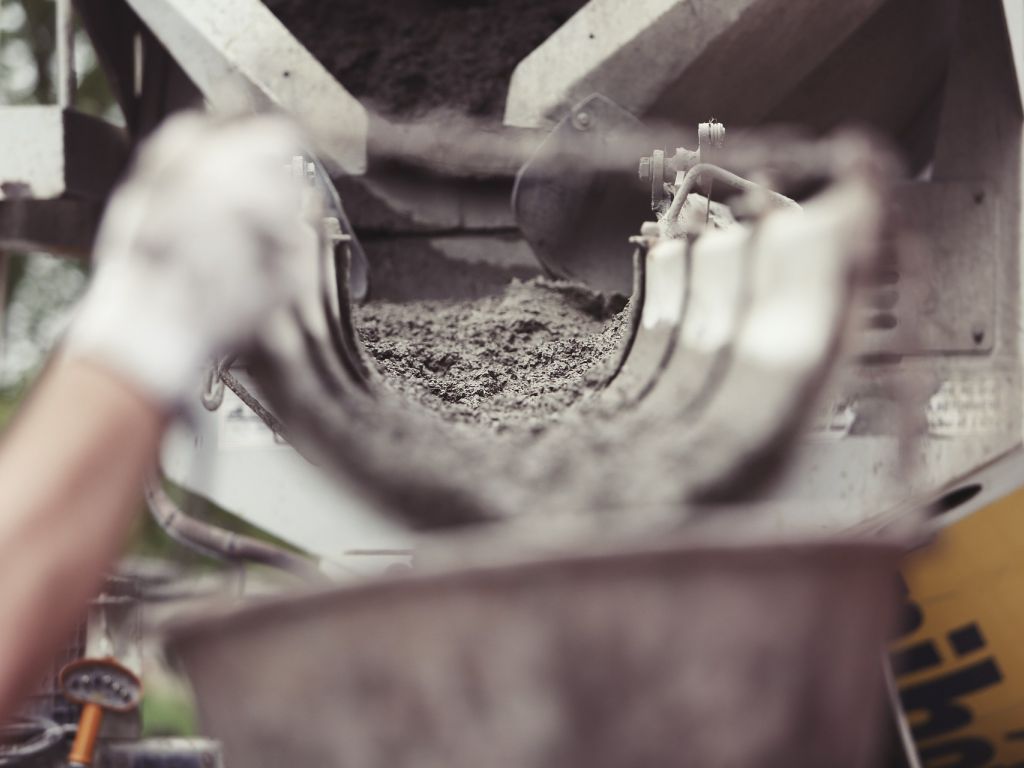
The spatial plan will cover, as can be seen, the cadastral municipalities of Ratari (Obrenovac municipality), Jazovnik (Vladimirci municipality) and Svileuva (Koceljeva municipality). The total territory covered by the spatial plan is 32,740 ha.
As stated in the document, the cement production plant is located in the cadastral municipality of Ratari on an area of 18.80 ha, and the quarry for the production of cement in the administrative divisions Jazovnik and Svileuva on an area of 305.80 ha. The area of the planned exploitation field is 276.2 ha.
The special purpose area of the Jazovnik quarry, as reminded, is located in the so-called Posavina-Tamnava region in the area of the villages of Jazovnik and Svileuva. It is about a kilometer away from the village of Jazovnik, and about 3 km from the village of Krnic. In its current state, the special purpose area of the Jazovnik quarry consists of an active quarry, until recently owned by the company TOP-KALK from Sabac and now owned by Lafarge Serbia. The existing Jazovnik quarry (entirely in the area of the village of Jazovnik) has been in exploitation since 1994. Since the exploitation works have approached the border of the existing exploitation field, it is necessary to expand it to the surrounding areas suitable for this purpose, the document notes.
(Photo: Printscreen/Rani javni uvid za PPPPN)
What is planned
The domestic cement industry, as indicated in the text of the document for early public inspection, does not have the capacity to meet the demand for cement in Serbia. Today, it is added, there is a shortage of about 700,000 tons of cement on the domestic market, and cement imports from neighboring countries will reach almost EUR 100,000,000 annually.
– The project to build a plant on the site in KO Ratari, Obrenovac municipality should cover the future demands of the domestic market for cement until 2040. This project includes the construction of a factory for the production and distribution of cement and other cement-based products, and part of the factory is also a plant for the processing of fly ash from thermal power plants. Lafarge Serbia is also in the final stages of acquiring the Jazovnik quarry (in parts of the Vladimirci and Koceljeva municipalities), where limestone is mined and further processed in a crushing plant to produce aggregates of various granulations. The annual capacity of the quarry is 900,000 tons. Limestone from this quarry is used for further cement production and for the gas desulfurization process in thermal power plants – the document states.
The entire technological process, as mentioned, includes a cement production and distribution plant at the Ratari location, a quarry at the Jazovnik location, and a raw material truck transport system with an annual capacity of around 220,000 tons of products from the Jazovnik quarry and 400,000 tons of fly ash from the Nikola Tesla B power plant in Obrenovac. Raw material will be transported by road - by trucks with stone aggregate tanks, while fly ash and limestone filler will be distributed by closed truck tankers.
– The process of producing cement and hydraulic binders, along with the disposal of additional quantities of by-products from other industries, primarily fly ash from the Nikola Tesla B thermal power plant, will significantly reduce the need for fly ash disposal, which is a key environmental benefit. Fly ash landfills occupy large areas, permanently pollute groundwater, permanently pollute the air, and cause health problems for the population. Lafarge’s investment in the Ratari and Jazovnik locations would enable the production of about twenty different cement-based products that are not currently present on the Serbian market. This investment enables the production and marketing of the most advanced types of products with a drastically reduced carbon dioxide content per ton of product and an increased share of non-metallic mineral raw materials – the document states.
The general goal of this project, as it is added, is the sustainable use of mineral resources and maintaining Serbia’s position as a regional leader in the mining industry. The specific goal of the protection and use of mineral resources and the development of mining is, among other things, the application of the best modern technologies in geological research and exploitation with the aim of rational and economical use of deposits with a secure supply of industrial capacities (thermal power plants, heating plants, refineries, smelters, cement and lime factories, etc.).
The drafting authority is the Spatial and Urban Planning Agency of Serbia, and the plan is being prepared by the Center for Urban Development Planning (CEP).
The document will be available for early public inspection from November 3 to 17.
More details (in Serbian) can be found HERE.

Tags:
Lafarge Serbia
Lafarge
Spatial and Urban Planning Agency of Serbia
Center for Urban Development Planning
TPP Nikola Tesla B
construction of technological complex for the production of cement and cement based elements Ratari Jazovnik
spatial plan for special purpose area for technological complex for the production of cement and cement based elements Ratari Jazovnik
Comments
Your comment
Naš izbor


Most Important News
Full information is available only to commercial users-subscribers and it is necessary to log in.
Pratite na našem portalu vesti, tendere, investicione projekte, grantove i pravnu regulativu.
Registracija na eKapiji vam omogućava pristup potpunim informacijama i dnevnom biltenu
Naš dnevni ekonomski bilten će stizati na vašu mejl adresu krajem svakog radnog dana. Bilteni su personalizovani prema interesovanjima svakog korisnika zasebno,
uz konsultacije sa našim ekspertima.