


 Izdanje Srbija
 Serbische Ausgabe
 Izdanje BiH
 Izdanje Crna Gora


 News
News


Talks with IMF mission end: growth to accelerate to 4% next year
Source: Beta
 Thursday, 12.06.2025.
10:48
Thursday, 12.06.2025.
10:48
Thursday, 12.06.2025.
10:48
 Comments


(Photo: Atstock Productions/shutterstock.com)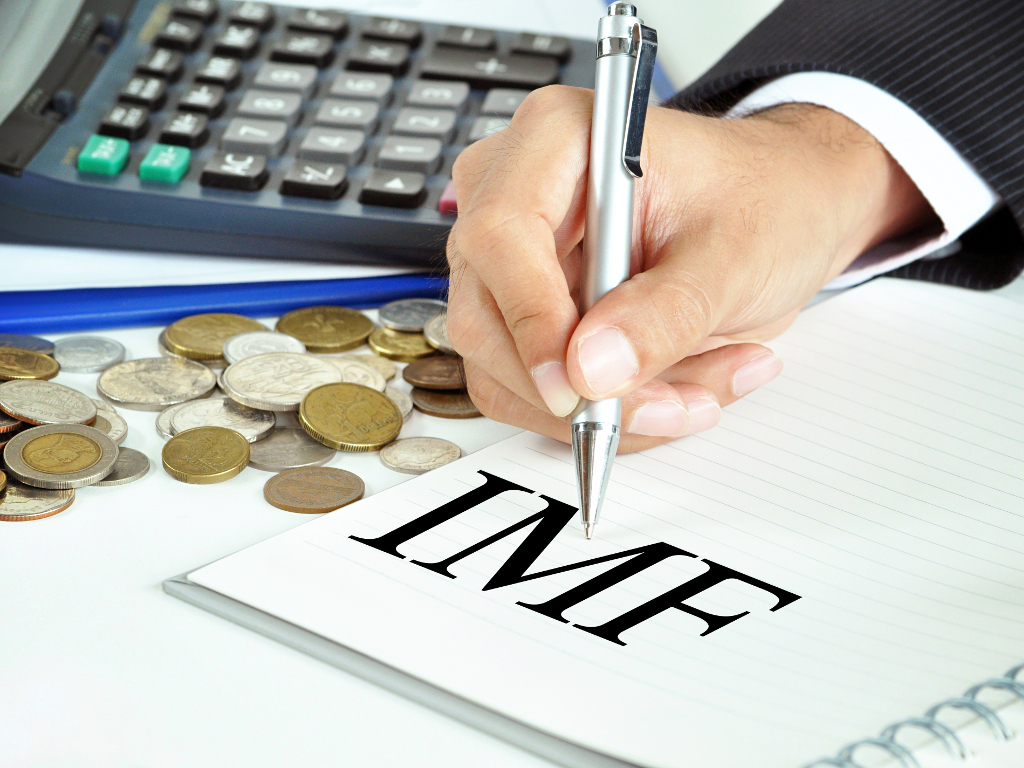
Agreement was reached on the first review of the Policy Coordination Instrument, which will be presented to the IMF’s Executive Board for approval. Article IV consultations were also conducted with Serbia, the press release says.
As specified, the labor market remains robust, inflation is easing, FX reserves are high, public debt is declining, and banks are well-capitalized and liquid.
After the first quarter, growth is expected to strengthen, driven by the government’s investment program and the expansion of export capacities in the manufacturing sector.
FDI inflows have moderated but together with exports are projected to continue supporting the accumulation of FX reserves from already ample levels.
Headline inflation has fallen back within the NBS’s target band, supported by declining energy prices and moderating core inflation.
It is pointed out that support also came from monetary policy that is appropriately restrictive and should maintain a tightening bias amid upside risks to prices.
The fiscal deficit will not exceed 3.0% of GDP during 2025-2027, supported by special fiscal rules on the indexation of public wages and pensions.
Any additional spending needs will be accommodated within the 3.0% of GDP deficit ceiling through careful public investment prioritization and budget reallocation.
This balanced approach to infrastructure, social, and other spending priorities will keep public debt on a downward path, reinforcing fiscal credibility and investor confidence, the press release says.
It was estimated that, in addition to macro-financial stability, the reform agenda should advance further with a view to strengthening the business environment and raising productivity, including modernization of labor market regulations, and further digitalization of specific segments of the public sector and the judiciary.
It was estimated that energy sector reforms were advancing but that more remained to be done to ensure financial sustainability and operational efficiency in state-owned enterprises.
Despite the global environment, as pointed out, Serbia’s macroeconomic results remain robust. Serbia has built up substantial buffers to respond to shocks - FX reserves and government deposits are high, public debt is declining, and banks are well-capitalized and liquid.
During the talks, Governor Jorgovanka Tabakovic pointed out that Serbia continued to implement sound and well-coordinated policies.
– Y-o-y inflation is within our target band of 3±1.5% and stood at 4.0% in April. In the coming period, inflation is expected to continue slowing and will approach the target midpoint of 3% by the end of the year, a level around which it is expected to remain until the end of the projection – she said.
Tabakovic pointed out that the NBS’s FX reserves were at an exceptionally high level by all metrics, including the IMF’s, covering nearly seven months of imports of goods and services.
– All rating agencies cite the high level of FX reserves, which we have built up over the past more than ten years, as one of the key elements that sets us apart positively from countries with comparable credit ratings – said the governor.
She added that, in 2025, they expected a growth rate of 3.5%, supported in part by supply-side factors, while for 2026 and 2027 they projected economic growth in the range of 4–5%. This will be driven in part by planned investments under the “Leap into the Future – Serbia EXPO 2027” program.
– We have joined SEPA, for which we have long been prepared, and now have the opportunity to make payment transactions with EU countries more efficient and cost-effective. We in Serbia have already introduced into domestic payments - which make up the majority of daily transactions by citizens and businesses - the most modern services based on transactions executed within a matter of seconds – said Tabakovic.
She also pointed out that, generally and individually, banks in Serbia were well-capitalized and highly liquid.
She estimated that the past monetary policy easing had fully passed through to interest rates in the money and dinar loan markets, while the easing of the ECB’s monetary policy had impacted the cost of borrowing in euros in Serbia.
– Along with the further easing of credit standards for households, this has contributed to an acceleration of lending activity to 10.5% in April, with loans to the corporate sector growing by 8.0% and to households by 12.0%. On all these grounds, the share of non-performing in total loans is at its lowest level of 2.3% - said Tabakovic.
According to her, there are also positive effects from interest rate caps, which can be clearly seen in the example of housing loans, where a potential increase in non-performing housing loans was prevented, reducing their share in total housing loans to 1.25% in April this year.
– The average growth rate of Serbia’s GDP over the past seven years of close to 4% (real growth) reflects good policies and a sound environment we have created. This is confirmed by data showing that over the past seven years, Serbia has attracted an average of about EUR 4 billion per year in foreign direct investment, or 6.8% of GDP on average, with a record of EUR 5.2 billion achieved last year. Furthermore, the fact that around 80% of foreign direct investments consist of equity investments and reinvested earnings indicates that investors in Serbia are expanding existing projects and launching new ones, despite challenges in their home markets – she said.
She pointed out that Serbia had achieved all three goals even amid significant geo-economic and geopolitical risks: a sharp decline in inflation and its movement within the target band, maintained and reinforced financial stability, and real GDP growth among the highest in Europe, accompanied by employment growth and a reduction in unemployment.
The NBS reminds that the Policy Coordination Instrument is advisory in nature and does not involve the use of financial resources.
It is approved to countries that are committed to reforms and are implementing strong and credible economic policies.
In addition, consultations under Article IV of the IMF’s Articles of Agreement are conducted regularly with all member countries as part of the surveillance function of this international financial institution.
The previous Article IV consultations with Serbia were successfully conducted in 2023.
Mali: IMF projects further economic growth of Serbia, despite domestic and global challenges
First Deputy Prime Minister and Minister of Finance Sinisa Mali stated, at the end of the visit of the IMF Mission to Serbia, that this financial institution predicted further economic growth for the country, despite domestic and global challenges, and added that it was a success and recognition of the economic policy of Serbia.
– The IMF predicts GDP growth of approximately three percent in 2025 and four percent in 2026, with an expected acceleration during the second half of the year, thanks to state investment programs and the growth of export capacities, especially in the processing industry – Mali emphasized, as announced by the ministry.
Mali reminded that the Serbian government had committed to maintaining the fiscal deficit below three percent during the period from 2025 to 2027, and to continuing with this policy.
He added that the year 2024 had been successful and emphasized that Serbia had a well-designed budget and was fully liquid.
The First Deputy Prime Minister pointed out that “further work is ahead on improving the business environment, digitalization of the public sector and reform of public enterprises, with a special focus on revitalization and reform of the energy sector.”
According to him, the IMF has also analyzed Serbia’s monetary position and concluded that, despite the challenges in the foreign trade balance, foreign exchange reserves remain high, which represents a significant shield against potential shocks.
Companies:
 Međunarodni monetarni fond-MMF Beograd
 Ministarstvo finansija Republike Srbije
 Narodna banka Srbije Beograd
Tags:
IMF Mission to Serbia
IMF
International Monetary Fund
Ministry of Finance
National Bank of Serbia
Jorgovanka Tabaković
Siniša Mali
economic growth
Policy Coordination Instrument
Comments
Your comment
Naš izbor


Most Important News
Full information is available only to commercial users-subscribers and it is necessary to log in.
Pratite na našem portalu vesti, tendere, investicione projekte, grantove i pravnu regulativu.
Registracija na eKapiji vam omogućava pristup potpunim informacijama i dnevnom biltenu
Naš dnevni ekonomski bilten će stizati na vašu mejl adresu krajem svakog radnog dana. Bilteni su personalizovani prema interesovanjima svakog korisnika zasebno,
uz konsultacije sa našim ekspertima.