


 Izdanje Srbija
 Serbische Ausgabe
 Izdanje BiH
 Izdanje Crna Gora


 News


Apartments from socialism or new construction - What are we willing to give up for one room more?
Source: eKapija
 Friday, 16.10.2026.
22:51
Friday, 16.10.2026.
22:51
 Comments


Illustration (Photo: AI generated/ Gemini)
Apartments built from 1975 to 1990 in certain aspects of functionality, storage and adaptability possibilities are rated better than new buildings, according to research on housing quality in Serbia. On the other hand, newer apartments have an advantage when it comes to thermal comfort and simplicity of maintenance. The results indicate differences in the design approach and raise the question of whether in modern housing construction, under the pressure of market profitability, sufficient attention is paid to the needs of the people who will live in these apartments.
About changes in the design of apartments, the features of older housing that are still important today, as well as the need to adapt the existing standards to the long-term needs of users, for eKapija spoke prof. Dr. Đorđe Alfirević, one of the authors of the research conducted in 2025. Alfirević is an architect, researcher and university professor. He is a senior research associate at the Institute for Architecture and Urban Planning of Serbia and an associate professor at the Faculty of Contemporary Arts in Belgrade. He deals with architectural and urban planning, residential architecture and interior design. He is the author of several monographs and scientific works, and he is the recipient of, among other things, the Borba Award for Architecture and several annual awards of ULUPUDS.
He carried out the research with his colleagues Tanja Njegić, Sanja Simonović Alfirević and Sanja Nikolić from the Institute of Architecture and Urbanism of Serbia, and the results were published in the work "Contemporary Dwelling in Serbia: Insights from a Survey Study" in the international scientific journal Buildings.
Đorđe Alfirević (Photo: Rade Kovač)
The aim of the research, as stated by Alfirević, was to review the experiences and opinions of users about the quality of modern housing in Serbia, with special reference to the functional, spatial and technical characteristics of apartments from different construction periods. The results indicate some differences in user ratings, which open up the question of changes in design priorities during the previous decades.
- I don`t think the knowledge about high-quality apartment design has disappeared, but rather
the priorities determining their spatial organization have changed. During the period of targeted residential construction during the seventies and eighties of the XX century significant attention was paid to functional relations, separation of daytime and nighttime activities, natural lighting, storage spaces and the possibility of adapting the apartment to changes in the household structure. Today, design is often carried out under the strong pressure of market profitability, while trying to achieve as many apartments and rooms as possible on the available area. Such an approach leads to a reduction of the areas intended for communications and auxiliary premises, which are often seen as a loss of usable area, even though they have a significant role in the daily functioning of the apartment - explains Alfirević.
In this context, the research results show that respondents who live in apartments from the period 1975-1990. on average rated their functional organization, storage possibilities and spatial adaptability more favorably. However, this does not mean that all older apartments are of better quality, but rather that the functionality and organization of space in that period had a more significant place among the design priorities.
Technical progress does not mean better space organization
New construction is rated better when it comes to thermal comfort and ease of maintenance, but that does not mean that it automatically provides better spatial organization.
- The technical and spatial quality of the apartment are not opposing categories and there is no justified reason to achieve one quality aspect at the expense of another. Modern construction materials, thermal insulation systems, installations and technological solutions allow a higher level of technical comfort. However, technical progress does not automatically entail progress in spatial organization. Our research shows that respondents who live in newer apartments rate thermal comfort and ease of maintenance more favorably, while certain aspects of functionality, natural lighting and adaptability are rated less favorably. It is, therefore, about different dimensions of quality, where the improvement of one does not necessarily mean the improvement of the other - Alfirević points out.
The problem, as he explains, is that the quality of an apartment is often judged by the year of construction,
equipment and finishing, while the functional organization of the space is taken for granted.
- Thermal insulation or installations can be improved later, but improper orientation, unfavorable location of rooms or lack of natural light is often very difficult, and sometimes impossible to correct - Alfirević states.
Illustration (Photo: Photographee.eu/shutterstock.com)
More than 40% of respondents adapted the apartment to their needs
According to the results of the research, 41.6% of respondents made certain spatial interventions in their apartments. They include moving partitions, glazing terraces, connecting or separating rooms, and changing their purpose.
However, adaptations are more common in older apartments and in households that stay in the same space for a long time. The need for changes does not necessarily have to be the result of design flaws, but can arise from changes in the life of the household, such as the birth of a child, growing children, working from home or changing the number of family members.
- One of the problems of modern housing construction is the identification of meeting the minimum normative requirements with reaching the appropriate quality of the apartment. An apartment that meets all the prescribed conditions does not have to be adaptable to changes in user needs over time, especially if such adaptability is not included in the prescribed criteria. Certain changes in the needs of the household, such as the increase in the need for privacy of children as they grow up, can be anticipated in advance and taken into account during the design. Spatial organization that enables appropriate adaptation to such changes extends the functional life of the apartment and reduces the need for complex adaptations or relocation. That`s why the quality of the apartment should not be assessed only by its initial functionality, but also by its ability to respond to changes during its lifetime - says Alfirević.
Are standards for apartment design outdated?
Square footage in itself is not enough to judge the quality of the apartment. Two apartments of the same area and room structure can have a completely different use value, depending on the proportions, room ratio, lighting, privacy and furnishing options.
- The problem is not only in the minimal areas allowed by regulations, but also in the fact that the quality of the apartment cannot be determined with sufficient reliability solely by quantitative indicators. Two apartments of the same area and room structure can have a completely different use value, depending on their proportions, room relationships, lighting, privacy and furnishing options. It is therefore necessary to review the existing standards with the aim of more precisely defining the functional quality, including the ability of the apartment to respond to the changing needs of the user over time - Alfirević points out.
As an example, he cites a divisible room, which was affirmed in the design practice during the seventies and in 1983 it became a normatively defined requirement. The regulations at the time provided, as a rule, for a room for two people with a width of 4.20 meters, whose arrangement of openings and installation allowed the subsequent division into two smaller rooms.
- With the rulebook on conditions and standards for designing residential buildings and apartments from 2012, with amendments from 2015, the requirement for divisibility is omitted, while the minimum room width for two people in two-room and larger apartments is set at 2.80 m. Thus, one of the key requirements that ensured the spatial adaptability of the apartment was omitted from the normative minimum. That`s why I believe that modern standards should include not only the initial functionality of the apartment but also the possibilities of its adaptation to changes in household needs over time - explains the professor.
About 68% of tenants from the socialist period prefer a well-adapted older apartment
The survey showed that approximately 68% of respondents who live in apartments from the socialist period gives preference to a well-adapted apartment from that period, while about 30% of users of new construction express the same preference.
Subjective ratings can be influenced by personal experiences, habits and emotional attachment to a specific space, but the research was not designed to measure nostalgia directly, Alfirević notes.
- It is interesting that approximately 68% of respondents who live in apartments from the socialist period prefer a well-adapted apartment from that period, but also that around 30% of users of new buildings express the same preference. This suggests that the preference for older apartments is not solely determined by the immediate experience of living in them. In my opinion, this result should be understood primarily as a signal that certain spatial features of older apartments still correspond to modern needs. Good functional organization, natural lighting, clearly separated residential zones and the possibility of adaptation represent permanent qualities of living space, regardless of the social system in which such solutions were created. That`s why I would not interpret the research as an idealization of former housing, but as an indicator that users recognize and value spatial-functional qualities that are not necessarily related to the age of the apartment - Alfirević states.
Illustration (Photo: Kartinkin77/shutterstock.com)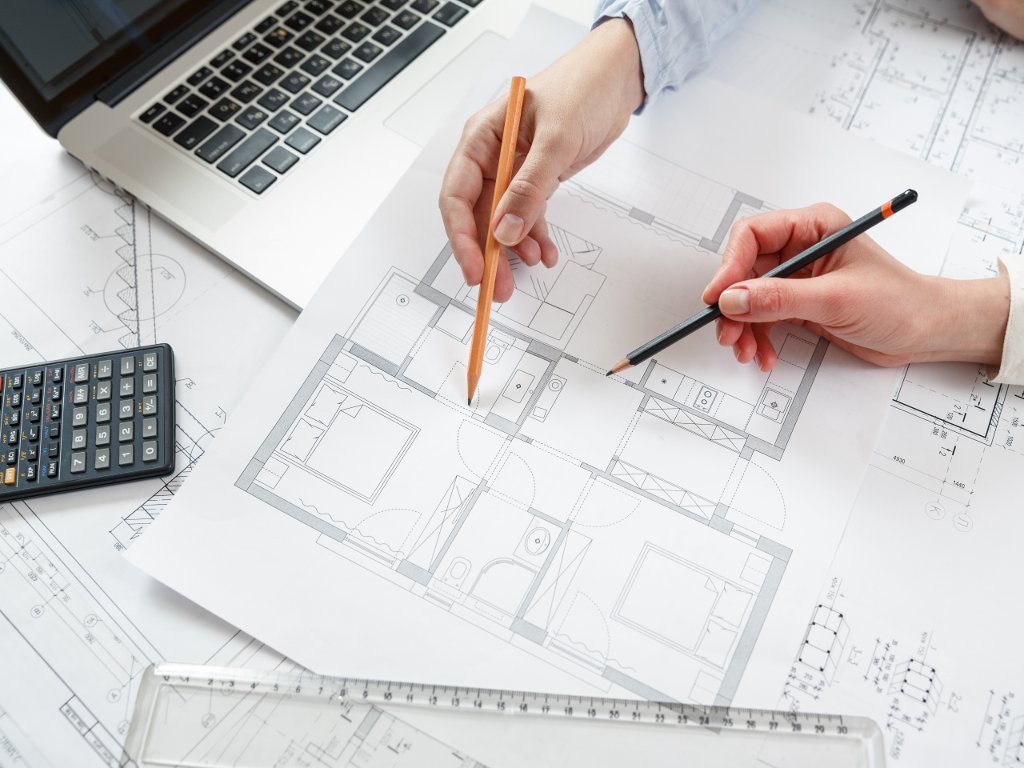
What should an ideal apartment be like for a modern family?
It is not possible to define an ideal apartment according to a unique pattern, because the needs of households vary and change over time. Nevertheless, it is possible to single out the characteristics that represent the permanent values of the residential space.
- From high-quality examples of residential construction in the seventies and eighties of the 20th century, I would take a rational functional organization, clear relations between daytime and nighttime activities, naturally lit kitchens, adequate storage spaces, two-sided orientation where it is achievable and the possibility of subsequent room adjustments. In particular, I would single out the principles of the circular connection, extended communications and extended visions, which enabled alternative directions of movement, multifunctional use of certain parts of the apartment and a greater sense of spatial comfort without necessarily increasing its area. One of the most important qualities of these solutions is flexibility, that is, the ability of the apartment to respond to changes in the household`s needs during its lifetime - Alfirević says.
From modern construction, in his opinion, advanced energy efficiency solutions should definitely be kept, high-quality thermal and sound protection, modern installations, accessibility for persons with reduced mobility and easier maintenance.
- The ideal apartment should therefore not be sought either in the past or solely in technological innovations, but in connecting the best spatial principles of earlier housing with the technical possibilities of modern design. Its most important quality would be the ability to provide functional, comfortable and adaptable living space in the long term - Alfirević concludes.

Click here to see the entire Special Edition Newsletter
"FROM FOUNDATIONS TO DETAIL - Projects, Ideas and Trends"
read more


Tags:
Faculty of Contemporary Arts in Belgrade
Institute of Architecture and Urbanism of Serbia
Đorđe Alfirević
special edition newsletter real estate and construction
From the ground up to the details Projects ideas and trends
Comments
Your comment
Naš izbor


Most Important News
Full information is available only to commercial users-subscribers and it is necessary to log in.
Pratite na našem portalu vesti, tendere, investicione projekte, grantove i pravnu regulativu.
Registracija na eKapiji vam omogućava pristup potpunim informacijama i dnevnom biltenu
Naš dnevni ekonomski bilten će stizati na vašu mejl adresu krajem svakog radnog dana. Bilteni su personalizovani prema interesovanjima svakog korisnika zasebno,
uz konsultacije sa našim ekspertima.