


 Izdanje Srbija
 Serbische Ausgabe
 Izdanje BiH
 Izdanje Crna Gora


 News
News


Emir Smailović, Faculty of Traffic: From urban planning errors to traffic jams and accidents - how did Belgrade's traffic collapse come about?
Source: eKapija
 Thursday, 07.05.2026.
22:06
Thursday, 07.05.2026.
22:06
Thursday, 07.05.2026.
22:06
 Comments


(Photo: Emir Smailović)
In such a context, questions arise that go beyond individual driver behavior - from the role of social norms and risk perception, through infrastructure quality and planning solutions, to how speeds, traffic hierarchy and system control are defined. About why Belgrade is lagging behind European practices and where the key systemic problems are located, Dr. Emir Smailović, professor of the Faculty of Traffic in Belgrade, speaks.
No one was killed in traffic in the territory of Vienna in the first quarter. It is a bigger city than Belgrade and the traffic volume is also high. It is even a city that has a highway through the city, but no ring road. Besides, Serbs make up a tenth of the population. Although there is progress in traffic safety in Belgrade compared to previous decades, especially in elementary school zones, we can still, unfortunately, read bad news in the black chronicle from time to time. Why?
- Another example of successful traffic safety management is the city of Helsinki, which has not had a person die in a traffic accident during the calendar year since the summer of 2025. In the question itself, you already indirectly pointed out that the improvement of one traffic safety factor, such as the road factor, is not enough for the complete improvement of the system. The traffic safety system is made up of human-vehicle-road-environment factors. The interconnectedness and complexity of the relationship between these factors create the final result - whether and how many victims will be trafficked in the city. Each of these factors is individually important and contains dozens of features that significantly affect traffic safety. The public often discusses the question of why the same driver sometimes parks illegally in Vračar, while he never does the same in other countries? In addition to other contributions, the answer to such a question can be found in social norms that have a significant influence on traffic behavior. Traffic participants tend to behave in accordance with the environment, i.e. other drivers, therefore they change their behavior very quickly and adapt to the majority. So, for safe participation in traffic, education is needed, knowledge and compliance with regulations, skills, social attitudes are important, but social norms and risk perception have a dominant influence. What percentage of the society condemns some dangerous traffic behavior? What percentage of young people condemns risky traffic behavior? These are precisely some of the measures of social norms that I am talking about... Then, what is the certainty that this improper behavior will be sanctioned in a timely and adequate manner, when we are talking about the perception of risk. In addition to other differences in the quality of the infrastructure, the state of the vehicle fleet, the key differences between Belgrade on the one hand and Helsinki or Vienna on the other are just the facts mentioned.
Belgrade, like the national level of the Republic of Serbia, had a very successful period of improving the traffic safety situation after the adoption of the Law on Road Traffic Safety in 2009. And that period lasted until 2017-2018, after which we can talk about stagnation and a very slight decline in the volume of the problem. The reasons can be found in every entity, but the key ones are insufficiently good management, reduction of financial resources for improving the state of traffic safety, and inadequate coordination of the activities of various entities. The capacities of the institutions for implementing measures and improving traffic safety are declining, which has significantly contributed to the stagnation of the scope of the problem.
One gets the impression that suburban roads, formerly Ibarska magistrala, now Batajnica - Ugrinovci, etc., are particularly dangerous. Can it be said that the design of these roads is not adapted to the volume of traffic in the area of the million-strong city - the Ibarska highway, on the section through the city, is still in a 1+1 lane profile, and there are also the Zrenjaninski, Smederevski, Avalski, Surčinski, Stari Batajnički roads, all radial directions for the approach to the metropolis, and narrow ones - or is it just a matter of inappropriate driving technique, wildness and uncivility of some drivers?
- Traffic accidents tend to migrate. Most of the traffic safety challenges in the central parts of the city when it comes to infrastructure have been solved, but new and more extensive problems have appeared in new locations. In the scientific literature, traffic safety is a very current topic of social inequalities, which are the result of different levels of safety. Suburban settlements are just mentioned as an example of that. Traffic accidents show marked spatial inequality, with rural/suburban areas bearing a disproportionate ratio. The proof of this is the fact that ten years ago the state road number 319 of the second B row through Dobanovce and Ugrinovce did not represent a significant traffic safety problem. Today, it is one of the most risky roads in the territory of Belgrade. The road must be adapted to its function, traffic volume, participants and environment. The key problem that occurs during the so-called "transitions" of state roads into local streets. This is the period during which the function of the road is reduced, the structure of the flow changes, so that the road is no longer dominated by long-distance trips, but by local service and going to the store. Many lives are lost until such a road receives its new function and is adapted to new driving conditions in the settlement. Every local self-government has similar problems in this regard. A separate question is whether the planning was adequate and why we allowed the mixing of diametrically different functions on the same road. It is certain that during the planning of the development of the road network and the granting of permits for the construction of new buildings, we (decision makers) made numerous mistakes...
It is true that most of these roads, above all in the part of the cross section, are not adapted to the environmental conditions. In practice, this means that the driver has the perception that he can move at a speed of 80 km/h in the settlement, because the road profile was identical to him before the settlement, where that was the permitted speed. Because of such road characteristics, drivers often do not have a good perception of what speed they should be moving, the speed for outside the settlement or the speed in the settlement.
The mentioned suburban roads have a large traffic flow, which is obstructed by numerous facilities and connections along these roads. Spontaneously, linear settlements appeared along state roads, which create huge problems in traffic safety and are not managed.
So, exceeding the speed limit of a driver is not only the driver`s fault, but it is much more the fault of the whole system, which produced such a driver, the road that contributed to the misjudgment of the safe speed, to the facilities that were built near the roadway, and to the connections that are a necessary consequence of servicing those facilities.
Emir Smailović (Photo: Snowscat/Unsplash)
Compared to the surrounding cities, Belgrade is distinguished by the absence of high-quality roads with multiple lanes per direction and surface intersections ("boulevard type") with a speed limit of more than 50 km per hour. The situation is extremely irregular on routes such as the Northern Tangent (from the Pupin bridge through Banat), where the limit due to unprofessional design is 50 km per hour, and the police tolerates up to 100! It is similar on the Ada Bridge - that, for example, in Ljubljana or Thessaloniki, the limit would be 70-80 kilometers per hour (no one even drives slower than that on the bridge). In Zagreb, New Belgrade boulevards would have a speed limit of 60-70 km/h. Why, along with the slowing down of traffic in the settlements and where it is justified, is nothing being done to eliminate such illogicalities, which certainly do not have a positive effect on safety and legal certainty?
- In a project from 2016, the Faculty of Traffic proposed to the Secretariat for Traffic of the City of Belgrade to increase the speed limit to 70 km/h in Vojvode Mišića Boulevard and Radnička Street. Even some objects of uneven pedestrian movement were built on that stretch towards Obrenovac, which seemed to be going in that direction. Today, in the year 2026, we witness that the limit is still 50 km/h on that road, with occasional speeding measurements at the borders of the settlements on that road. This is precisely one example of social inequality, because certain social groups are more often exposed to traffic enforcement measures that are, to say the least, debatable.
Bulevar Heroja from Košar is another example of a road that was designed and built for the most part for safe movement at speeds above 50 km/h. On most of this street, today`s conditions allow safe movement at speeds higher than 50 km/h, but the speed limit is 50 km/h. An automatic speed detection system has even been installed.
Such situations first of all affect the legitimacy of traffic signals and the trust that road users have in the entire system.
You are completely right that there is a need for higher speed roads in the city. I believe that the authorities will gather courage and professional competence to make such important decisions.
I`m not sure that the problem only in the design of the northern tangent led to today`s paradox that we have a cross-section of an expensive and multi-lane road where the speed is limited to 50 km/h. Much bigger problems arose during the construction and the changes that occurred during the project implementation.
(Photo: Pixabay/Alexander Grishin)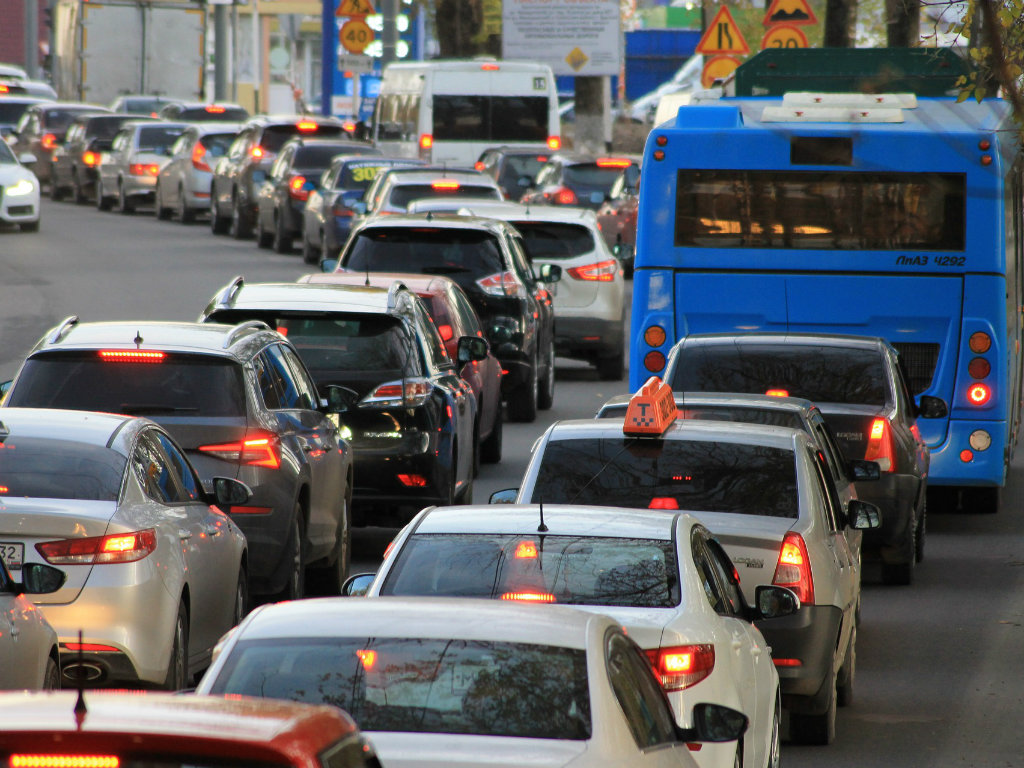
What is the professional name for a "lying down policeman" and are there other means of slowing down traffic and regulating speed, apart from these, as our editor says, "logs", which, among other things, increase consumption, thereby also CO2 emissions into the atmosphere?
- Technical means for slowing down traffic. We even have a rulebook for it! (Regulation on technical means to slow down traffic on the road.)
From an engineering point of view, a technical means to slow down traffic is the last measure to be used, when other measures have been exhausted and there is no other way to regulate traffic. Previous measures are education, training, construction of roads that indicate the speed to the driver with their profile, cameras for automatic detection, etc. A particularly significant measure is the construction of roads that show the driver the speed limit on that road with all profiles. For example, we in Belgrade, as well as in the rest of Serbia, very rarely use zones 30, which are very efficient in speed control. Even when we use them, we just place the traffic sign zone 30, while the road curtain remains asphalt 6 m wide, which is the case in Strahinjića Bana street. This street does not differ in its profile from Cara Dušana street, where 50 km/h is allowed. And actually the idea of zone 30 is to have a special road curtain and arrangement such that a speed of 30 km/h is acceptable for every driver.
Of course, there are other technical means to slow down traffic, such as vibrating belts, rustling belts, plateaus, narrowing of the roadway, etc. An effective measure that is not used enough is narrowing the roadway.
The general urban plan from 1950 provided for six main roads in Belgrade: of these, only the Third Longitudinal (Highway through Belgrade) has been fully built. According to the GUP from 1972, in front of the Zemun Railway Station, the current Zorana Đinđić Boulevard and Norveska Street from Bežanijska Kosa intersect! One entire circular ring was deleted from that plan, and the rest were not built either, except for the bypass. Can it be said that the breakdown of the implementation of urban plans is the main cause of traffic problems in Belgrade? What could be done to improve the situation in the short and medium term?
- To your very good observation, I would add a particularly important inner ring road in the old part of the city, which nobody is talking about anymore.
The key problem is the frequent change of urban plans and the disregard of plans that have been previously adopted. You may have heard as a joke that the plans change every Thursday, which is not far from the truth. Therefore, the key problem is the frequent change of plans and abandonment of previously defined plans.
First of all, it is necessary to develop adequate plans in the short term, which would define the dynamics of the realization of the key infrastructure challenges. Solving these challenges is not simple, nor can it be realized in the short term. But it is important to work on it every budget year, as well as every calendar year.
How ready are Belgrade and Serbia for autonomous vehicles and smart traffic systems, and what would be required to effectively integrate such technologies into the city network?
- The urban network of Belgrade, as well as other cities, is very far from the necessary requirements of autonomous vehicles. Newly built parts of expressways in some parts can meet the demands of autonomous vehicles. A wide set of measures is needed, from design, through quality and traffic signal equipment, to maintenance. Currently, the biggest challenges are in the area of maintenance, which cannot respond to much smaller demands than those of autonomous vehicles.
What should be Belgrade`s most important long-term strategies for traffic relief in the next 10-20 years, and how realistic is it to implement them?
- In the coming period we can expect a further increase in the level of motorization. Currently, Belgrade has about 440 passenger cars per 1,000 inhabitants. According to the experience of others who have gone through similar phases, we can expect a continuation of the rapid increase in the degree of motorization above 500 vehicles per 1,000 inhabitants. Which certainly means more crowds. The key requirement would be to develop a strategy and work towards implementing it. Not that we allow the system to spontaneously develop without our management. Therefore, in that part, the development of the capacity of the institutions that should implement strategies and action plans is key. The certainty of the implementation of strategies will depend on the capacity of institutions.
The most important strategies are, of course, shortening the travel time by public transport (which can be achieved by building the subway); multimodal transportation and land use planning; more secure infrastructure adapted to all users; safer behavior of participants; effective response to accidents by strengthening one`s own capacities; development of pedestrian and cycling traffic (scooters); consistent application of regulations; construction of key missing infrastructure (eastern part of the ring road); the development of urban corridors with higher speeds; application of zone 30 on all city streets with one lane per direction, etc.

Click here to see the entire Special Edition Newsletter
"THE ENGINE DRIVING THE ECONOMY - Fast, Smart, Sustainable"
read more
Companies:
 Saobraćajni fakultet Beograd
Tags:
Faculty of Traffic in Belgrade
Emir Smailović
traffic safety
traffic jams in Belgrade
traffic jams Belgrade
thematic newsletter on transport and logistics
thematic newsletter on transport and logistics the engine that drives the economy
special esition newsletter on transport and logistics the engine that drives the economy fast smart sustainable
Comments
Your comment
Naš izbor


Most Important News
Full information is available only to commercial users-subscribers and it is necessary to log in.
Pratite na našem portalu vesti, tendere, investicione projekte, grantove i pravnu regulativu.
Registracija na eKapiji vam omogućava pristup potpunim informacijama i dnevnom biltenu
Naš dnevni ekonomski bilten će stizati na vašu mejl adresu krajem svakog radnog dana. Bilteni su personalizovani prema interesovanjima svakog korisnika zasebno,
uz konsultacije sa našim ekspertima.