


 Izdanje Srbija
 Serbische Ausgabe
 Izdanje BiH
 Izdanje Crna Gora


 News
News


Italian companies in Serbia lose tens of millions of euros due to border blockades
Source: Biznis.rs
 Monday, 09.02.2026.
09:02
Monday, 09.02.2026.
09:02
Monday, 09.02.2026.
09:02
 Comments


(Photo: ChameleonsEye/shutterstock.com)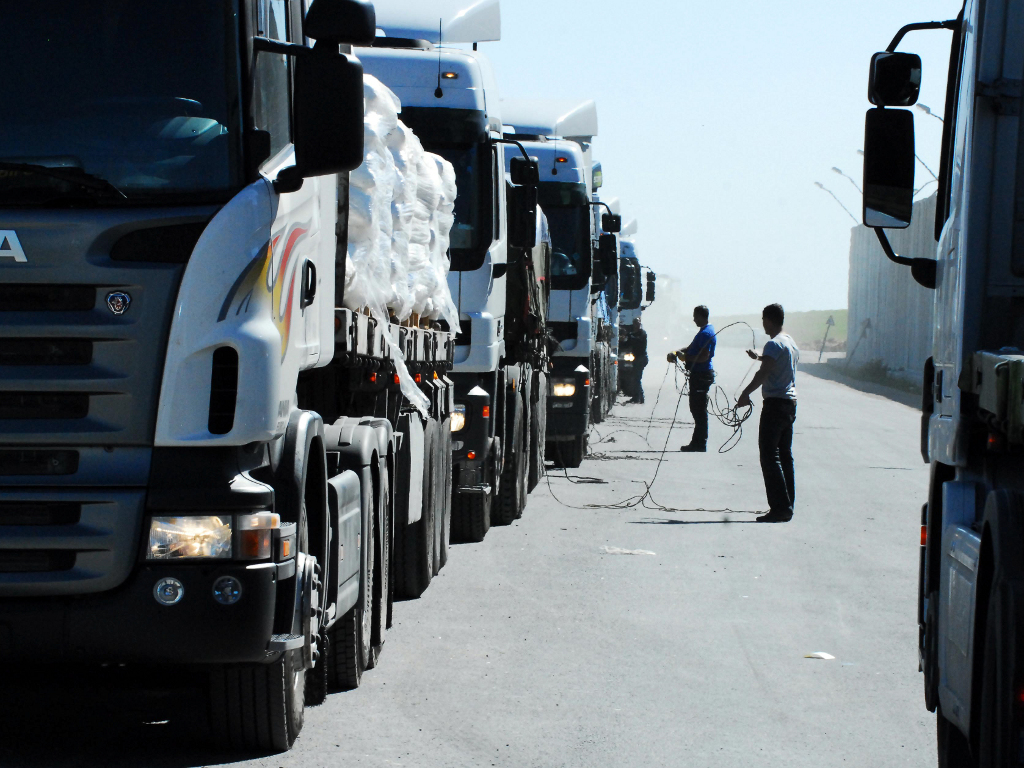
It was not only Serbian companies that suffered damage, and among the most affected economies were Germany and Italy, Serbia’s largest foreign trade partners.
The Association of Italian Industrialists - Confindustria Serbia has been actively participating in the dialogue with key stakeholders and institutions in the past period, preparing proposals and initiatives aimed at constructively overcoming the problems caused by the protests of truckers and the blockades of border crossings.
As a relevant partner in industrial dialogue, this association emphasizes that it is crucial that existing problems are resolved through institutional mechanisms and open dialogue, and not through radical measures that further burden the economy.
– The blockade of road transporters at border crossings has had a direct and significant impact on the daily operations of Italian companies active in Serbia. Almost all of these companies depend on road transport to the European Union for exports, component supply and inventory management, and delays have caused the moving of delivery deadlines to European customers, forced accumulation of goods in warehouses and difficulties in production planning and shift organization – Romano Rossi, President of Confindustria Serbia, points out in an interview with Biznis.rs.
He adds that in many cases companies have had to reorganize already defined production cycles, which has negatively affected efficiency and costs.
– Some Italian companies were forced to slow down or temporarily stop production lines, especially in sectors with strong logistical integration (automotive industry and components, processing industry, agri-food sector). Disruptions in the supply of raw materials and components, as well as the inability to deliver finished products, made technical downtime inevitable, with direct consequences for productivity and reliability towards international customers – notes Rossi.
Preliminary estimates by Confindustria Serbia indicate significant economic losses associated with additional storage costs, contractual penalties for late deliveries, inefficient use of labor and facilities, as well as increased financial exposure of small and medium-sized enterprises.
– The most affected sectors are those oriented towards export and just-in-time production, where even a few hours of blockade can cause chain effects along the entire supply chain. Although a more precise quantification is still underway, it is clear that this impact was neither marginal nor sporadic. According to the first estimates of our Association, our member companies have lost cumulatively tens of millions of euros - estimates Romano Rossi.
From an investment point of view, such disruptions in logistics may affect the perception of Serbia as a production base for Italian companies and change plans for new investments or expansion of existing capacities.
– These critical situations negatively affect the perception of Serbia as a reliable, in the sense of predictable, production platform for the European market. International investors assess the stability of the logistics infrastructure and the predictability of trade flows with great care. Events such as those of last week increase the perceived risk, reduce the country’s competitiveness and may influence decisions on new investments or expansion of production capacities – concludes the interviewee.
The president of the Association of Italian Industrialists reminds that Serbia has built a positive reputation over the years and that it is crucial not to call this into question in situations that seem solvable through better institutional coordination.
When asked what concrete solutions Italian businessmen expect in the coming period – from the Serbian state, border services, regional and EU partners – to prevent such situations in the future, Romano Rossi says that these are certainly not emergency solutions, but concrete and structured measures, through more efficient coordination between border authorities and competent services.
– But above all through stable channels of dialogue with representatives of the logistics sector and international diplomacy, in order to ensure lasting solutions: professional drivers should be treated similarly to international air traffic pilots and have special entry visas so as not to hinder the performance of their activities. The free flow of goods is not a secondary issue – it is an essential prerequisite for the country’s industrial competitiveness and credibility in the eyes of foreign investors – believes Rossi.
Companies:
 Konfindustrija Srbija
Tags:
Confindustria Serbia
Romano Rossi
Italian companies in Serbia
blockade of freight border crossings
losses
Comments
Your comment
Naš izbor


Most Important News
Full information is available only to commercial users-subscribers and it is necessary to log in.
Pratite na našem portalu vesti, tendere, investicione projekte, grantove i pravnu regulativu.
Registracija na eKapiji vam omogućava pristup potpunim informacijama i dnevnom biltenu
Naš dnevni ekonomski bilten će stizati na vašu mejl adresu krajem svakog radnog dana. Bilteni su personalizovani prema interesovanjima svakog korisnika zasebno,
uz konsultacije sa našim ekspertima.