


 Izdanje Srbija
 Serbische Ausgabe
 Izdanje BiH
 Izdanje Crna Gora


 News
News


Press: German companies moving to Hungary and Serbia due to significantly cheaper labor

 Comments


Illustration (Photo: Shutterstock/4045)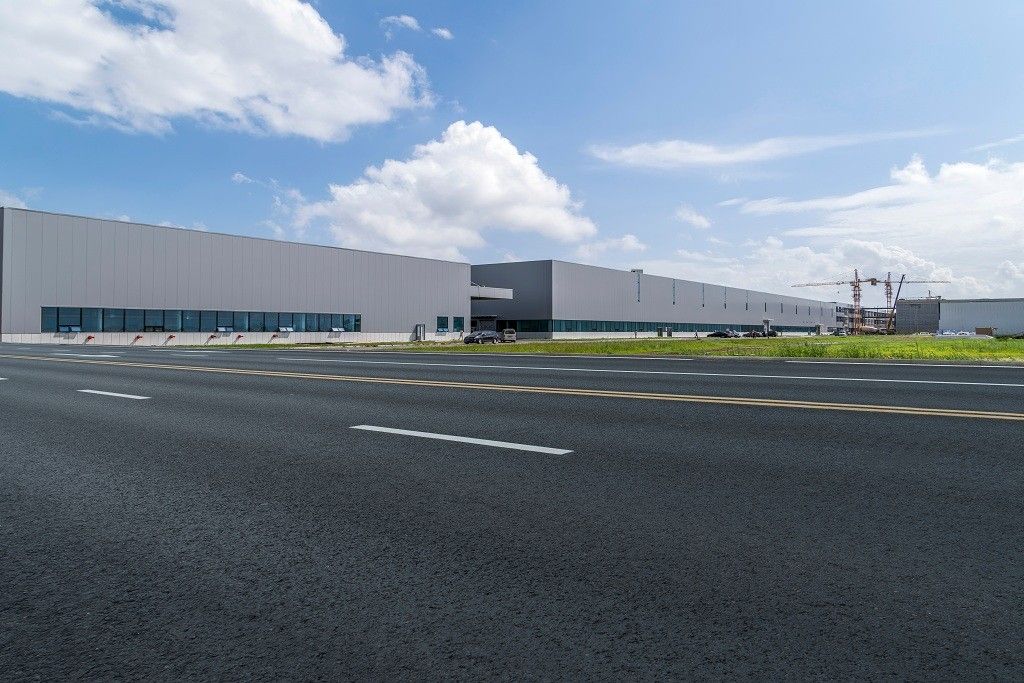
The text then cites examples – in 2023, the British-German car parts manufacturer GKN Driveline closed its location in Zwickau-Mosel and more than 800 employees lost their jobs, although the company had not been making any losses. At the same time, a new axle shaft factory was built in Miskolc, Hungary, with subsidies from the Hungarian government.
The example of the Dusseldorf concern Henkel is also cited, which closed its adhesive factory near Dresden in 2024, and production was moved to Kornye, Hungary. The automotive supplier Mahle from Stuttgart also closed its factory in Freiberg, Saxony, in 2022. The author of the text notes that while factories are closing in eastern Germany and beyond, the German automotive industry is investing billions in Hungary.
– BMW opened its first European factory in Debrecen in 2025 after two decades. More than EUR 2 billion was invested in the highly modern factory, and it will produce exclusively electric New Class cars. In the long term, more than 2,000 jobs should be created. In February 2025, Mercedes announced the expansion of its existing plant in Kecskemet, Hungary, by one billion euros – the text states, adding that Mercedes has announced that by 2030 the share of production in countries with lower labor costs will increase from 15 to 30%. And production costs in Hungary are about 70% lower than in Germany. In addition, the technology concern ZF Friedrichshafen is building two new factories in Hungary, in Kecskemet and Debrecen. Bosch opened a new logistics center in Miskolc in early 2025, worth 147.6 million euros.
Serbia - free trade with the EU, Eurasia and China
Serbia, which is not a member of the EU, is also attracting German industrial champions. In February 2023, Continental opened a high-tech electronics factory in Kac near Novi Sad. The 30,000 square meter facility produces displays and infotainment systems. The concern has invested around EUR 150 million, and around 1,500 jobs are planned to be created.
Since 2019, ZF has operated a factory in Pancevo, where electric motors and transmission parts are manufactured. In 2023, production was expanded to include electronics for hybrid vehicles. Exhaust system specialist Boysen opened its largest factory abroad in Subotica in 2021. EUR 65 million was invested in the plant, which produces complete exhaust systems for Mercedes and Audi and employs 500 people.
– Serbia attracts investors with a unique advantage. The country has free trade agreements with the EU, the Eurasian Economic Union, Turkey, the United Kingdom and, from October 2023, China. Goods produced in Serbia can be exported duty-free to markets with a total of around 2.7 billion consumers. In 15 free economic zones, companies additionally enjoy exemption from customs duties on imported materials and machinery, as well as tax breaks – the text highlights.
The text also points out that, for example, Hungarian labor is three times cheaper than German (EUR 1,500 gross compared to EUR 4,600 gross in Germany), and the corporate tax rate is the lowest in Europe - 9%. The burden in Germany is around 30 percent. Energy is also cheaper in Hungary. In addition, the government is recruiting foreign investors with a set of measures: subsidies, tax breaks, favorable construction land and fast permits.
– Marko Graf, CEO of the Osnabruck Chamber of Commerce, criticizes German conditions. In Germany, investors are unfortunately too rarely rolled out the famous red carpet. At the latest, bureaucracy catches up with them in the implementation phase. In Hungary and Serbia, on the other hand, investors are welcomed with open arms, procedures are accelerated, and problems are solved pragmatically – the text emphasizes.
It is also noted that the outflow is not just a matter for eastern Germany. The most developed German state of Baden-Wurttemberg has also been affected. Bosch announced that by 2030 it will move the entire production of truck components to Hungary. And the ZF concern announced that it will eliminate up to 14,000 jobs in Germany by 2028. Trade unions warn that the German government’s countermeasures that are supposed to relieve companies are not having the expected results.
– The current factory closures bring back memories of the 1990s, when countless industrial plants disappeared in eastern Germany after the reunification – it is added.
The region between Budapest and Belgrade, the text reminds us, is not only attracting German investors. Chinese electric car manufacturer BYD is building its first European factory in Szeged, Hungary, near the Serbian border. The Hungarian government is promoting the project as one of the largest investments in the country’s history. The railway line between Belgrade and Budapest, financed by Chinese capital, is intended to improve logistics.
As early as 2022, a fifth of all Serbian exports came from the automotive industry. The country has developed from an agrarian state into a solid part of European supply chains.
– Germany is losing its former unique locational advantages. For decades, German industry was considered a leader in quality and productivity, and the slogan “Made in Germany” a valuable quality mark. Hungary and Serbia have caught up to that level. German companies explicitly praise the qualifications, productivity and work ethic of local employees – the text points out.
Plants like ZF’s factory in Pancevo are highly automated and rationally organized, without the historically developed structures of old German factories. If the concern’s research and development are now moved together with production, there will be little reason to keep production in more expensive regions. ZF opened its own development center in Novi Sad in 2023 with 150 engineers working on next-generation electric drives. Areas with high knowledge are being built directly in Serbia, and not necessarily in Germany anymore.
The combination of cost savings, incentives and strategic planning for the future is currently leading German business leaders to increasingly favor Eastern Europe over Germany, the text concludes.
Tags:
moving of German factories to Serbia and Hungary
closing of plants in Germany
cheaper labor force
Comments
Your comment
Naš izbor
Most Important News
Full information is available only to commercial users-subscribers and it is necessary to log in.
Pratite na našem portalu vesti, tendere, investicione projekte, grantove i pravnu regulativu.
Registracija na eKapiji vam omogućava pristup potpunim informacijama i dnevnom biltenu
Naš dnevni ekonomski bilten će stizati na vašu mejl adresu krajem svakog radnog dana. Bilteni su personalizovani prema interesovanjima svakog korisnika zasebno,
uz konsultacije sa našim ekspertima.