


 Izdanje Srbija
 Serbische Ausgabe
 Izdanje BiH
 Izdanje Crna Gora


 News
News


“Small modular nuclear reactors still at the experimental level” – Is this the solution for the national power grid?

 Comments


Illustration (Photo: Shutterstock/TTstudio)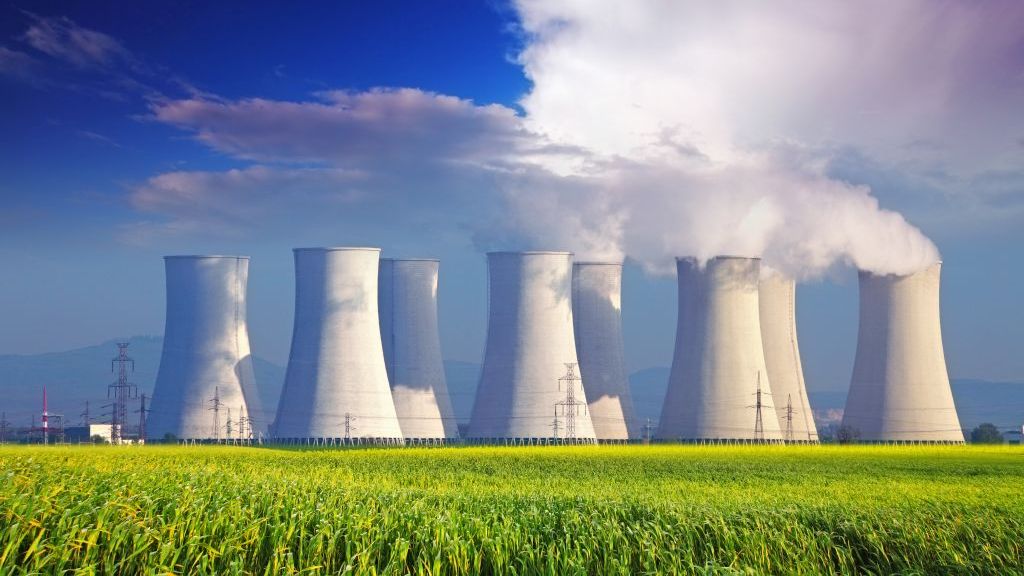
While energy experts are divided on whether Serbia should build a nuclear power plant at all, they are almost unanimous in their view that small modular nuclear reactors are still at the experimental level and that Serbia should not invest money in a technology that has not yet been proven in practice.
Despite warnings from experts, which have been repeated for two years, Serbia is not giving up on the idea of building small modular nuclear reactors.
Namely, President Vucic stated at a panel as part of the “Sustainability Week” in Abu Dhabi that Serbia had begun talks in that city about the potential construction of small modular nuclear reactors, in order to provide additional amounts of “green and clean energy” in the future.
However, on that occasion, he did not specify with which country or which company these talks are being held. It is known that Serbia has intensified cooperation with France in the field of nuclear energy in the last two years and it is mentioned that its companies could operate small modular reactors in Serbia.
Vucic emphasized that the demand for electricity would grow due to the development of artificial intelligence, data centers and electric vehicles, and that Serbia would have to invest in gas, renewable energy sources, but also in nuclear energy.
The president sent a similar message at the New Year’s press conference, when he said that Serbia would need a “modular reactor” or nuclear power plant in the future.
Energy experts in Serbia do not have a unified position on the construction of a nuclear power plant.
Some believe that nuclear energy could replace dirty coal-fired power plants and thus simultaneously solve the issue of electricity supply, protecting human health and the environment, reducing CO2 emissions and combating climate change.
Others warn that it would be risky for Serbia to have a nuclear power plant “in its own backyard,” due to the lack of qualified personnel and the long-standing practice of the party employing unskilled people in key positions.
Still others point out that construction is expensive, as is electricity from nuclear energy, and that Serbia could cover its needs with a combination of gas, renewable energy sources and, in part, coal.
Some others believe that the best solution would be for Serbia to buy a stake in a nuclear power plant in the region.
Even if there were no green agenda, Serbia would have to think about replacing coal — an energy source that is becoming increasingly scarce and of poorer quality, while thermal power plants are also approaching the end of their service life.
The installed capacity of all thermal power plants in Serbia is around 3,900 megawatts.
This means that in the next 25 years, Serbia will have to find clean and reliable energy sources that will be able to replace almost 4,000 megawatts of electricity generation from coal.
“Nothing has changed in two years, SMRs are still untested”
Honorary Secretary General of the Serbian Committee of the World Energy Council and member of the Serbian Academy of Engineering Sciences, Miodrag Mesarovic, estimates that nothing has changed regarding small modular reactors in the last two years and that this is a technology that has not yet proven its technical or commercial viability.
According to him, it will take at least ten years to be able to say with certainty that SMRs are safe and reliable.
As he points out, most projects are developed by startup companies, mainly from the West, which receive limited state subsidies, and then seek strategic partners among countries in order to jointly develop the technology.
– Small modular reactors are currently primarily marketing for some future organization of their construction in countries with low energy needs – Mesarovic tells Danas.
He emphasizes that Serbia’s energy needs significantly exceed the capacities of SMRs, whose power, he says, ranges up to about 300 megawatts, while classic nuclear power plants that have been proven on the market for decades have a power of 1,000 to 1,600 megawatts. Therefore, according to his assessment, the two concepts are not comparable.
When asked whether any country has already built an SMR, Mesarovic said that there is none, adding that Poland and Romania are also announcing them.
But Mesarovic believes that these countries are taking on a high investment and technological risk with this decision, because they are entering into projects whose final outcome is not yet known.
– Who today would make a serious investment in something for which it is not known what the final result will be? These are essentially experiments that small companies are trying to carry out with state subsidies – he says.
In his opinion, Serbia should not opt for SMR, but for serious, classic nuclear power plants, and not one, but several of them — especially in the context of pressures to gradually shut down thermal power plants.
Mesarovic emphasizes that small reactors only make sense in specific conditions: in remote locations without access to the electricity grid, large data centers, industrial complexes or local large consumers, such as mining basins.
– This is not a solution for the national electricity grid – he emphasizes.
He particularly warns against, as he says, the political promotion of SMRs, emphasizing that their promoters do not talk to experts, but turn to politicians, often in countries with weaker institutional capacities, or, as he says, “more corrupt regimes,” in order to find partners for projects.
– This is not a solution for today. This is a solution for some distant future, probably 25 years in advance, because it takes at least ten years for the technology to even be proven on the market – Mesarovic emphasizes.
Professor of nuclear engineering at the University of California, Berkeley, Jasmina Vujic, previously told Danas that small modular reactors were not a good solution for Serbia.
– Small modular reactors and microreactors of the 4th generation in the West will not be in commercial production for at least another 10 to 15 years. Not a single prototype of such reactors has been built in the West yet – Vujic previously told Danas.
“Serbia has not even used up its existing energy capacities”
Energy expert Miodrag Kapor estimates that no changes have occurred in relation to small modular reactors recently, except for the increased political interest in Serbia, which, according to him, is not based on the real needs of the domestic energy system.
– I have not noticed any serious technological progress in relation to SMRs. What I see is a policy that is trying to find a new model of long-term contracts and bilateral agreements, often agreed behind closed doors, which are favorable for those who agree them – says Kapor.
According to his assessment, there is strong lobbying in this area, but the solutions offered are not optimal for the Serbian energy market.
When asked whether there are small modular reactors built in Europe, Kapor points out that there are practically no such plants. As he says, he knows of only two examples in the world - one in Russia, installed on a floating platform, and one in China.
Although, as he adds, various research is being conducted in the field of SMRs, Kapor believes that even if the technology becomes available, it would not be a good choice for Serbia.
He sees the reason as being that this would neglect the energy potentials that the country already has, which are insufficiently or inefficiently used.
– Nuclear energy is constantly being talked about, while biomass, biomethane and renewable energy sources are being ignored – he points out.
When it comes to possible options - building small modular reactors, a classic nuclear power plant or buying a stake in a nuclear facility in the region - Kapor believes that Serbia should not enter into any of these options at this time.
– Our priority now is to focus on using energy potentials that already exist, but are unused or used inefficiently – Kapor emphasizes.
He additionally emphasizes that Serbia must meet numerous technical, institutional and regulatory conditions before it can even consider building a nuclear power plant.
When it comes to joint projects with other countries, he warns that such arrangements carry serious political and legal risks. As an example, he cites the Krsko nuclear power plant, co-owned by Slovenia and Croatia, where there have been disputes over nuclear waste, liability and long-term management for years.
– Such problems can seriously complicate relations between states – concludes Kapor.
What are small modular reactors?
The International Atomic Energy Agency website states that small modular reactors are advanced nuclear reactors that have a power capacity of up to 300 megawatts, which is about one-third of the production capacity of traditional nuclear reactors.
Small modular reactors can produce large amounts of electricity with low carbon dioxide emissions, and another advantage is that they are assembled in a factory and can be transported to any location, especially those that are not suitable for larger nuclear power plants.
Another advantage is that they have lower costs and shorter construction times, and they can be gradually deployed to meet increased energy demand. Another advantage is that they are mostly automated and do not require special human intervention.
Increased safety margins, in some cases, eliminate or significantly reduce the potential for unsafe releases of radioactivity to the environment and the public in the event of an accident.
The biggest flaw is that they have not been verified and tested.
Companies:
 AINS Beograd
Tags:
World Energy Council
International Atomic Energy Agency
Aleksandar Vučić
Miodrag Mesarović
Jasmina Vujić
Miodrag Kapor
construction of modular reactors
Comments
Your comment
Most Important News
Full information is available only to commercial users-subscribers and it is necessary to log in.
Pratite na našem portalu vesti, tendere, investicione projekte, grantove i pravnu regulativu.
Registracija na eKapiji vam omogućava pristup potpunim informacijama i dnevnom biltenu
Naš dnevni ekonomski bilten će stizati na vašu mejl adresu krajem svakog radnog dana. Bilteni su personalizovani prema interesovanjima svakog korisnika zasebno,
uz konsultacije sa našim ekspertima.