


 Izdanje Srbija
 Serbische Ausgabe
 Izdanje BiH
 Izdanje Crna Gora


 News
News


EIB: Serbian market mature enough for direct financing of solar and wind projects
Source: eKapija
 Monday, 04.08.2025.
14:54
Monday, 04.08.2025.
14:54
Monday, 04.08.2025.
14:54
 Comments


(Photo: PhotographyByMK/shutterstock.com)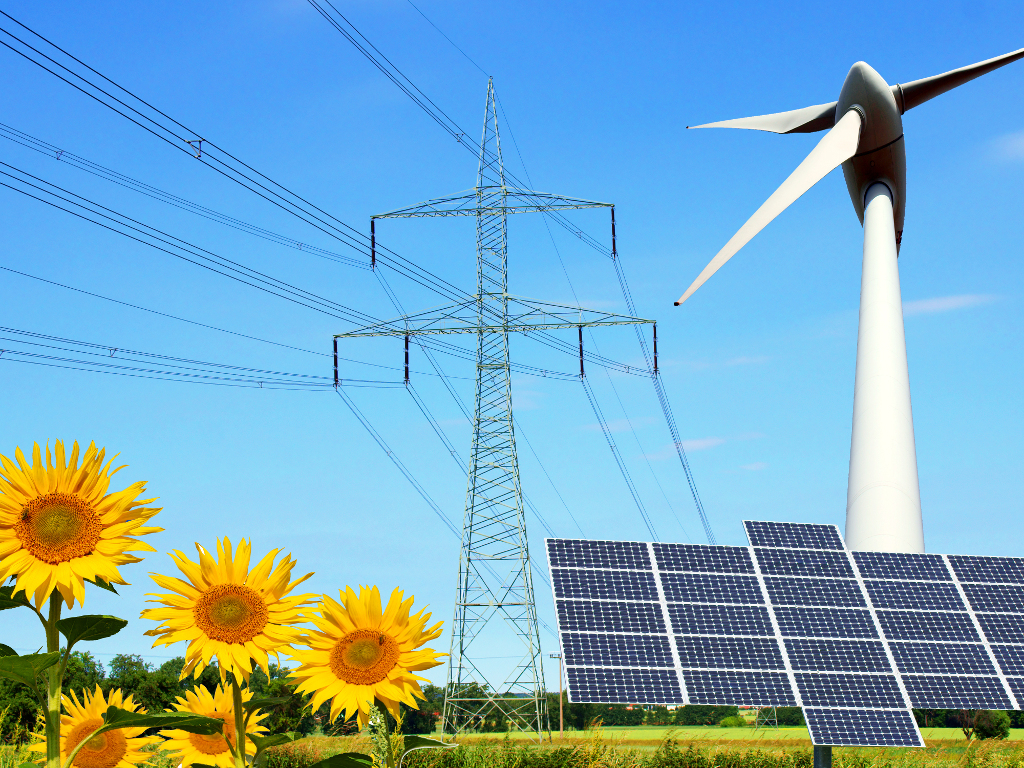
This was pointed out by Damien Sorrell, Head of the EIB Regional Hub for the Western Balkans, in an interview for the RES Serbia portal. Among the most important projects financed by the bank in Serbia are the introduction of smart meters, supported by a loan of 80 million euros. Last year, the EIB signed a EUR 100 million loan for the rehabilitation of hydropower plants in Serbia.
Sorrell estimates that the market in Serbia is now mature enough for standard solar projects and wind farms, so commercial banks can finance them directly, without the need to involve international financial institutions such as the EIB.
He announces that the EIB is preparing to launch a new programme – the “Innovation and Green Transformation Fund for the Western Balkans”, worth EUR 170 million.
According to him, the Bank will continue to prioritize energy efficiency, the expansion of renewable energy sources and environmental protection in the Western Balkans region. The focus will also be on climate change adaptation projects, as the Western Balkans are increasingly vulnerable to the consequences of climate change.
According to the European Commission, he emphasized, the renewable energy sector alone could create up to 3.5 million new jobs in the European Union by 2030.
– In the Western Balkans, the EIB is accelerating its energy investments. EIB Global has signed EUR 420 million for energy and energy infrastructure projects since 2020. With an EUR 80 million loan, we are supporting the rollout of smart electricity meters to modernise the grid and reduce energy losses in Serbia. A further EUR 100 million loan was signed in 2024 to rehabilitate hydropower plants in the country, enhancing system flexibility. The Bank is also co-financing large-scale renewable projects with KfW in the region, including wind farms in Bosnia and Herzegovina, a 100 MW solar plant near Pristina and the rehabilitation of the Vau i Dejes hydropower plant in Albania. These efforts aim to diversify the region’s energy mix and bolster energy security. We stand ready to further support the deployment of renewables in the region as well as the infrastructure investments that are required to do so – Sorrell specified.
He reminds that the Bank is co-financing two large renewable energy projects in Bosnia and Herzegovina, the Vlašić and Poklečani wind farms, alongside KfW, the German promotional bank:
– These projects are set to deliver a total capacity of 182 MW and once operational, they will supply clean electricity to approximately 97,500 households and reduce carbon emissions by an estimated 500,000 tonnes annually. Our financing will be complemented with EU grants and advisory services, channelled through the Western Balkans Investment Framework.
When asked whether state projects are priority for the EIB, or if there is a real possibility for private investors to obtain favourable loans for wind or solar power plants, he says that, for smaller-scale initiatives, the EIB is partnering with commercial banks as well as national development institutions, to extend credit lines to SMEs.
– These financial opportunities, offered on favourable terms, are helping SMEs invest in renewable energy and energy efficiency upgrades, cutting energy use by up to 70% in some cases. For example, in 2024 alone, we disbursed EUR 200 million of long-term funds to over 1,500 SMEs in Serbia, of which over 10% undertook green investments. Partial portfolio guarantees issued by the European Investment Fund (EIF), part of the EIB Group, are helping commercial banks reduce risk exposure and lower collateral requirements, thus unlocking greater lending capacity for SMEs. In the Western Balkans, the EIF has deployed the EU-funded Guarantee for SME Resilience under the Western Balkans Investment Framework (WBIF).
According to him, this initiative is expected to deploy a total of EUR 885 million, achieving a leverage of 15x.
– In Serbia, the initiative is expected to mobilise EUR 250 million worth of loans to some 4,650 small businesses. With demand for green financing rising, further guarantees of this kind will be essential to sustain momentum. We also have the possibility to finance larger private sector projects directly, such as the FIAT project in Serbia aiming to adapt the factory for electric vehicle production, contributing to the green transformation of the European automotive industry. For energy-related projects we can also finance on a project finance basis; however, we note that in Serbia the market is now mature for standard solar and wind power projects and that commercial banks are happy to finance them directly without recourse to IFIs such as the EIB – Sorrell said.
He adds that their financing is often backed by technical assistance and capacity building to help firms prepare bankable projects and banks to better apprehend risk aspects.
The EIB, he emphasized, is also preparing to launch its “green checker” for the Western Balkans based on the EU taxonomy:
– It is an online tool enabling companies to assess the eligibility of their projects and access dedicated credit lines. We will also soon publish our decarbonisation guide for SMEs, which will be particularly timely as the Carbon Boarders Adjustment Mechanism (CBAM) is expected to start in 2026.
Sorrell underlines that, by working closely with governments, partners and financial institutions, the EIB is helping local businesses modernise operations, adopt clean technologies and energy solutions to stay competitive amid tightening EU supply chain and carbon regulations.
Talking about the European Wind Power Package, he says that, as part of this package, they are backing the European Commission’s efforts to stabilise the wind energy sector through a new EUR 5 billion pan-European counter-guarantee facility:
– The instrument, aimed at de-risking commercial bank lending to key wind industry suppliers, is designed to ease supply chain bottlenecks and unlock broader investment. The facility is expected to mobilise up to EUR 80 billion in wind energy investment and support the installation of 32 GW of new capacity, contributing significantly to the European Union’s target of 117 GW by 2030.
Sorrell adds that the initiative underscores the EIB’s role in deploying risk-sharing tools to accelerate the green transition, decarbonise the economy, and bolster industrial competitiveness:
– In the Western Balkans, the EIB intends to continue supporting the construction of new wind farms, while also exploring onshore wind power opportunities, building on its early support for the sector. The EIB is currently working on designing these types of de-risking instruments for the region to increase the risk-appetite and lending capacity of commercial banks for renewable energy projects, particularly in the wind sector. However, scaling up investment in this section will require modernised grid infrastructure and more transparent, efficient and EU-aligned permitting processes.
Regarding the partnerships with commercial banks to strengthen the wind industry, he reminds that, as part of the EU Wind Power Package, the EIB has signed six intermediated operations with major European banks in 2024, mobilising EUR 3 billion to support wind-energy equipment manufacture.
– In the Western Balkans, as already mentioned, we are working on making available similar instruments to de-risk commercial banks’ financing of sizeable renewable projects and ensure that such projects are developed in line with the highest EU standards. In the Western Balkans, an exemplary partnership that is already delivering results is the “EU for Green Agenda in Serbia” initiative. Since 2022, it has supported over 60 green innovations, including renewable energy projects, unlocking over EUR 29 million in total investment, equivalent to 15% of Serbia’s estimated green investment. The programme is jointly funded by the European Union, Sweden, Switzerland, and Serbia, and implemented by the United Nations Development Programme (UNDP), the Ministry of Environmental Protection, and the EIB – said Sorrell.
He adds that, looking ahead, the EIB is also preparing to launch the Innovation and Green Transformation Facility for the Western Balkans.
The EUR 170 million programme will combine concessional credit lines, EUR 17 million in performance-based grants, and technical assistance to support private sector innovation in areas such as sustainable use of resources and clean technologies. By blending finance with advisory support, the facility aims to unlock private capital and accelerate the green and digital transition.
The Head of the EIB Regional Hub for the Western Balkans was also asked where he sees the greatest potential for the improvement of the investment climate in Serbia and the region:
– Foreign direct investment has played a pivotal role in the Western Balkans’ economic development over the past decade, averaging 6% of GDP, with 70% originating from EU member states. This capital influx has driven technology adoption, productivity gains and job creation, particularly in traditional sectors such as manufacturing and financial services. However, emerging industries like ICT and renewable energy are now drawing attention due to their growth potential and alignment with global sustainability goals.
To sustain momentum, the region must accelerate structural reforms and embrace a new growth model rooted in EU standards and green transition priorities. In this respect, the New Growth Plan and reforms agenda represent a wonderful opportunity. The upcoming Carbon Border Adjustment Mechanism (CBAM), set to take effect in 2026, underscores the urgency of decarbonisation. While renewables are gradually increasing in the region’s energy mix, fossil fuels still dominate. EU-backed investments in transport infrastructure have already boosted trade efficiency, with further gains expected upon EU accession.
Yet, according to him, challenges persist:
– The region’s transport and digital infrastructure lags behind EU standards, and labour shortages threaten productivity. Connectivity, market integration (in particular among the region itself) and human capital remain key to unlocking long-term growth.
In conclusion, Sorrell says that, along with financing, EIB Global is stepping up technical support for governments, banks and businesses to accelerate the rollout of high-impact green and sustainable projects across the Western Balkans.
– Under the European Union’s New Growth Plan, the Bank will continue to prioritise energy efficiency, renewable energy expansion and environmental protection, while also investing in human capital and SME development to build a more resilient regional economy.
In addition, the Western Balkans region is increasingly vulnerable to the escalating impacts of climate change, with more frequent extreme weather events compounding the strain on ageing infrastructure and fragile energy systems. Hydropower output is under pressure from erratic rainfall, while electricity grids face growing demand from rising temperatures and cooling needs. That is why climate adaptation projects will be essential going forward – Sorrell said.


Tags:
European Investment Bank
EIB
RES Serbia
Damien Sorrell
wind farms
solar power plants
smart meters
energy projects
climate change
financing
green transformation
credits for SMEs
Comments
Your comment
Naš izbor
Most Important News
Full information is available only to commercial users-subscribers and it is necessary to log in.
Pratite na našem portalu vesti, tendere, investicione projekte, grantove i pravnu regulativu.
Registracija na eKapiji vam omogućava pristup potpunim informacijama i dnevnom biltenu
Naš dnevni ekonomski bilten će stizati na vašu mejl adresu krajem svakog radnog dana. Bilteni su personalizovani prema interesovanjima svakog korisnika zasebno,
uz konsultacije sa našim ekspertima.