


 Izdanje Srbija
 Serbische Ausgabe
 Izdanje BiH
 Izdanje Crna Gora


 News
News


Young people in Serbia, 90% of them, support transition to renewable energy sources
Source: eKapija
 Monday, 10.02.2025.
10:58
Monday, 10.02.2025.
10:58
Monday, 10.02.2025.
10:58
 Comments


(Photo: Udruženje OIE Srbija)
A survey conducted among 525 young people aged 18 to 30 from all over Serbia shows that the majority of the subjects, 87% of them, define thermal power plants as major polluters in Serbia, and 90% support increased production and consumption of energy from renewable sources.
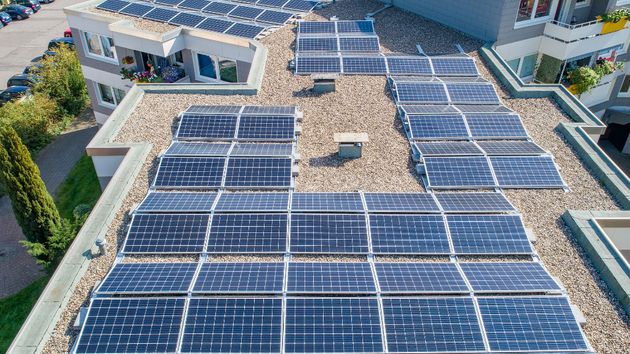
Young people see the greatest potential in solar energy (42%), and a significantly smaller number of them see it in water (22%) and wind energy (19%), whereas the subjects do not recognize geothermal sources, biomass and biogas as sources with too much potential in Serbia.
Subjects recognize old inefficient plants as biggest energy problem in Serbia
The research participants primarily associate the term green transition with the use of renewable energy sources, sustainable development, solar panels, environmental protection, electric vehicles, EU regulations, fair transition and balance of all energy sources.
According to the subjects, the biggest energy problems in Serbia are old inefficient plants, network problems, dependence on non-renewable sources, supply uncertainty and regulations.
The majority of young people, 71%, believe that thermal power plants, on one hand, certainly provide energy, but are also major polluters of the environment. Additionally, another 16% of young people point out that these plants do not provide enough energy in Serbia, while, at the same time, creating pollution with their operations. Collectively, as many as 87% of young people define thermal power plants as major polluters in Serbia.
Young people overwhelmingly support the transition to greater production and consumption of energy from renewable sources. Such a decision is fully supported by slightly more than half of the subjects, 53% to be exact, while another 37% mostly support it.
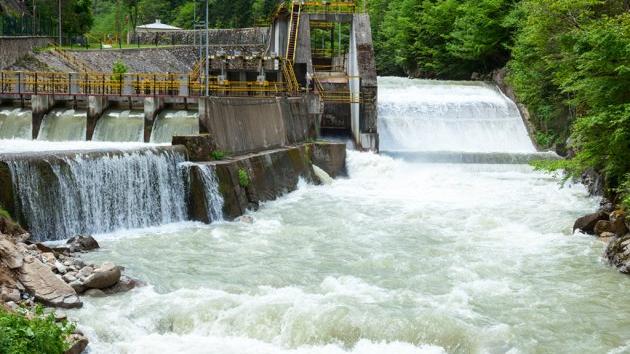
The survey shows that young people see the greatest potential in solar energy (42%), and a significantly smaller number of them see it in water energy (22%) and wind energy (19%). The subjects do not recognize geothermal sources, biomass and biogas as sources with too much potential in Serbia. This is supported by the primary associations when it comes to renewable sources, namely solar panels, the Sun, Djerdap, wind farms/windmills in Vojvodina, wind and hydropower plants.
The majority of young people, 64%, believe that investments in renewable sources in Serbia will produce only positive results in the future. Also, young people recognize business perspectives in the RES sector through different spheres such as science, the non-governmental sector, the media, but also by working in the plants themselves.
(Photo: Udruženje OIE Srbija)
Young people fear high temperatures as consequence of climate change
The primary associations that young people have with climate change are global warming, warm nights, the greenhouse effect, adverse weather, adaptation.
Young people believe that the development of climate change is primarily caused by thermal power plants, outdated methods of industrial production, individual combustion plants, illegal landfills, and agriculture. The majority of respondents (69%) recognize the use of fossil fuels as one of the main causes of the development of climate change. Nevertheless, close to a third of young people believe that fossil fuels do not affect the development of climate change too much or at all.
The subjects estimate that climate change mainly affects their daily habits, and 55% believe that climate change will have a major impact on young people in the future. Focus group participants point out that climate change will bring with it risks to the health of citizens, as well as the appearance of new viruses and diseases.
The majority of young people, 47%, singles out high temperatures as an effect of climate change that will have the greatest negative impact on future generations of young people in Serbia. For 19% of young people, the biggest negative impact will be droughts, for 14% of them it will be heat waves, and for 13% heavy rainfall.
Only 22% of young people use web portals as source of information on these topics
In getting information about climate change and the green transition, the majority of young people in Serbia (52%) rely on social networks, while 22% use internet portals as a source of information. Collectively, as many as 3⁄4 of young people use modern digital media to inform themselves about these topics.
Such answers are expected, because young people today rely on modern rather than traditional media, such as the press and TV, on numerous social issues. It is interesting that a considerable percentage of young people (15%) rely on their environment for information, that is, on conversations with family members, friends, and acquaintances.
Research shows that young people believe that information about climate change and renewable energy sources is not sufficiently available to them. They have a divided opinion and point out that information is mostly available (34%), or that it is mostly not available (46%). Polarization of attitudes is also present among young people in the focus groups. Young people believe that there has been an increase in reporting on these topics compared to the period of 10 years ago, but that this has not necessarily led to an increase in the quality of the content and a greater development of the awareness among the citizens themselves.
(Photo: Udruženje OIE Srbija)
About the research
The research was conducted in the period from November 21 to December 25, 2024. 525 young people aged 18 to 30 from all over Serbia were surveyed, while 16 young people participated in the focus groups.
This research was carried out with the financial support of the European Union and WWF within the project “Raising Awareness of Climate Change and Green Transition” implemented by RES Serbia. The Association RES Serbia is solely responsible for the content of this research, and this content in no way expresses the official views of the European Union.
Click for the PDF file.
Companies:
 Obnovljivi izvori energije Srbije
Tags:
Association RES Serbia
WWF Adria
European Union
Raising Awareness of Climate Change and Green Transition
Comments
Your comment
Naš izbor
Most Important News
Full information is available only to commercial users-subscribers and it is necessary to log in.
Pratite na našem portalu vesti, tendere, investicione projekte, grantove i pravnu regulativu.
Registracija na eKapiji vam omogućava pristup potpunim informacijama i dnevnom biltenu
Naš dnevni ekonomski bilten će stizati na vašu mejl adresu krajem svakog radnog dana. Bilteni su personalizovani prema interesovanjima svakog korisnika zasebno,
uz konsultacije sa našim ekspertima.