Editorial

How prepared are we for a new world?
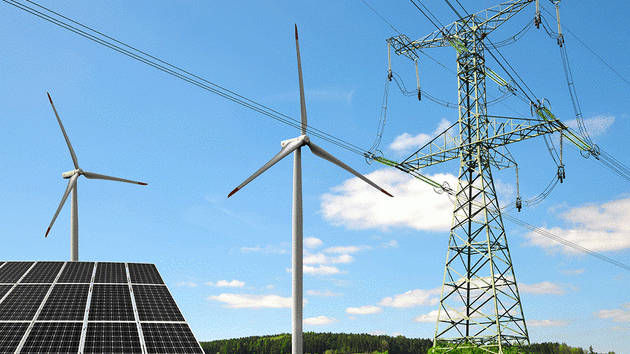
In recent years, the energy picture of Europe and the region no longer suffers from illusions. The crises that followed one after the other exposed the weaknesses of the system, which for too long rested on imports, fossil fuels and postponing strategic decisions. The region is no exception, so faced with growing consumption, outdated infrastructure and climate pressures, we see that the issue of energy is no longer only economic and ecological, but also a question of security and development. In this context, the green economy ceases to be a phrase and becomes a necessity. Investments in renewable sources: wind, sun and biomass, circular economy and recycling, are no longer a matter of choice, but a minimum that cannot be lowered. However, experience teaches us that the green transition,
read more
Big Picture

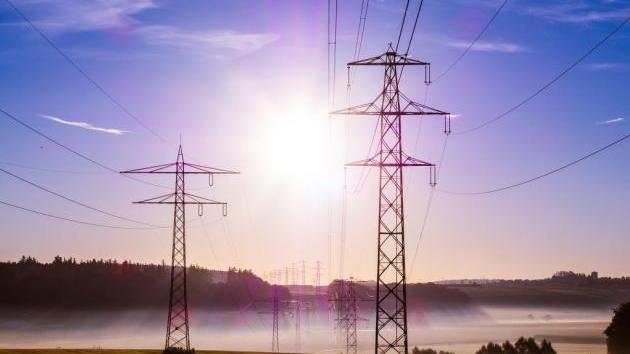
Power without borders - How far has the region come in merging the electricity market with the EU?
The countries of the region are getting closer to fully integrating their electricity markets with the EU, a key step in ensuring competitive prices, greater system stability, resistance to energy shocks and support for the green transition. The process of connecting requires not only technical
Why nuclear power is returning to the focus of decarbonisation alongside solar and wind - What energy mix does our country need?
At a time when Serbia is rapidly developing solar and wind power projects, the question of whether nuclear energy could become an important part of the future energy mix is increasingly being raised. According to Prof. Dr. Vladimir Stevanović from the Faculty of Mechanical Engineering, University
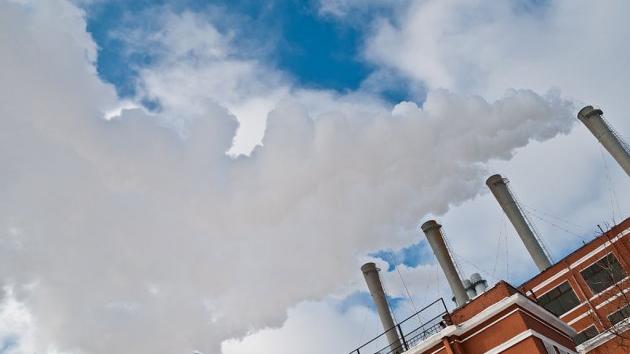
Bad air comes to pay - Pollution could cost Montenegro dearly, citizens are entitled to compensation for impaired health
Montenegro is preparing a new Law on Air Protection which significantly improves the existing legal framework and introduces stricter environmental standards aligned with the latest European Union directives. The main goal of this act is to protect the health of citizens and preserve the

Conversation with

Toma Vukić, Director of Licensing at Mozzart: It matters who you play with - Mozart's winning green economy team
In the business world, as on the sports field, the result is always a reflection of strategy, discipline and, above all, the choice of teammates. In the game to preserve a healthy environment, the Mozzart company has long ceased to be just an observer of environmental changes. They have become an active participant who through the consistent application of the "Reuse, Reduce, Recycle" philosophy creates new value for a cleaner future. As a proud holder of the ISO 14001 certificate, Mozzart
At a time when climate goals are becoming more ambitious, and the need for stable energy sources is becoming more pronounced, nuclear energy is again coming into focus of global energy policies. As a source that enables continuous production of electricity with minimal CO₂ emissions, nuclear technology is increasingly being seen as a key element of the transition to a green economy, especially in the context of consumption growth caused by digitization and the development of artificial
Food waste is one of the most paradoxical challenges of contemporary society. While huge amounts of fruit and vegetables are thrown away every day, the need for sustainable sources of raw materials and solutions that reduce pressure on the environment is growing. It is precisely from this gap that innovative approaches arise that no longer see waste as an end, but as the beginning of a new production cycle. The project of the Faculty of Chemistry in Belgrade "Pure Way" goes a step further, not
Stanislava Simić, Director of the Association of Serbian Energy-Intensive Industries: The path to decarbonisation through innovation and collaboration
At a time when climate policies are increasingly shaping industrial flows,energy-intensive sectors of the economy are at a turning point, between pressure to reduce emissions and the need to preserve competitiveness. Although often viewed as part of the problem, these sectors can play a key role in the transformation towards a more sustainable business model, through investments in new technologies, energy efficiency and circular economy. How complex that process is in practice, what challenges

Introducing

Nestlé and young people in bee conservation mission
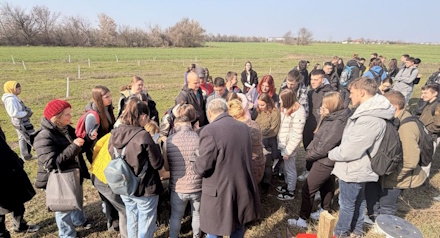
(Setting up bee hotel) According to the claims of scientists, if bees disappeared, every third bite of food we consume would also disappear. This, not so well-known fact, shows how interconnected the processes in nature are and how important its smallest guardians are for the food system. More than 700 species of bees have been recorded in Serbia, where the largest part is made up of the
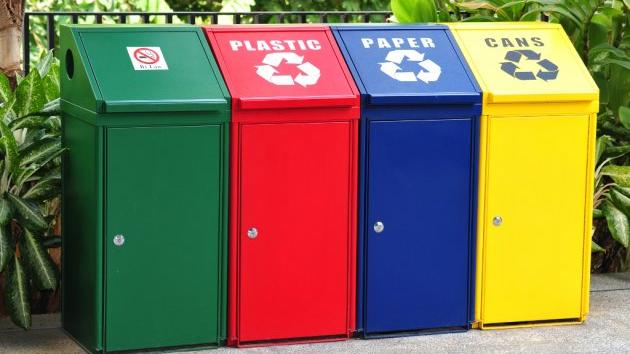
After the cancellation of incentives for recyclers in Serbia, a market model of auctions is being prepared - Will the industry survive the transition phase?
The cancellation of incentives for recycling from the beginning of 2026 has already left visible consequences for the functioning of the waste management system in Serbia. Reduced waste flow to operators, rising costs for generators and slowing material flows have resulted in recycling facilities operating below capacity, while waste is more often retained at the place of origin. In such
From waste to resources - Why circular economy is becoming a key strategy of FMCG brands
At a time when resources are becoming more expensive, consumers are more informed, and regulatory pressure is increasing, circular economy ceases to be a theoretical concept of sustainability and becomes a very concrete business strategy. Especially for the FMCG industry, a sector that touches millions of consumers every day, the transition from a linear "take-make-throw" model to a circular