


 Izdanje Srbija
 Serbische Ausgabe
 Izdanje BiH
 Izdanje Crna Gora


 News
News


EU Mission Energy Program Manager: No energy shortages this winter, prices biggest problem
Source: Beta
 Thursday, 10.09.2026.
13:08
Thursday, 10.09.2026.
13:08
Thursday, 10.09.2026.
13:08
 Comments


Illustration (Photo: ssuaphotos/shutterstock.com)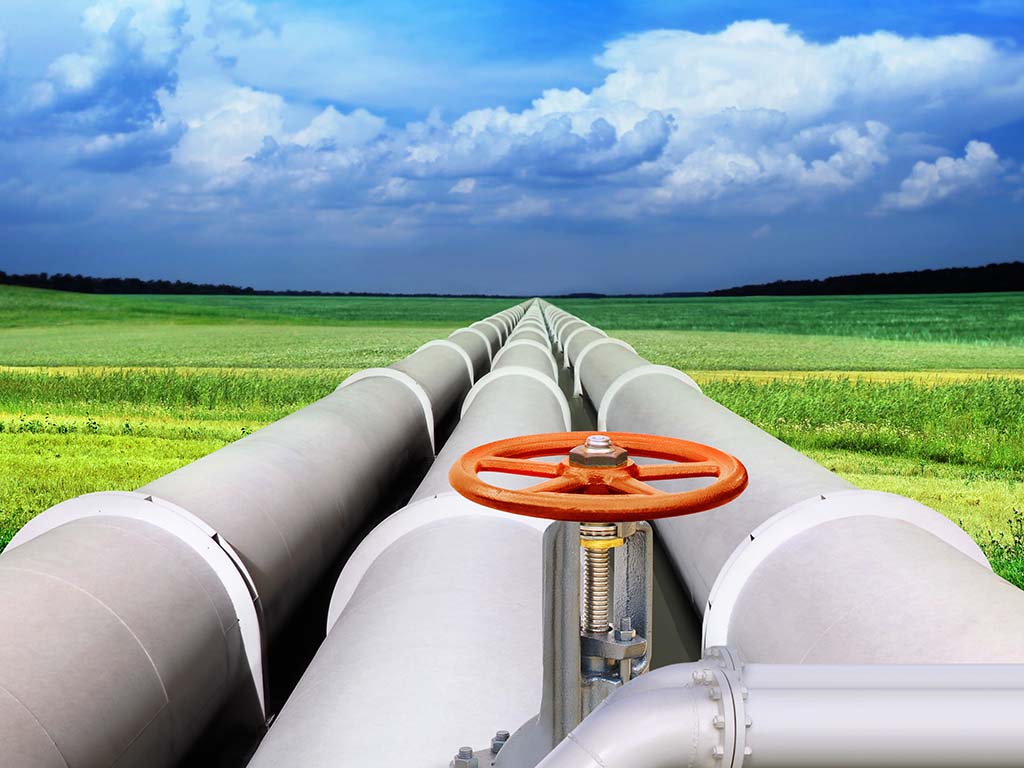
– Serbia has expressed interest and applied for the use of the joint gas procurement platform – he said, stating that it was not possible to discuss commercial details at that moment.
The essence of the mechanism, as he explained, is to try to influence the achievement of lower energy prices by merging demand and supply.
He reminded that the EU had mutual assistance mechanisms with which member states could react in the event of a crisis in the supply of gas, electricity and oil.
Serbia, as a non-EU member, does not have access to all of these instruments, but Vukovic stressed that there were other support mechanisms available to it.
As an example, he cited the energy crisis after the start of the war in Ukraine in 2022, when Serbia was provided with direct budgetary support of EUR 165 million.
A joint working group for security of supply has also been formed, and the mechanism for joint gas procurement through European institutions is also available to Serbia.
– These are mechanisms that are always available, including the mechanism for joint gas procurement through European institutions – Vukovic pointed out.
He reminded that the European energy market was affected by conflicts in the Middle East, Europe’s increasing dependence on the global liquefied natural gas market, as well as uncertainty regarding transport routes.
According to him, storage facilities at the EU level were filled to around 67% at that moment, but there were significant differences between countries.
In Poland and Italy, the occupancy rate is above 90%, while in Germany, one of Europe’s largest economies, it is around 54%.
European rules require storage facilities to be 90% full by November 1, with the possibility of reaching 80% in special circumstances.
Vukovic also reminded that, during June and July, the European Commission had urged member states not to rush to fill storage facilities so that additional demand would not create even greater pressure on the prices of liquefied natural gas – LNG.
According to Vukovic, the price of gas is one of the biggest reasons for concern ahead of winter, as the current price is around 79 euros per megawatt-hour, while at the beginning of the year it was around 30 euros, and in June around 42 euros.
He pointed out that the price increase was influenced by several factors – Europe is increasingly dependent on the global LNG market, conflicts in the Middle East are ongoing, and at the same time the need for gas is growing ahead of the winter season.
However, Vukovic noted that the price on the spot market did not fully reflect how much Europe was actually paying for gas.
– Around a third of the total gas supply to the EU comes from the spot market. Approximately two thirds are long-term and medium-term contracts, so this may not be a representative price – he explained.
If the conflicts in the Middle East continue, he expects the price of gas to remain relatively high.
He added that the EU was also continuing the process of gradually waiving Russian gas.
Vukovic reminded that, before the war in Ukraine, Russian gas had accounted for about 45% of European supplies, and that that share had been significantly reduced.
At the same time, imports of liquefied natural gas have increased, with the share of the EU’s supply increasing from about 20 to approximately 45%.
The key deadlines in further reducing dependence on Russian energy sources are during 2027.
– The dates that are important for the EU are January 1, 2027, when imports of Russian LNG gas will cease, as well as November 1, 2027, when all contracts for the import of Russian gas, both through pipelines and in other ways, will cease – Vukovic stated.
Although the further decline in Russian gas imports is not as visible in 2026, Vukovic emphasizes that the process is still taking place in accordance with the REPowerEU plan.
Changes in the European market have also led to a significant diversification of supply sources, and according to the data presented by Vukovic, the largest supplier of gas to the EU is currently Norway with a share of 31%. This is followed by the United States with 26% and North Africa with 13%.
Russia participates with about 12%, while Azerbaijan and Qatar each have four percent, and Vukovic expects this structure to change further in the coming period.
Comments
Your comment
Naš izbor
Most Important News
Full information is available only to commercial users-subscribers and it is necessary to log in.
Pratite na našem portalu vesti, tendere, investicione projekte, grantove i pravnu regulativu.
Registracija na eKapiji vam omogućava pristup potpunim informacijama i dnevnom biltenu
Naš dnevni ekonomski bilten će stizati na vašu mejl adresu krajem svakog radnog dana. Bilteni su personalizovani prema interesovanjima svakog korisnika zasebno,
uz konsultacije sa našim ekspertima.