


 Izdanje Srbija
 Serbische Ausgabe
 Izdanje BiH
 Izdanje Crna Gora


 News
News


Srbijagas sues Lithuania – International arbitration initiated over Azotara Pancevo
Source: eKapija
 Friday, 12.06.2026.
11:12
Friday, 12.06.2026.
11:12
Friday, 12.06.2026.
11:12
 Comments


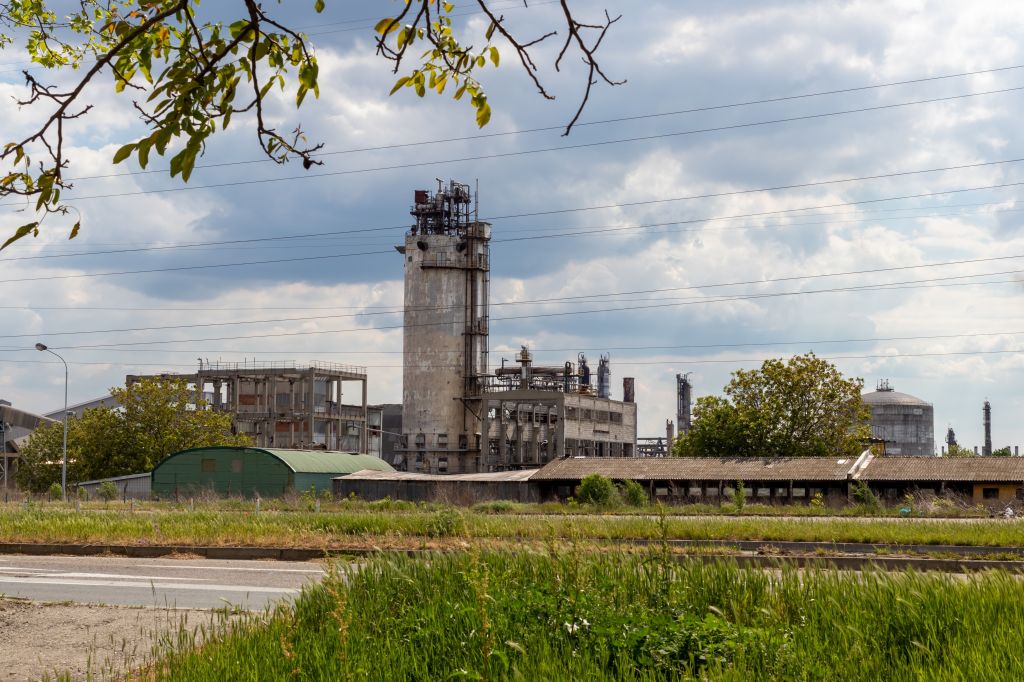
(Photo: Shutterstock/ok_fotoday)
Before a specialized international arbitration tribunal that has not yet been appointed, the Serbian state-owned company accuses the Baltic state’s judiciary of having, through long-term court delays, devalued the multi-million-euro arbitration awards that Srbijagas previously obtained, which, by all accounts, concern Azotara Pancevo.
Through this proceeding, Srbijagas is apparently trying to compensate for claims that, according to estimates, with default interest and the costs of several years of litigation, could reach multi-million euro amounts and up to EUR 20 million.
The Serbian side was represented in the dispute over the privatization of Azotara by the Lithuanian law firm Motieka & Audzevicius. Since the Lithuanian businessmen have since gone bankrupt, the Serbian company is now claiming compensation directly from the Lithuanian state, and the legal basis is a bilateral investment protection agreement from 2005.
Chronology of the dispute: From privatization to an international war of counterclaims
The roots of this complex legal tangle go back to 2006, when a consortium of Lithuanian companies, led by the UAB ARVI ir ko group and the Sanitex company, in partnership with the domestic Univerzal holding, bought the Pancevo-based Azotara for EUR 13.1 million.
However, the cooperation was soon terminated. Official reports from the Serbian Government’s Anti-Corruption Council later stated that the investors had alienated the key production facility of the Karbamid 2 factory, contrary to the contract, which was sold to buyers from the Russian Federation, and that the factory was financially burdened through affiliated companies abroad. The Serbian state terminated the privatization in 2009 due to non-fulfillment of contractual obligations, and Srbijagas took over the management and majority stake.
The termination of the purchase agreement triggered the first major international arbitration in the same year, in which Serbia suffered a financial blow. Namely, Lithuanian investors filed a lawsuit against the Serbian state, claiming that the privatization was terminated illegally and demanding compensation of over EUR 50 million. The international arbitration court ruled in favor of the Lithuanians, obliging Serbia to pay them around one million euros in compensation for the manner in which the factory was seized.
Read more:
The sale and subsequent liquidation of Azotara had its own criminal and legal repercussions in Serbia as well, given that the privatization of Azotara was part of the report on the disputed 24 privatizations. HIP Azotara filed an official lawsuit before the Commercial Court in Belgrade for compensation of damages in the amount of EUR 45 million. In 2012, domestic media reported in detail on the actions of the Prosecutor’s Office for Organized Crime, the filing of indictments and the arrest of former domestic managers and members of the consortium on suspicion that the illegal sale of the plant had caused damage to the state in the amount of several million.
The legal battle did not stop there. After taking over the management of Azotara, Srbijagas also legally inherited the claims for the damage caused to the factory by the Lithuanians before the termination of the contract and initiated international disputes before the International Chamber of Commerce (ICC) and the Vienna International Arbitration Center (VIAC). A total of four arbitration decisions were made, confirming the obligation of the Lithuanian party to compensate for damages of EUR 8 million.
During the forced collection process in Lithuania, the legal portal CEE Legal Matters reported that Srbijagas lawyers successfully challenged the property transfer contracts that the owners of the Arvi group had executed to third parties before the Lithuanian Court of Appeal, returning assets worth around EUR 40 million to the bankruptcy estate. However, due to the final bankruptcy of the Arvi holding, actual collection failed, which led to the initiation of the latest investment lawsuit.
The processes before the Lithuanian judiciary lasted almost a full ten years. Although the Supreme Court of Lithuania ruled in favor of Srbijagas in February 2024, the Serbian side now argues that the long-term duration of the process has prevented actual collection. According to the plaintiffs, during the decade of court proceedings, the original debtors from the Arvi group filed for bankruptcy and transferred part of their assets to third parties, which made the judgments obtained in practice uncollectible, which is why the responsibility for the resulting financial damage is now addressed directly to the state of Lithuania.
What does Srbijagas have to prove?
As the official chronology followed by the CEE Legal Matters portal shows, Srbijagas enters these proceedings from the position of a proven creditor who already has a final victory before the Supreme Court of Lithuania. However, before the new international tribunal, the Serbian company now has a much more difficult task. They must prove that the state of Lithuania violated the investment protection agreement by allowing its courts to drag out the enforcement process for an entire decade. In the practice of investment disputes, the standard for proving a “denial of justice” by a state is extremely high, which is why Srbijagas will have to prove a direct causal link between the slowness of the courts and the inability to collect the debt.
If Srbijagas succeeds in the proceedings, the case could represent one of the rare examples in international investment arbitration of a state-owned enterprise from a country candidate for membership in the European Union receiving compensation from an EU member state due to alleged failures of its judiciary.
Azotara today
While Srbijagas is fighting a battle for old debts in the Baltics, the Pancevo factory itself has undergone new ownership transformations. After bankruptcy proceedings were opened against it in 2018, Azotara was purchased in 2021 by the domestic private company Promist for around EUR 5.5 million. A new international economic conflict with the American corporation Nitron Group over alleged debts recently broke out around the factory, which is currently being processed before the domestic judiciary. While the commercial disputes continue, current plans for the location of the Pancevo factory envisage a change in land use and the construction of a modern data center on the site of what was once the largest producer of mineral fertilizers and nitrogen compounds in the entire former Yugoslavia.
B. Petrovic


U blizini:

700 m


1,5 km

Fotografije:



Tags:
PE Srbijagas
 Azotara Pančevo
Motieka Audzevicius
UAB ARVI ir ko
Sanitex
privatization of Azotara
disputable 24 privatizations
international arbitration
lawsuit
damages
Karbamid 2
Investicije na lokaciji:
2015 - 2019.
2005 - 2017.
2008 - 2009.
Comments
Your comment
Naš izbor
Most Important News
Full information is available only to commercial users-subscribers and it is necessary to log in.
Pratite na našem portalu vesti, tendere, investicione projekte, grantove i pravnu regulativu.
Registracija na eKapiji vam omogućava pristup potpunim informacijama i dnevnom biltenu
Naš dnevni ekonomski bilten će stizati na vašu mejl adresu krajem svakog radnog dana. Bilteni su personalizovani prema interesovanjima svakog korisnika zasebno,
uz konsultacije sa našim ekspertima.