


 Izdanje Srbija
 Serbische Ausgabe
 Izdanje BiH
 Izdanje Crna Gora


 News
News


In 2026, Montenegro will receive two-thirds of its electricity from renewable sources - Solar and wind driving the energy transformation
Source: eKapija
 Wednesday, 25.03.2026.
11:22
Wednesday, 25.03.2026.
11:22
Wednesday, 25.03.2026.
11:22
 Comments


(Photo: Unsplash/Arno Senoner)
This can be seen in the energy balance of Montenegro for 2026. As the document states, in relation to the estimated achievement in 2025, production will increase by more than half - to be precise, about 58%, while last year was marked by a drop in production of about 30% vs. 2024, due to the stagnation of the thermal energy sector and less favorable hydrological conditions.
Gross electricity consumption in 2026 is planned at the level of 3,400 GWh, with a slight increase compared to the previous year. As consumption remains relatively stable and production grows significantly, a surplus of 398 GWh is expected to be realized, in contrast to 2025, in which a deficit is estimated due to limited production.
Growth boosted by new RES capacities
The installed capacity of the electric power system continues to grow and by the end of 2026 it should reach about 1,120 MW. This growth is foreseen through the commissioning of the new wind farm Gvozd, as well as through the strong development of solar projects, including the Solari programs and commercial power plants.
Namely, as the document states, 225 MW refers to the Thermal Power Plant (TE) Pljevlja, 342 MW to the Hydroelectric Power Plant (HE) Piva, HPP Perućica 307 MW, wind power plants (WE) 118 MW, small hydropower plants (MHP) about 56 MW and solar power plants (SE) about 72 MW.
Illustration (Photo: Pixabay.com/lukasbieri)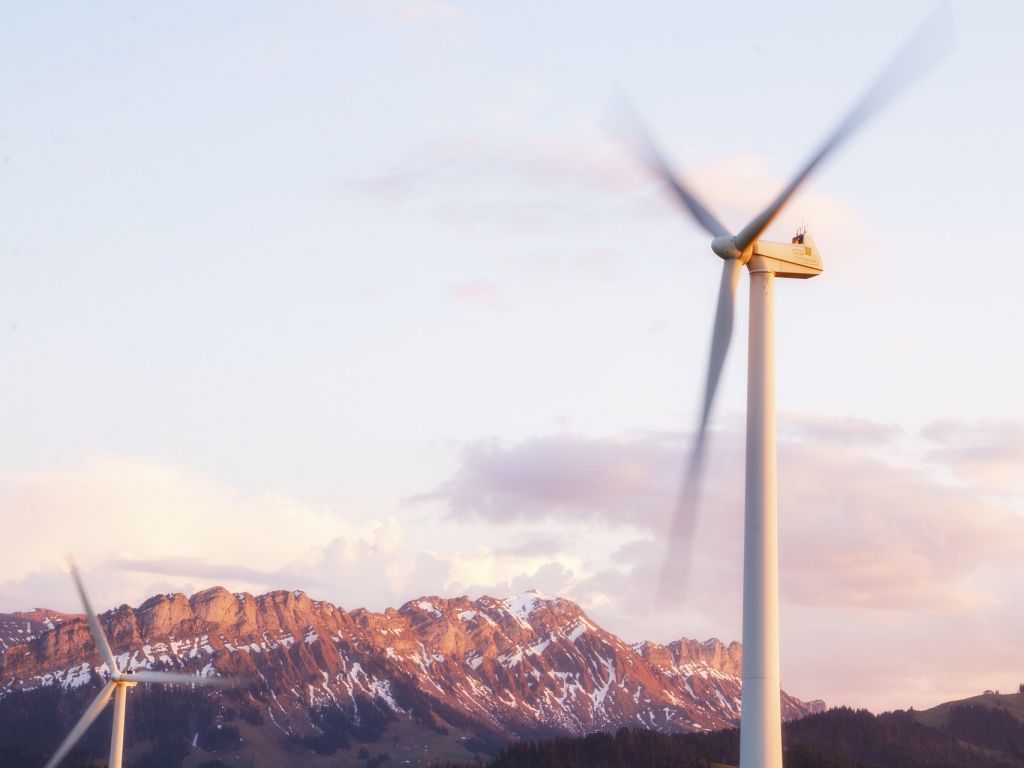
In addition, there are several commercial solar power plants by private investors in trial operation and construction whose total power by the end of 2026 would amount to about 25 MW of power.
- If planned projects are realized, the installed power of solar power plants would increase significantly, which should amount to around 215 MW at the end of 2026. With the implementation of the planned power plants, the total available power of all power plants at the end of 2026 should amount to 1,320 MW - the energy balance states.
As it has been pointed out, in this way the structure of production capacities will be further changed in favor of renewable sources, whereby hydropower plants will continue to have a dominant role, but with an increasingly significant contribution from wind and sun.
Production structure
In the structure of electricity production, it is expected that hydropower plants will participate with almost half of the total production, while the thermal power plant will provide about a third. The remaining part of production will come from wind and solar power plants, whose share is continuously growing. Overall, production from renewable energy sources will account for about two thirds of the total production of electricity.
- In 2026, a significant change in the structure of the sources of electricity production is planned, and the main reason is the significant increase in production from wind and solar power plants. It is planned that 49% of the total planned production of electricity will be produced from hydropower plants, 34% from thermal power plants, 12% from wind power plants and 5% from solar power plants - the document states.
Electricity production from renewable energy sources (RES), consisting of hydroelectric power, wind power and solar power plants, is planned in the amount of 2,372 GWh or 66%, and from the thermal power plant 1,299 GWh or 34% of the total planned production of electricity.
HPP Piva (Photo: Shutterstock/BEAUTIFUL MONTENEGRO)
Production plan
Production from hydropower plants is planned at the level of 1,846 GWh, with recovery compared to the weaker 2025. In HPP Perućica, electricity production at the threshold of the power plant is planned at 920 GWh, which is about 16% more than the estimated realization in 2025. The production plan from inflows is 726 GWh, and from reservoirs 194 GWh.
The plan is to produce 750 GWh of electricity within HPP Piva, which is about 32% more than the estimate for 2025.
When it comes to small hydropower plants, the total planned electricity production is 176 GWh, which is about 1.8% more than planned production in 2025, and by 6.1% more than the estimated realized production for 2025. The document states that the total number of MHP owned by concessionaires, EPCG, and Zeta Energy from Danilovgrad, and which will work or plan to start work in 2026 is 41.
Significant growth in electricity production is also planned for wind farms, primarily thanks to new capacities. The energy balance states that the planned annual production is 454 GWh of electricity, which is 46% more compared to the estimated production for last year.
- The increase in production is planned due to the commissioning of the new 54 MW Gvozd wind farm which will be owned by EPCG. VE Krnovo, with an installed power of 72 MW, should produce 201 GWh, which is 10.5% more than the estimated realization in 2025. Production of VE Možur, installed power of 46 MW, in 2026 it is planned in the amount of 127 GWh, which is 1.55% less than the estimate for 2025 - the document explained.
Due to the expansion of installed capacity and the realization of large projects, a multiple increase in solar energy production is also expected. Namely, as stated, the planned production of electricity from solar power plants for this year is about 198 GWh.
- The planned production represents multiple growth compared to the previous period, and is based on the completion of customer-producer projects, Solari 3000+, 500+ and 5000+ with a total power of more than 100 MW, the planned commissioning of several power plants by EPCG at the locations of Kapino Polje, Željezara, Vrtac dam and Slano dam with a total power of about 84 MW and several privately owned commercial power plants - distribution SEs, which with already existing power plants will have a power of around 30 MW - the plan for 2026 states.
This means that the solar power plants will have a total power of approximately 215 MW.
Pljevlja TPP (Photo: Shutterstock/OPIS Zagreb)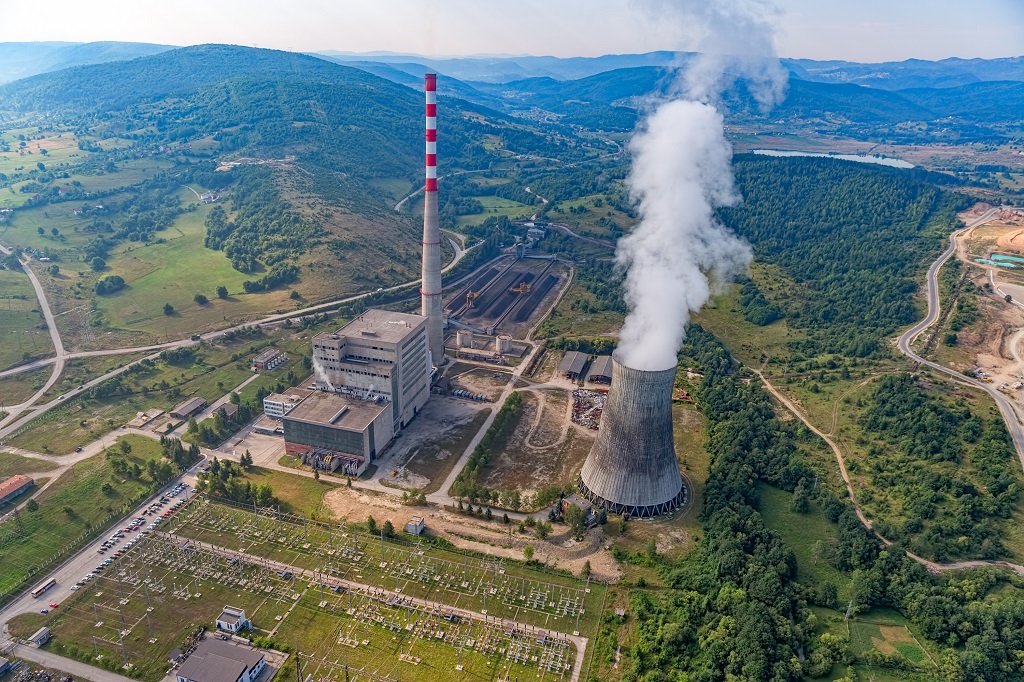
After the reconstruction, Pljevlja thermal power plant will once again represent a key pillar of system stability, and electricity production is planned at 1,299 GWh. That is a growth of as much as 160% compared to expectations for 2025.
- After the ecological reconstruction of the Thermal Power Plant and its re-inclusion in the system for the first quarter, the installation of new facilities and a slightly lower production are planned, after which it is expected to operate in full capacity, the planned monthly production is shown in the following diagram - it has been clarified.
Based on the planned operation of the Thermal Power Plant for the year 2026, the required amount of fuel oil is planned in the amount of 600 tons. In order to achieve the planned electricity production plan, the TE planned its own consumption from the grid in the amount of 7.85 GWh.
Consumption and supply security
The planned gross consumption of electricity in Montenegro amounts to around 3,400 GWh, which is about 3% more compared to the estimate of consumption in 2025, i.e. 2.6% more than the achieved gross consumption in 2024.
Distribution customers participate the most in the total gross consumption, with around 85% participation, direct buyers participate with about 1.5%, and total losses amount about 13.5% of the total gross consumption.
In terms of security of supply, the available system power during most of the year will be sufficient to cover the needs of consumers, although during the summer months there may be a shortage, especially in the period from August to the first half of October. Despite that, on an annual level, surplus electricity is planned, which will be marketed.
The total losses of electricity are planned in the amount of 458 GWh, which is 2.3% more compared to the estimate of realization for the year 2025. Losses in the transmission network are planned in the amount of 146 GWh, and in the distribution network in the amount of 312 GWh.
(Photo: Shutterstock/Baloncici)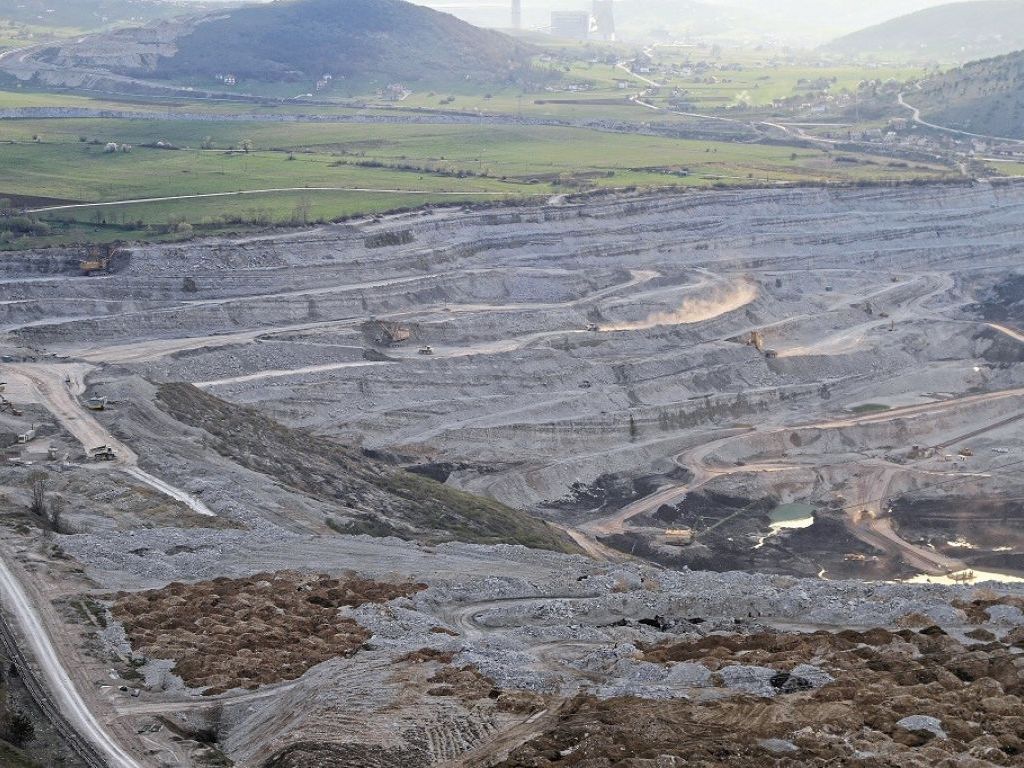
Coal production
This year will also be marked by a significant increase in coal production, in order to ensure a stable supply of the Pljevlja Thermal Power Plant, which is the largest consumer of this energy source. Most of the coal produced will be used for electricity production, while a smaller part will be intended for industry and export.
- RUP plans total production for 2026 in the amount of 1,795,000 tons, which is 220% more than the estimate for 2025. The reason is the re-commissioning of the Thermal Power Plant, which in 2025 had a several-month stoppage in operation due to environmental reconstruction - it was clarified.
Coal consumption in Montenegro is realized to the greatest extent in the Pljevlja TPP, and in the previous period it was over 95%, while the rest is consumed in industry and by other consumers. For the year 2026, the plan is to significantly increase the placement of coal outside of Montenegro, so that structure has also changed to some extent.
- The coal mine for the Pljevlja TPP plans to deliver 1,545,000 tons of coal, which is 86% of the total planned production. The planned amount of coal for the needs of the Pljevlja TPP for this year is significantly higher due to its full operation. It is important to note that the Coal Mine provides the total required amount of coal for the TPP - the document states.
For wide consumption - industry and other consumers, the delivery of 20,000 tons of coal is planned,
which is slightly above 1% of the total planned production. Coal export is planned in the amount of 230,000 tons, which makes up about 13% of planned production. The planned export is about 53% higher than the projection for 2025.
When it comes to liquid fuels, Montenegro is still completely dependent on the import of oil derivatives, whose consumption continues to increase. Eurodiesel retains its dominant share in total consumption.
Oil derivatives, biomass and natural gas
The total turnover of oil derivatives for consumption in Montenegro in 2026 is planned in the amount of 461,027 tons, which is about 7% more than the estimate of spending in 2025.
- Eurodiesel has the largest share in the planned consumption of oil derivatives, as in previous years, with around 77%. Given that there is no production of oil derivatives in Montenegro, the total quantities required for the Montenegrin market are imported - it was stated.
When it comes to biomass, production is projected at 8,856 TJ, and consumption at 6,420 TJ.
Natural gas in Montenegro has limited use and is used mainly in industry. Thus, consumption is planned in the amount of 2,475 tons, which is 12.5% more compared to the planned realization for 2025.
Illustration (Photo: Shutterstock)
Annual analysis of participation of RES in total energy production
Total electricity production in 2024 was 12,407.76 TJ, production from renewable sources was 7,591.54 TJ, which is 61.18% of total production. In 2025, production is expected to be 8,679.60 TJ, of which 6,879.60 TJ or 79.26% of the total production will come from renewable sources. For 2026, the total production is planned to be 13,672.80 TJ, of which 8,996.40 TJ or 65.80% of the total production will be from renewable sources.
- The total energy produced from coal (excluding coal that is transformed into electricity at the Pljevlja Thermal Power Plant) in 2024 was 144.29 TJ, in 2025, it was estimated at 121.44 TJ, while for 2026, 184.20 TJ is planned. From the above, it can be concluded that the ratio of energy produced from renewable sources in the total energy production in 2024 amounted to 77.39%, in 2025 it was estimated at 89.06% and for 2026 it was planned at 78.06% - it was stated.
Therefore, the document assesses that, of the total energy needs, Montenegro lacks a significant part which in 2024 amounted to about 38.33%, in 2025 a shortfall of 52.38% is estimated, and in 2026 it is planned to be 41.2%.
- In 2026, coal needs are covered from own resources. A surplus of biomass of about 38% is planned, and a surplus of electricity is planned for about 12%. Oil derivatives and natural gas have the greatest impact on the total energy deficit, which make up about 51% of the total energy needs, and for the needs of the domestic market, they are completely imported - the planner for this year states.
Finally, we can conclude that in the total energy balance, despite the growth of production from renewable sources and electricity, Montenegro remains dependent on energy imports, primarily oil derivatives and gas. Nevertheless, the increase in domestic electricity production and the development of renewable sources contribute to reducing energy dependence and strengthening the stability of the system.

Click here to see the entire Special Edition Newsletter
"INVESTING IN THE FUTURE - Powering a new world"
read more


Tags:
Electric Power Company of Montenegro
EPCG
 TE Pljevlja
Zeta Energy
HPP Piva
HPP Prućica
 VE GvozdVE Krnovo
solar power plants
wind power plants
Energy balance of Montenegro for 2026
special edition newsletter
Investments in the future Energy for the new world
green economy
special edition newsletter on the green economy
Comments
Your comment
Naš izbor


Most Important News
Full information is available only to commercial users-subscribers and it is necessary to log in.
Pratite na našem portalu vesti, tendere, investicione projekte, grantove i pravnu regulativu.
Registracija na eKapiji vam omogućava pristup potpunim informacijama i dnevnom biltenu
Naš dnevni ekonomski bilten će stizati na vašu mejl adresu krajem svakog radnog dana. Bilteni su personalizovani prema interesovanjima svakog korisnika zasebno,
uz konsultacije sa našim ekspertima.