


 Izdanje Srbija
 Serbische Ausgabe
 Izdanje BiH
 Izdanje Crna Gora


 News
News


Having fun with Jadar – Unlocking geological recipe of jadarite to find it outside of Serbia
Source: eKapija
 Thursday, 12.06.2025.
11:16
Thursday, 12.06.2025.
11:16
Thursday, 12.06.2025.
11:16
 Comments


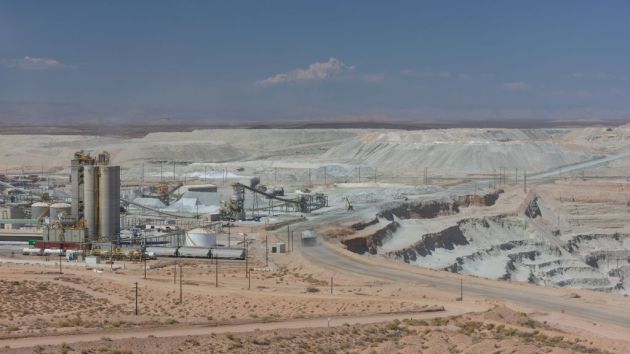
Illustration (Photo: Alan Emery/Unsplash)
– Scientists from the Natural History Museum have unraveled the geological mysteries behind jadarite, a rare lithium-bearing mineral with the potential to power Europe's green energy transition which, so far, has only been found in one place on Earth, Serbia’s Jadar Basin.
Museum scientist and co-author on the paper, Dr Francesco Putzolu said that, similar to baking a cake, everything needed to be measured and exact for this rare mineral to form.
– For instance, if the mineral ingredients are not just right, if the conditions are too acidic or too cold, jadarite will not form. The criteria seem to be so precise that we’ve not yet seen it replicated anywhere else on Earth!
By unlocking this geological recipe, Francesco Putzolu and his colleagues at the Natural History Museum hope that it could help in discovering other sites where this mineral might be found.
– We’ve likened it to baking a cake – explains Professor Richard Herrington, who helped coauthor the summary now published in Nature Geoscience. – We need just the right ingredients and just the right conditions and suddenly this mineral forms. It appears that it’s really a complete coincidence that all of these features occurred in this one place, because despite lots of other environments having all the same kinds of chemistry, nobody’s ever found this mineral. To date, Serbia is still the only place in the world this mineral forms.
Dr Robin Armstrong, geologist at the Museum and co-author on the paper said that, “as the demand for lithium continues in the race toward renewable energy, if mined, jadarite can offer huge potential. This process brings us closer to identifying other possible deposits by unravelling the formation conditions in the lab.”
Discovered in 2004 and described by Museum scientists Chris Stanley and Mike Rumsey, jadarite made headlines for its uncanny resemblance to the chemical formula of Kryptonite, the fictional alien mineral which depletes Superman’s powers. A team of researchers at the Museum have uncovered why this white, nodular mineral is so rare. Their findings show that to form, jadarite must follow an exact a set of geological steps in highly specific conditions. This involves a strict interplay between alkaline-rich terminal lakes, lithium-rich volcanic glass and the transformation of clay minerals into crystalline structures which are exceptionally rare.
The significance of the mineral for a greener future is that not only does it contain similar levels of lithium to the more commonly mined Spodumene, but also useful concentrations of boron which is also commercially valuable. Coupled with the relative ease in which it can be processed and the volume that is found in Serbia, the authors think it could provide a key source of minerals for the green transition.
– There’s nearly a hundred million tons of jadarite in the deposit – explains Richard Herrington. – If mining is given the go-ahead this could be nine tenths of all the lithium Europe needs for its electric vehicles, so it’s pretty substantial.
This is not without controversy, however, the Museum adds. Since the discovery of the mineral deposit three decades ago there has been fierce local opposition to the construction of a mine and processing plant, which to date has been successful in preventing exploitation of the mineral.
– This is one of the big conundrums that we’re currently having to deal with – said Herrington. – We’ve got all these minerals that we need for the green energy transition, but equally we actually need to mine them to make that happen. – he concluded.
Let us remind that, last year, scientists managed to synthetize jadarite in laboratory conditions, using a method which imitates the natural conditions in Jadar, and that research was published in European Journal of Mineralogy. However, mass production in labs would be a long and expensive process, so scientists have now turned to trying to understand its forming in nature and the possibility of finding similar conditions for its forming elsewhere in the world.
B. P.
Tags:
Natural History Museum London
Natural History Museum
Jadar
Jadar Basin
Richard Herrington
Francesco Putzolu
Robin Armstrong
jadarite
lithium
boron
Nature Geoscience
geological recipe of jadarite
Comments
Your comment
Naš izbor
Most Important News
Full information is available only to commercial users-subscribers and it is necessary to log in.
Pratite na našem portalu vesti, tendere, investicione projekte, grantove i pravnu regulativu.
Registracija na eKapiji vam omogućava pristup potpunim informacijama i dnevnom biltenu
Naš dnevni ekonomski bilten će stizati na vašu mejl adresu krajem svakog radnog dana. Bilteni su personalizovani prema interesovanjima svakog korisnika zasebno,
uz konsultacije sa našim ekspertima.