


 Izdanje Srbija
 Serbische Ausgabe
 Izdanje BiH
 Izdanje Crna Gora


 News
News


3D Printed Houses – Dream or Reality for the Serbian Market?
Source: eKapija
 Sunday, 01.06.2025.
22:13
Sunday, 01.06.2025.
22:13
Sunday, 01.06.2025.
22:13
 Comments


Illustration (Photo: Photo by Jakub Zerdzicki)
In short, 3D printers use a special concrete mixture that they extrude layer by layer, following a predefined digital object model. This method of construction allows significantly shorter construction time (days instead of months), less material and waste consumption, reducing the number of workers on the ground, lower cost compared to traditional construction and the possibility of customizing the design at no additional cost.
Such houses already exist in the Netherlands, France, USA and Mexico, and some of them are used as homes for the homeless, tourist accommodation and even as family homes.
Is Serbia ready?
Currently, in Serbia, only a few architectural studios and startups are exploring the possibilities of applying such technologies.
- The construction industry and the market in Serbia are quite conservative and they accept new technologies very slowly and with considerable distrust, especially during this period of intense construction. In such conditions, well-known technological solutions and materials are used for construction, and no one from the entire chain - from investors to designers to contractors - wants to "experiment" and test innovative materials and construction methods, but opts for common materials - concrete, steel, wood and standard building methods. Viewed in this way, currently there is little room for the application of 3D printing, but the potential is actually enormous - Ivan Ignjatović, a professor at the Faculty of Civil Engineering in Belgrade, tells eKapija.
Where 3D printing makes the most sense?
If the obstacles are removed, this technology could be used in the rapid construction of social housing, low-budget tourist facilities (cottages, glamping), rural areas with low availability of contractors and as temporary facilities in case of disasters.
- 3D printed concrete objects can be applied in situations when it is necessary to solve the issue of housing people quickly after natural disasters - earthquakes, floods, landslides, or provide housing for sensitive and socially vulnerable groups. They can also be used as exhibition pavilions, offices or small stores. In addition to buildings, 3D printing technology can be used to construct even pedestrian bridges of a smaller span, usually through parks, over canals and other minor obstacles. It is especially important to highlight the potential in the field of assembly-dismantling facilities, where the production, i.e. 3D printing takes place in prefabrication, and segments are assembled in the field to form permanent or temporary objects - the professor says.
He explains, that the construction speed, the bsence of the need for formwork high precision, the possibility of free shaping and achieving complex spatial forms, the small scrap of material are the main advantages of 3D printed concrete buildings which also define their potential for application in any market, including ours.
- Apart from construction objects, 3D printing is also successfully applied in the production of urban furniture - bench, chair, furniture, for production of facade elements, ornaments, etc. Therefore, there is significant potential in this segment as well - adds Ignjatović.
Can it compete with classic construction?
Although 3D printing in construction around the world has already shown that it is not inferior to traditional construction methods when it comes to the load-bearing capacity and safety of buildings,
in Serbia, this technology is still at the very beginning of development. The professor of the Faculty of Civil Engineering explains that safety and mechanical stability are the basic requirements that all buildings, regardless of construction technology, must meet.
- Regarding the bearing capacity of the building and security, there should be no competition between technologies, but no compromises either. Regardless of the construction method, the buildings must meet the basic requirements for the building defined by the regulation, which, among other things, include mechanical load-bearing capacity and stability. Examples of the application of 3D printing in the world have so far not shown that this method of construction is in any way inferior in these matters compared to classical construction. However, considering that this is a relatively new technology, it is necessary to intensify the collection and analysis of test data of structural elements and units produced in this way, in order to expand the base of results and increase the reliability of the conclusions regarding load-bearing capacity and stability - says Ignjatović.
At the Faculty of Civil Engineering, research is already being conducted in this direction, with the aim of expanding the knowledge and experience base.
- One part of the research at the Faculty of Civil Engineering in Belgrade is focused on this aspect. When it comes to usability and durability, competition and comparison between building technologies is always open. Generally speaking, the durability of buildings as a whole, i.e. their useful life, is most often defined by the durability of installations, coverings, facades, insulation, and not structural materials, in situations where they are not directly exposed to the effect of an aggressive environment. The fact that until now the buildings built using 3D printing technology are mostly without external coverings and exposed to atmospheric influences in the outer space, indicates that the durability of the material should not be questionable, but it is certainly a subject of research and re-examination - explains our interlocutor.
Illustration (Photo: Freepik / jcomp)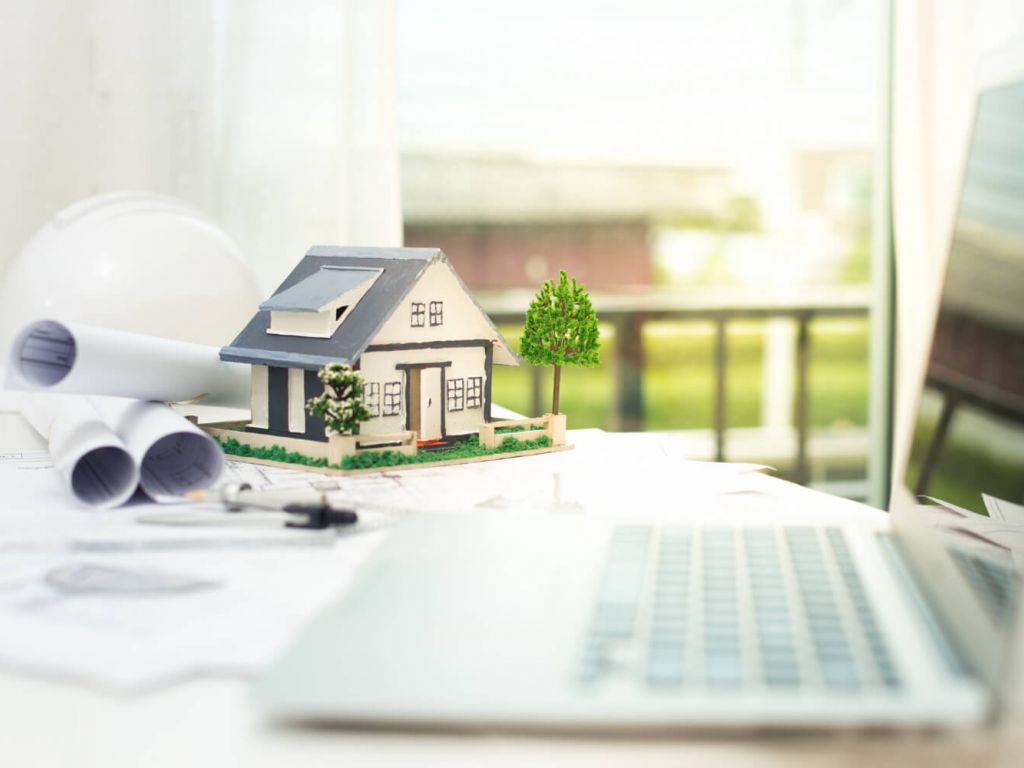
Just a single commercial 3D printer
One of the main challenges to implementing 3D printing in the domestic construction sector, as the professor says, is lack of infrastructure. In Serbia, there is currently only one commercial and one research 3D printer for concrete, and that is precisely at the Faculty of Civil Engineering.
- So, we cannot talk about significant implementation when the necessary infrastructure for such technology is missing. That`s why the challenge is actually making a decision on investing in 3D printers - the professor points out.
In his opinion, the first implementation plays a key role.
- For any innovative technology, the first implementation is crucial, to convince the first investor that he will get a unique object in all respects, and the way to such a decision leads through the architects, who should recognize the aesthetic and functional values in the concept of 3D printing - he believes.
Norms for this type of construction still do not exist in Serbia, but as the professor reminds, they do not exist in most of Europe either, which did not prevent the construction of buildings. He thinks that the lack of official standards should not block innovation.
- The key thing is the construction product`s performance, in this case, a 3D printed construction element (wall, pillar) or the construction as a whole - if it proves to meet the requirements regarding load capacity, usability and durability as well as classically built elements - there is no obstacle for application. Therefore, the absence of standards must not hinder innovation in construction, but basic facility requirements must be met. As for the material, it is interesting that there is a commercial product on our market that is used for 3D printing - Sika premix, and there was another successful example of the development of a premix for 3D printing in cooperation between Lafarge and the Natura Eco start-up. Expert staff is necessary for the application of 3D printing, but I am convinced that for the new, young, digitally literate generations, the creation of the so-called G-code that is, the movement path of the printer head should be both a challenge and a pleasure - Ignjatović points out.
______________________________
The Japanese made a train station with the help of a 3D printer and assembled it in six hours
In Japan, with the help of a 3D printer, in just six hours they made, that is, assembled a railway station.
The work started at midnight, after traffic had ended for the day. The station was already ready for use at 5:45 am.
It is about the station of Hatsushima, on the west coast of the country. 500 passengers use it daily, and the first station at this location was built of wood in 1948. Consequently, it was necessary to create a new one.
Building a new station using conventional methods would take two months. During that period, it would be necessary to work at night, when the trains are not running. That`s why the authorities hired the company "Serendix", which uses 3D printers to build houses.
______________________________
Can 3D printing into infrastructure?
This technology is already being used in infrastructure work - for example, in automated lining of tunnels by replacing shotcrete concrete, so-called shortcrete 3D method. However, the professor is cautious when it comes to its application to more complex systems such as bridges.
- 3D printing is already used for lining the walls of the tunnel with concrete, where shotcrete is replaced by automated 3D shortcrete technology. Although there are examples of bridges of smaller spans built with 3D printing technology, I think that at this moment we should not insist on its application for such complex structures and systems. It takes time for technology development, for research and testing on real less complex objects - he believes.
The 3D future is knocking on the door, are we opening it?
The future of 3D printing, according to Professor Ignjatović, is located in areas that can take maximum advantage of this technology.
- First of all, these are prefabricated elements, where automation has already been developed and where 3D printing can offer a quick, efficient and cost-effective solution - especially in conditions of an increasingly pronounced lack of labor and high costs of formwork - concludes the professor.
3D printing in construction is not a reality for Serbia yet, but could become so in the near future.
As the world moves towards automation and sustainable construction, it is only a matter of time when the domestic market will start to accept this technology. It remains to be seen whether it will be an initiative from the private sector, the support of local self-governments or the need arising from emergency situations.
Ivana Žikić

Click here to see the entire Special Edition Newsletter
"Real Estate & Construction - Trends that Build the Future"
read more
Companies:
 Građevinski fakultet Beograd
Tags:
Faculty of Civil Engineering in Belgrade Ivan Ignjatović
3d printing in construction
3d houses
special edition newsletter Real estate and construction Trends that build the future
Comments
Your comment
Naš izbor


Most Important News
Full information is available only to commercial users-subscribers and it is necessary to log in.
Pratite na našem portalu vesti, tendere, investicione projekte, grantove i pravnu regulativu.
Registracija na eKapiji vam omogućava pristup potpunim informacijama i dnevnom biltenu
Naš dnevni ekonomski bilten će stizati na vašu mejl adresu krajem svakog radnog dana. Bilteni su personalizovani prema interesovanjima svakog korisnika zasebno,
uz konsultacije sa našim ekspertima.