


 Izdanje Srbija
 Serbische Ausgabe
 Izdanje BiH
 Izdanje Crna Gora


 News
News


How would the trade conflict between the EU and China affect Serbia and what could we lose?
Source: eKapija
 Friday, 17.05.2024.
08:49
Friday, 17.05.2024.
08:49
Friday, 17.05.2024.
08:49
 Comments


Illustration (Photo: Tatiana53/shutterstock.com)
Namely, on September 13 last year, the President of the European Commission, Ursula von der Leyen, announced an investigation into Chinese EV subsidies. As Euractiv wrote, an anti-subsidy investigation based on the EU's anti-subsidy regulation usually lasts for 13 months. Once the investigation begins, the Commission has nine months to publish its findings, as well as the interim measures it decides to apply. After four months at the latest, the Commission will have to announce the final measures it wants to take.
Subsidized EVs were also the topic of Ursula von der Leyen's recent meeting with Chinese President Xi Jinping in Paris last week.
After the meeting, the President of the EC stated that subsidized products from China, such as electric vehicles or steel, are flooding the European market.
- At the same time, China continues to massively support its manufacturing sector. With domestic demand not growing, the world cannot absorb excess production from China. Therefore, I encouraged the Chinese government to resolve these structural surpluses - said Von der Leyen.
She pointed out that in order for trade to be fair, access to mutual markets must be reciprocal and announced the possibility of using "defense instruments".
- We talked about ways to make real progress in accessing markets. I believe we can make more progress. Simultaneously, we stand ready to make full use of our trade defense instruments if necessary. For example, a few weeks ago, we launched our first investigation under the International Procurement Instrument. Europe cannot accept practices that distort the market and might lead to de-industrialization here at home - stated the president of the European Commission.
Our interlocutor, coordinator of the Business Support Network Dragoljub Rajic, believes that there is dissatisfaction in Brussels due to the alleged government subsidies for products made in China.
- There is great dissatisfaction in Brussels due to subsidies for Chinese products. The state supports local companies in different ways, not so explicitly, but it was still discovered, and one of the principles of the EU is that states do not subsidize the automotive industry. Thanks to those actions, China enabled their companies to be more competitive on the market, but it threatened the signing of various agreements with the EU, but also with Japan and Korea - Rajic believes.
He adds that EU countermeasures are expected in the coming period.
- We will see the effects of the talks that Chinese President Xi Jinping had with Ursula von der Leyen and Emmanuel Macron. It is expected that if China continues such a policy, the EU will take some measures and the tightening will certainly occur, because it is also tied with the preservation of jobs in the automotive industry, and the EU will react - Rajic points out.
According to him, companies from the EU are already working on strategies for the possible introduction of barriers in trade with China.
- For several years, German trading companies and the state have been preparing a strategy in case the barriers are placed to trade with China; they are restructuring their business. According to some forecasts, until a few years ago, Germany's GDP would have decreased by 5% if there was a complete suspension of trade with China, and now those figures are significantly lower - our interlocutor says.
Where does that leave Serbia?
If there were to be a suspension of trade between the EU and China, Rajic points out that Serbia would fare badly.
- If that were to happen, the biggest loser would be Serbia, because a significant number of Chinese companies operate here, and they want to strengthen their influence in the EU through us. In that case, we would have a problem with both the EU and China, because we would not be able to provide China with what it needs. A portion of Chinese companies would no longer even have an interest in being here and investing - he states.
As he adds, "Serbia is a de facto part of the Western world" both geographically and in terms of living standards, but also when it comes to the economy.
- We must be aligned with Europe, because everything else spells suicide. If we did not have an exchange with the EU, the average salary in Serbia would be as low as 100 or 150 EUR - Rajic points out.
He also states that due to Serbia's "balancing act" in foreign policy, confidence in the Serbian economy has already begun to decline.
- The level of trust of Western companies in the development of Serbia and the Serbian economy has dropped a lot in the last two or three years, because even if the news from here are not entirely bad, they are often ambivalent. There is a suspicion on behalf of EU companies because it is not entirely clear to which bloc does Serbia belong to and whether the conditions for doing business here are stable. In uncertain times, companies are looking for certainty, a clear determination, so that they do not end up in a situation like they did in Russia, where they had to stop doing business and give up the significant investments they had there - says the interlocutor of eKapija.
He also states that China needs to place a large amount of its products on the Western market.
- As much as 70% of Chinese trade goes to rich countries, to Western countries. The Chinese economy is largely dependent on that placement. They are also working towards the BRICS countries, but the purchasing power of those countries is not as great. If the Chinese economy were to face sanctions like those Russia is currently facing, it would feel significant consequences, because it is much less self-sustained than the Russian economy - Rajic believes.
Illustration (Photo: cybrain/shutterstock)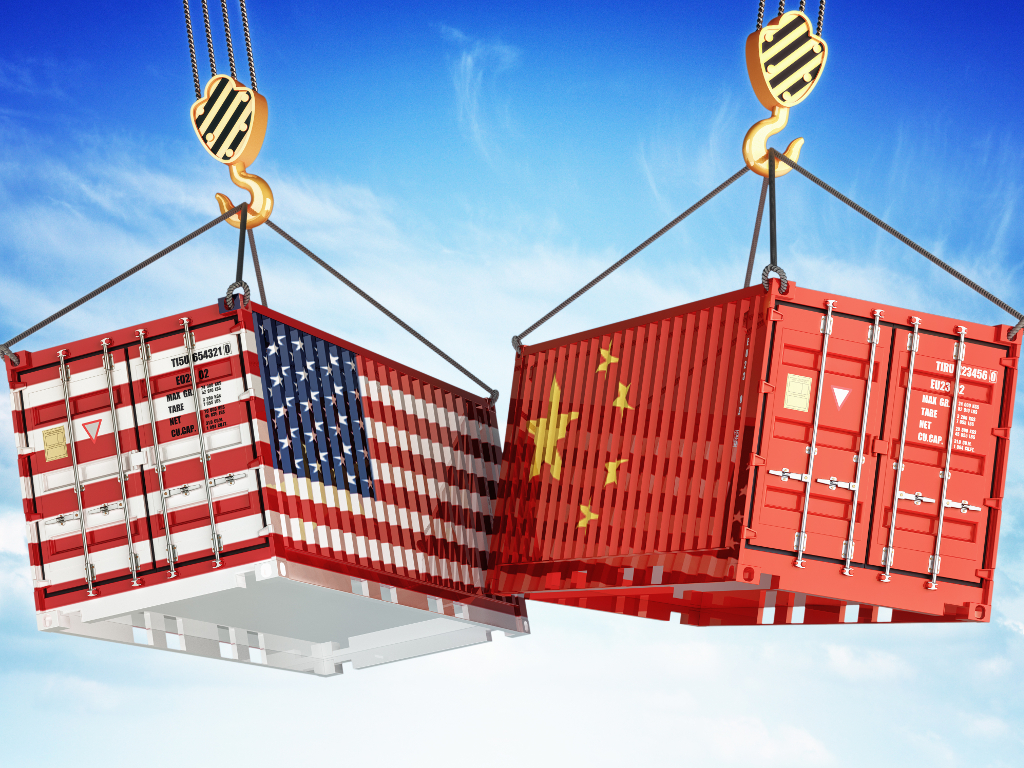
Information from the European Union and the eventual introduction of countervailing duties are expected after the US administration repeatedly increased tariffs on imports from China. Tariffs will be phased in over the next three years, with those coming into effect in 2024 covering EVs, solar cells, syringes, needles, steel, aluminum.
The White House has announced that it will increase tariffs on electric vehicles from 25% to 100% this year. The expectation is that this increase in tariffs will drastically affect the price of Chinese electric cars and thus practically ruin their chances of entering the American market.
The US is also increasing tariffs on photovoltaic cells used to make solar panels from 25% to 50%, as well as tariffs on lithium-ion batteries from 7.5% to 25%, and the tariff increase will extend to all lithium batteries until in 2026.
New tariffs on medical products such as respirators and masks were also announced, as well as on steel and aluminum products, which will increase from 0 to 7.5% to 25% in 2024, as well as a new 25% tariff on key minerals, and 50% to semiconductors in 2025, double the current rate.
The new tariff rates will affect USD 18 billion worth of goods, the White House announced.
I. Zikic
Companies:
 BSN-Mreža za poslovnu podršku Beograd
Tags:
European Commission
Dragoljub Rajic
Ursula von der Leyen
Xi Jinping
Emmanuel Macron
trade war
increase in tariffs on Chinese products
electric vehicles
tariffs on electric vehicles
tariffs
Chinese electric vehicles
photovoltaic cells
batteries
lithium ion batteries
products of steel
respirators
masks
Comments
Your comment
Most Important News
Full information is available only to commercial users-subscribers and it is necessary to log in.
Pratite na našem portalu vesti, tendere, investicione projekte, grantove i pravnu regulativu.
Registracija na eKapiji vam omogućava pristup potpunim informacijama i dnevnom biltenu
Naš dnevni ekonomski bilten će stizati na vašu mejl adresu krajem svakog radnog dana. Bilteni su personalizovani prema interesovanjima svakog korisnika zasebno,
uz konsultacije sa našim ekspertima.